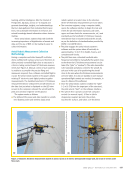
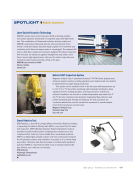
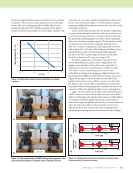
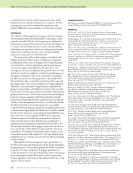
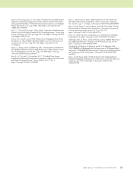
J U L Y 2 0 2 1 • M A T E R I A L S E V A L U A T I O N 693 due to weather. For example, you could not operate one in the rain unless it is specifically designed to be waterproof. Wind is also a limiting factor as gusts, the venturi effect, crosswinds, and low-velocity eddies on structures all can impact their flight and performance. Additionally, robots do not respond well to many unexpected situations. Robots are not as versatile as people and while they may exceed at certain specific tasks—especially repeated programmatic tasks—they might not be able to adapt in unexpected or unantici- pated situations. Since the aerial robotic systems are not human inspectors, they may not discover some issues that an experienced human inspector might. Due to this limitation, companies supplement robotic- powered inspections and examinations with ones completed by people. When properly selected and utilized, aerial robotic inspection systems can assist with creating safer work- places, provide better data to manage assets, and unlock cost savings. While industrial robotic inspec- tion systems can be highly effective when properly used, they do have limitations and, in some cases, they are the incorrect tool. Organizational Benefits of Faster, Safer Robotic UT Thickness Measurements Planned preventative maintenance has long been practiced as a strategy for keeping industrial field assets operating safely and efficiently. This has led to the development of standards to help asset owners maintain the integrity and fabric of their facilities and to ensure that they remain operationally safe and effective for their entire life cycle. Transformative tech- nology such as aerial robotic UT thickness measure- ment and visual asset assessment systems, such as those discussed in this paper, allow customers to take a fresh look at the opportunity for conducting inspec- tions and data-gathering operations that can help redefine a planned maintenance regime. As these systems collect huge amounts of data, they provide a fantastic opportunity to add to or create a digital record of industrial field assets. Investment in a powerful data-collection system via an aerial robotic system is fairly simple and can be easily made purely on a financial footing. Utilizing these systems makes other visual or data inspections redundant, as the aerial robot collects UT thickness measurement data as well as HD video that can be used for visual inspec- tion. The benefits have been clearly shown from the early adopters of this technology. Conclusion Given the enormous potential industrial aerial robotic field inspection systems enable, one can easily envision a future with robotic systems having more automation, functionality, and capability. This would enable more inspections as an increased number of inspection robots are placed in service and as func- tionality increases. The systems presented in this paper improve effi- ciency due to reduced inspection times and increase efficacy by faster reporting and decision making, which adds value and creates even more value when coupled with NDE 4.0 processes. Further, they help achieve substantial cost savings, particularly when they prevent an industrial asset from being taken out of service or enabling the asset to be returned to service faster. And, finally, they are an elegant safety solution moving workers out of harm’s way and potentially saving lives. As we move toward a more automated future with robotic inspection tools becoming more advanced, affordable, and utilized, we will continue to utilize automation tools that free human inspectors from the dirty, dull, and dangerous tasks of collecting inspec- tion data. This will enable them to spend more time on the higher value components of industrial asset operation and maintenance. w As these systems collect huge amounts of data, they provide a fantastic opportunity to add to or create a digital record of industrial field assets.

694 M A T E R I A L S E V A L U A T I O N • J U L Y 2 0 2 1 AUTHOR Robert (Bob) Dahlstrom: Apellix, Working Drones Inc., Jacksonville, FL r.dahlstrom@apellix.com CITATION Materials Evaluation 79 (7): 687–694 https://doi.org/10.32548/2021.me-04213 ©2021 American Society for Nondestructive Testing REFERENCES ASTM, 2021, ASTM E1316 – Standard Terminology for Nondestructive Examinations, ASTM International, West Conshohocken, PA, https://doi.org/10.1520/E1316-21 Dahlstrom, R., 2020, “The Efficacy of Aerial Robotic Systems (Drones) for Taking Dry Film Thickness (DFT) Meas- urements at Height Consistent with SSPC PA2 Standards” available at https://www.academia.edu/35709547/the _efficacy_of_aerial_robotic_systems_drones_for_taking _dry_film_thickness_dft_measurements_at_height _consistent_with_sspc_pa2_standards Global Electronic Services, 2021, “Guide to Inspection Robots Used in Industrial Sectors,” accessed 12 May 2021, https://gesrepair.com/guide-inspection-robots-used -industrial-sectors/ Mattar, R., 2018, “Development of a Wall Sticking Drone for Non-Destructive Ultrasonic and Corrosion Testing,” Inspec- tioneering Journal, Vol. 24, No. 2, https://inspectioneering .com/journal/2018-04-25/7567/development-of-a-wall -sticking-drone-for-non-destructive-ultraso Skaga, S.K., 2017, “Feasibility Study of Unmanned Aerial Vehicles (UAV) Application for Ultrasonic Non-Destructive Testing (NDT) of Wind Turbine Rotor Blades. Preliminary Experiments of Handheld and UAV Ultrasonic Testing on Glass Fibre Laminate,” Master’s Thesis, The Arctic University of Norway, available at https://hdl.handle.net /10037/11350 Vrana, J., 2020, “NDE 4.0: The Fourth Revolution in Non- Destructive Evaluation: Digital Twin, Semantics, Interfaces, Networking, Feedback, New Markets and Integration into the Industrial Internet of Things,” https://doi.org /10.13140/RG.2.2.17635.50720 ME FEATURE w aerial robots for ut thickness measurements
ASNT grants non-exclusive, non-transferable license of this material to  .
All rights reserved. © ASNT 2026. To report unauthorized use, contact: customersupport@asnt.org