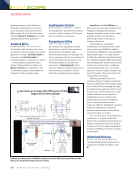
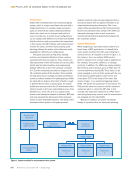
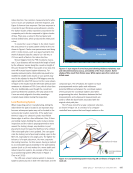
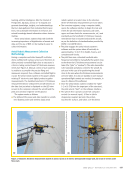
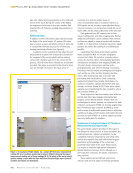
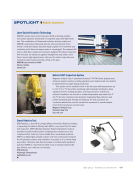
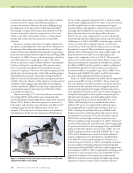
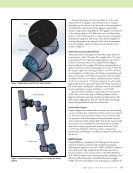
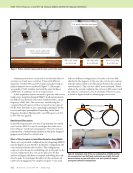
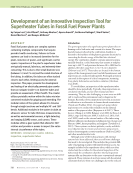
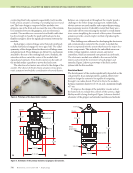
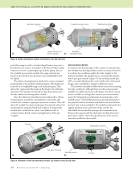
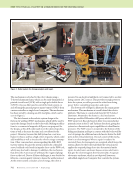
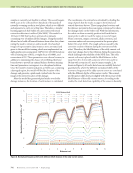
J U L Y 2 0 2 1 • M A T E R I A L S E V A L U A T I O N 689 learning, artificial intelligence (AI), the Internet of Things (IoT), big data, and so on–to expand and generate knowledge, insights, and understandings that turn data gathered from industrial field inspec- tions, into actionable information to enhance and extend knowledge-based information-driven decision making. These aerial robotic systems help with both the increasing importance of digitalization of assets and data and the use of NDE 4.0 by making it easier to collect information. Aerial Robotic Measurement Collection Methodology Having a computer-controlled heavy-lift multirotor drone outfitted with various sensors and functions to allow precisely controlled flight close to structures is critical in taking contact-based UT thickness measure- ments (see Figure 2). Manual control of such systems is unable to accomplish the precise flying and maneuvers required thus, software-controlled flight is crucial. The aerial robotic system in this paper utilizes existing UT electronics and digital probes to gather measurements. The handheld electronic UT thickness measurement device onboard the aircraft streams all the data (not just what is displayed on the LED view screen) to the computer onboard the aircraft and the pilot and corrosion engineer on the ground. The system works as follows: l The tethered (for power and data transfer) or unteth- ered (battery power and wireless data) aerial robotic system is located close to the structure where UT thickness measurements are to be taken. l The corrosion engineer, using a computer tablet, opens the software interface to begin the test and enters the job information (operator, job name, upper and lower limits for measurements, etc.) and standardizes the handheld UT thickness measure- ment device that is mounted onboard the aircraft, as per the definition of standardization provided by ASTM 1316 (ASTM 2021). l The pilot engages the aerial robotic system’s software and the system takes off vertically to approximately 2 m (6.5 ft) in height, hovers, and completes self-checks. l The pilot then uses a standard handheld radio frequency transmitter to manually fly the system close to the where the UT thickness measurement is to be taken (the “gate” or “window”). (The radio transmitter is the standard operations control for the aircraft. Its sole use in this case is for positioning the aircraft close to the area where the thickness measurements are to be taken. It is also on standby in case manual operational flight controls are needed for example, in case of a failure of the software.) l Once the aerial robotic system is within the “gate” (~2 m [6.5 ft] from the target part of the structure), the pilot selects “start” on the software interface. l The system then operates under full computer control (no manual input). It flies in (while dispensing couplant gel onto the probe), touches the surface, and takes a UT thickness Figure 2. Ultrasonic thickness measurement system in action: (a) on an in-service aboveground storage tank (b) on an in-service active flare stack. (a) (b) Photo credit: ©2020 Apellix, Working Drones Inc. Photo credit: ©2020 Apellix, Working Drones Inc.

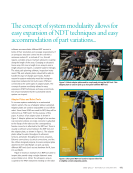
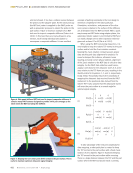
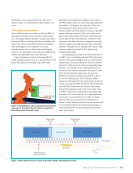
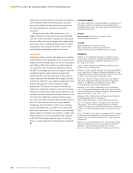
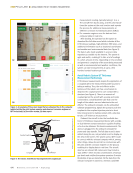
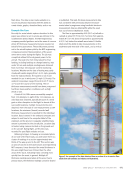
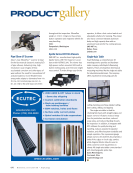
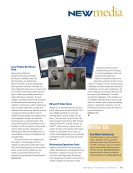
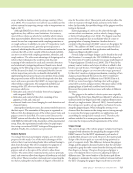
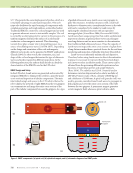
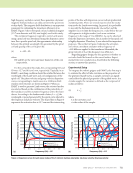
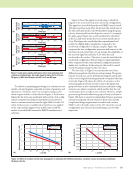
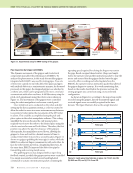
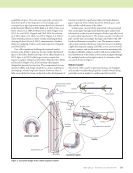
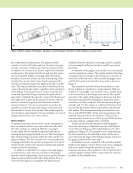
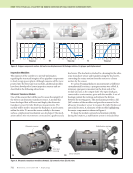
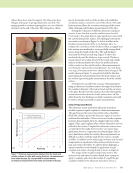
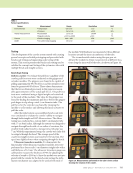
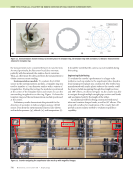
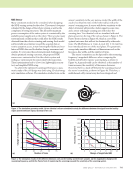
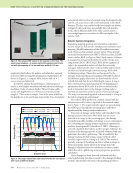
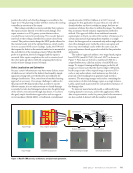
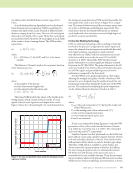
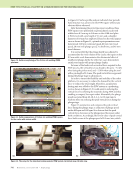
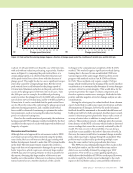
690 M A T E R I A L S E V A L U A T I O N • J U L Y 2 0 2 1 measurement reading, typically taking 1 to 4 s. The aircraft then backs away, and the pilot reposi- tions the system at the next location and repeats the process for additional measurements at different corrosion monitoring locations (CMLs). l The corrosion engineer sees the data on their computer tablet in real time. After landing, the operator has the option to download the full data record which includes all the UT thickness readings, high-definition (HD) video, and additional information such as locational coordinates and weather and environmental data (see Figure 3). The data is also made available in a secure data repository accessible via the Internet. The system is agile and motile, enabling it to take a lot of readings in a short amount of time. Depending on the condition and geometric complexity of the asset being measured as well as environmental and weather conditions, the system can take measurements at up to a few hundred contact locations per hour. Aerial Robotic System UT Thickness Measurement Technology UT thickness measurements require the application of a couplant gel to the measurement probe tip prior to taking a reading. Thus, the end effector at the terminus of the robotic arm has a mechanism to dispense the couplant prior to each contact with a structure (see Figure 4). There is a reservoir of couplant gel on the aircraft with a pump and motor connected to a small-diameter tube that runs the length of the robotic arm and attaches to the end effector. The onboard computer, via the embedded software programming, signals the pump to push the couplant to the couplant injection point at a short time interval prior to making contact with a structure to take a UT thickness measurement. Onboard the aircraft is also the handheld elec- tronic UT thickness measurement device with a single- or dual-element contact transducer capable of taking echo-to-echo ultrasonic thickness measurements. The device is plugged into the onboard computer for power and data transfer. The full data record is trans- mitted during its use, not just what is set to display on the device LED screen. The system uses a Wi-Fi router to connect with the onboard computer which, among other things, allows the aircraft to communicate with the pilot and the corrosion engineer on the ground, enabling it to display data in real time. The aircraft also has an onboard HD camera and may include a “gas sniffer,” which records concentrations of various gas levels and notifies the system operators if certain thresholds of gas are detected. All the data from the onboard computer is saved to a memory card/USB ME FEATURE w aerial robots for ut thickness measurements End effector Robotic arm Stabilizers Contact switch Couplant injection UT probe Figure 4. The robotic end effector that disperses the couplant gel. Figure 3. An example of the screen views that are streamed live to the computer tablets held by the pilot/system operator and observer (corrosion engineer or NDT technician): (a) live video stream (b) data report. (a) (b) Photo credit: ©2020 Apellix, Working Drones Inc. Photo credit: ©2020 Apellix, Working Drones Inc.
ASNT grants non-exclusive, non-transferable license of this material to  .
All rights reserved. © ASNT 2026. To report unauthorized use, contact: customersupport@asnt.org