allows users to remotely view the print’s progress regardless of
their physical location.
4. Discussion
This study bridges identified gaps in the related literature by
implementing a heterogeneous, multi-sensor approach to
enhance fault detection in AM processes. The digital thread
architecture adeptly processes multimodal, heterogeneous
data, including AE and image-based datasets, for efficient
defect classification. The real-time defect detection and cor-
rection enabled by this system represent an advancement over
conventional monitoring methods. Furthermore, the synergy
between the advanced deep learning model and the digital
thread enables immediate issue detection and facilitates a
closed-loop system.
The effectiveness of the proposed DEF model was evalu-
ated for defect detection in manufacturing processes. The DEF
model, distinguished by its ability to integrate multiple sensor
inputs, demonstrated superior performance compared to
models relying on single-sensor data. This enhanced capability
is pivotal for comprehensive monitoring and control in man-
ufacturing environments. The model’s robustness was further
augmented through the application of advanced preprocessing
techniques and hyperparameter tuning. A noteworthy aspect of
this approach was the incorporation of a custom loss function
with Shannon entropy. This innovation not only contributed to
the model’s ability to minimize uncertainty but also improved
its precision in defect detection, a crucial aspect for real-time
applications. This model architecture exhibits reduced suscep-
tibility to overfitting and enhanced generalization.
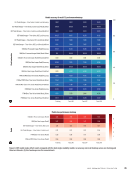
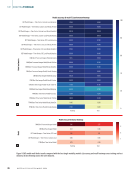
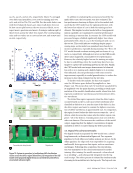
The per-defect benefit of fusion can be interpreted physi-
cally: underextrusion produces both an intermittent AE burst
(from discontinuous filament feed) and a small visible gap,
neither of which is reliably detected alone—image-only models
miss gaps occluded by shadows, and AE-only models miss
chronic low-amplitude flow drift. Warping is dominated by
visible deformation but also produces low-frequency AE from
bed-adhesion failure, again favoring the joint feature space.
Pristine cases benefit from cross-modal agreement, which
lowers the false-positive rate that drives unnecessary closed-
loop interventions [29, 32].
The primary goal was to bridge critical gaps in manu-
facturing process monitoring and control, with an emphasis
on real-time defect correction. By employing the DEF model
for multimodal heterogeneous sensing, the study developed
not only effective feedback control and remote monitoring
capabilities but also laid the foundation for a digital thread.
Furthermore, these findings represent a significant advance-
ment in the application of digital thread technology in AM.
The DEF model’s ability to incorporate the latest advances in
deep learning architectures, coupled with its plug-and-play
features, exemplifies an AI model that is versatile and adapt-
able. Additionally, the model’s proficiency in making rapid
inferences from heterogeneous, multimodal sensor data is
important in real-time manufacturing process monitoring. This
capability is particularly relevant in the context of AM, where
precision and speed are paramount. The study’s contributions
thus extend beyond immediate process improvements, offering
a broader understanding and utility of digital thread applica-
tions in the evolving landscape of AM.
The reported findings also highlight the impact of the DEF
model on process monitoring and control in AM, significantly
advancing digital thread technology. This development aligns
with the goal of creating a more interconnected and responsive
manufacturing environment. This integration is vital for main-
taining product quality, as it facilitates real-time identification
and correction of defects. Moreover, the DEF model’s capabil-
ity to efficiently process multimodal sensor data underscores
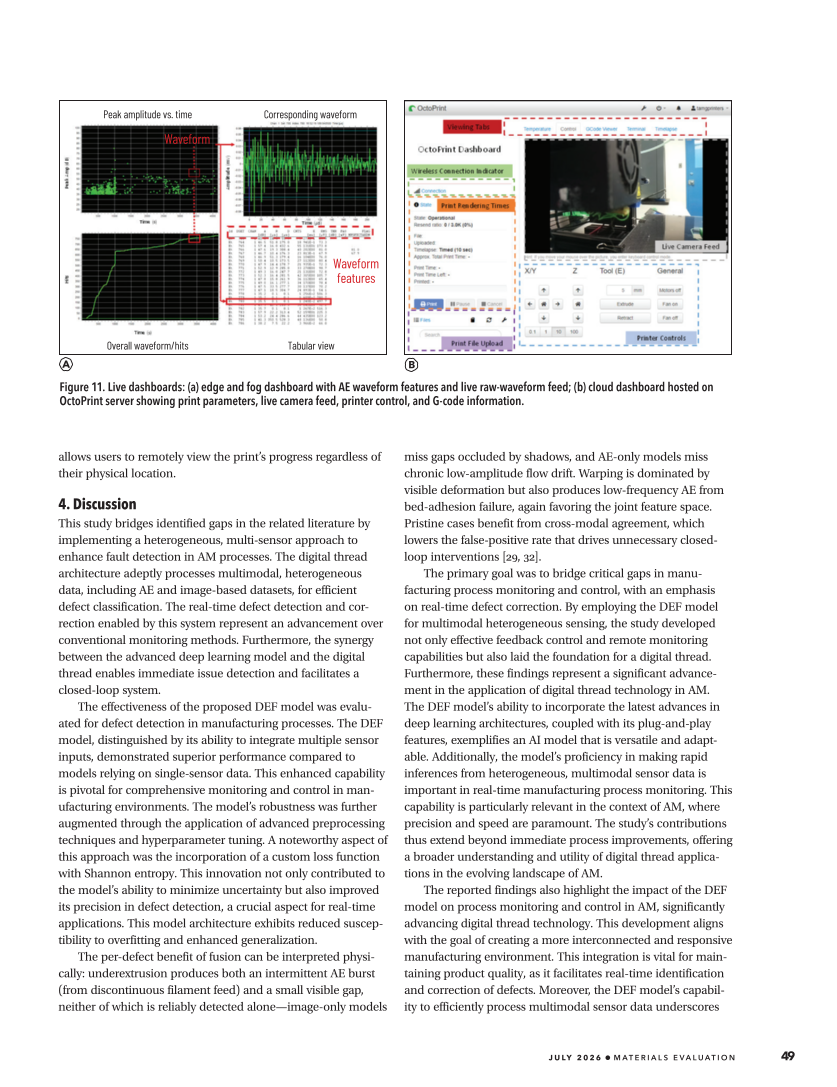
Peak amplitude vs. time
Overall waveform/hits Tabular view
Corresponding waveform
Waveform
features
Waveform
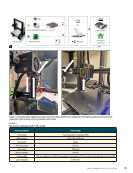
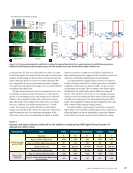
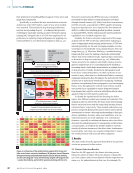
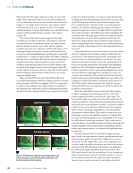
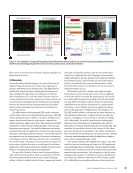
Figure 11. Live dashboards: (a) edge and fog dashboard with AE waveform features and live raw-waveform feed (b) cloud dashboard hosted on
OctoPrint server showing print parameters, live camera feed, printer control, and G-code information.
J U LY 2 0 2 6 • M AT E R I A L S E V A L U AT I O N 49
their physical location.
4. Discussion
This study bridges identified gaps in the related literature by
implementing a heterogeneous, multi-sensor approach to
enhance fault detection in AM processes. The digital thread
architecture adeptly processes multimodal, heterogeneous
data, including AE and image-based datasets, for efficient
defect classification. The real-time defect detection and cor-
rection enabled by this system represent an advancement over
conventional monitoring methods. Furthermore, the synergy
between the advanced deep learning model and the digital
thread enables immediate issue detection and facilitates a
closed-loop system.
The effectiveness of the proposed DEF model was evalu-
ated for defect detection in manufacturing processes. The DEF
model, distinguished by its ability to integrate multiple sensor
inputs, demonstrated superior performance compared to
models relying on single-sensor data. This enhanced capability
is pivotal for comprehensive monitoring and control in man-
ufacturing environments. The model’s robustness was further
augmented through the application of advanced preprocessing
techniques and hyperparameter tuning. A noteworthy aspect of
this approach was the incorporation of a custom loss function
with Shannon entropy. This innovation not only contributed to
the model’s ability to minimize uncertainty but also improved
its precision in defect detection, a crucial aspect for real-time
applications. This model architecture exhibits reduced suscep-
tibility to overfitting and enhanced generalization.
The per-defect benefit of fusion can be interpreted physi-
cally: underextrusion produces both an intermittent AE burst
(from discontinuous filament feed) and a small visible gap,
neither of which is reliably detected alone—image-only models
miss gaps occluded by shadows, and AE-only models miss
chronic low-amplitude flow drift. Warping is dominated by
visible deformation but also produces low-frequency AE from
bed-adhesion failure, again favoring the joint feature space.
Pristine cases benefit from cross-modal agreement, which
lowers the false-positive rate that drives unnecessary closed-
loop interventions [29, 32].
The primary goal was to bridge critical gaps in manu-
facturing process monitoring and control, with an emphasis
on real-time defect correction. By employing the DEF model
for multimodal heterogeneous sensing, the study developed
not only effective feedback control and remote monitoring
capabilities but also laid the foundation for a digital thread.
Furthermore, these findings represent a significant advance-
ment in the application of digital thread technology in AM.
The DEF model’s ability to incorporate the latest advances in
deep learning architectures, coupled with its plug-and-play
features, exemplifies an AI model that is versatile and adapt-
able. Additionally, the model’s proficiency in making rapid
inferences from heterogeneous, multimodal sensor data is
important in real-time manufacturing process monitoring. This
capability is particularly relevant in the context of AM, where
precision and speed are paramount. The study’s contributions
thus extend beyond immediate process improvements, offering
a broader understanding and utility of digital thread applica-
tions in the evolving landscape of AM.
The reported findings also highlight the impact of the DEF
model on process monitoring and control in AM, significantly
advancing digital thread technology. This development aligns
with the goal of creating a more interconnected and responsive
manufacturing environment. This integration is vital for main-
taining product quality, as it facilitates real-time identification
and correction of defects. Moreover, the DEF model’s capabil-
ity to efficiently process multimodal sensor data underscores
Peak amplitude vs. time
Overall waveform/hits Tabular view
Corresponding waveform
Waveform
features
Waveform
Figure 11. Live dashboards: (a) edge and fog dashboard with AE waveform features and live raw-waveform feed (b) cloud dashboard hosted on
OctoPrint server showing print parameters, live camera feed, printer control, and G-code information.
J U LY 2 0 2 6 • M AT E R I A L S E V A L U AT I O N 49