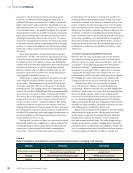
A relevant NDE method that has proven useful in multiple
monitoring applications is acoustic emission testing (AE). For
AM monitoring, AE is advantageous because it is a nonin-
trusive, high-throughput method that can be used to identify
abnormal conditions [10]. In the context of polymer AM, AE
sensors have been used to acquire time-series-based data [11].
The data acquisition system involved in AE setups converts
passively recorded surface vibrations into time series of voltage
values typically referred to as waveforms. By employing digital
signal processing [12] or machine learning methods [13], signal
features can be calculated or extracted from AE waveforms
(e.g., frequency, time, and energy domain information), which
can then be further analyzed for postmortem assessment
of print quality. Other researchers used AE qualitatively to
assess the machine’s health rather than the part’s [1, 14]. For
example, efforts by Wu et al. involved a data-driven moni-
toring and diagnostic method that used AE sensors to detect
failure modes of a 3D printer’s first deposited layer, which is
often considered the most important layer to ensure proper
adhesion to the build platform and thereby yield a successful
print [10].
One of the most significant trends in the use of digital twins
in manufacturing is the potential for machine learning (ML)
to enable real-time fault detection. However, improvements
are needed in the accuracy and reliability of applying ML in
real time [5]. For example, defect-detection approaches for
3D-print monitoring have used time-series data or images as
inputs [15–17]. ML approaches to damage detection have also
been implemented offline to characterize faults during the
print process [18–21]. Techniques such as hierarchical K-means
clustering, supervised deep learning neural networks, prin-
cipal component analysis, Gaussian mixture modeling, and
variational auto-encoder were employed for this purpose [22].
Moreover, deep learning methods, particularly convolutional
neural networks (CNNs), are effective in autonomously detect-
ing and classifying printing anomalies [18, 23]. Additionally, ML
methods such as support vector machine, K-nearest neighbor,
and decision trees have been used to enhance defect detection
capabilities in AM [24]. Although these methods are effective,
they are mostly applied offline. Thus, the bulk of the related
analysis is performed during post-processing of the data
recorded during the print [25, 26].
The adoption of a multimodal diagnostics method for
defect detection generally requires combining different data
types, each requiring specialized processing and classifica-
tion strategies. In this context, data fusion, as delineated by
Hall and Llinas, is classified into three distinct categories:
decision-level, data-level, and feature-level. Data-level fusion
combines raw data from different sources, feature-level fusion
merges extracted features across datasets, and decision-level
fusion integrates final decisions from multiple models [27, 28].
For example, Peng et al. employed both visible and infrared
imaging to detect defects in powder bed fusion (PBF) parts
that conventional optical technologies miss. They proposed a
system that simultaneously captures brightness and infrared
intensities, which was found to significantly enhance defect
detection and process optimization in PBF [29]. Further efforts
have been made to fuse sensory data with process parame-
ters to detect flaws [9, 30]. Current research with multimodal
data fusion focuses on combining similar data types, such as
time-series [31] and image data [29, 32] for defect detection.
The authors of this paper concur with Yang et al. that future
research should focus on creating quickly deployable data
fusion tools for analyzing and utilizing diverse data types from
single or multiple sensors [32]. Although efforts toward het-
erogeneous data analysis for AM monitoring have been made,
they are mostly conducted offline and do not provide mecha-
nisms to control the print process, which is an integral part of a
digital twin system [33–35].
The severity of a defect can be addressed by intercepting
the manufacturing process. This offers economically conscious
options for large-scale operations by augmenting existing
manufacturing processes with sensory feedback and control.
In fact, the need for a closed-loop feedback 3D-print monitor-
ing system has been introduced in several applications using
NDE sensing [1, 36, 37]. Specifically, Reese et al. published a
patent for real-time monitoring and additional tool path cor-
rection instructions during the 3D printing process [38]. The
system output is a corrected physical print accompanied by a
report containing 3D space displays, structural geometry, and
inherent properties of the final object. A combination of image
processing, neural networks, and closed-loop control has also
been implemented for an inkjet-based 3D printer, where the
voltage was adjusted based on current droplet analysis [39].
Another closed-loop system for AM was implemented by
Breese et al., in which the powder mass flow rate was adjusted
using an optical powder flow sensor during laser metal depo-
sition [40]. A series of other closed-loop systems in academia
and commercial AM products has been reviewed by Rivera
and Arciniegas, aiming to increase the overall reliability of the
AM process [41].
Most of these monitoring efforts, however, have relied on
a single sensing modality to diagnose and qualify the current
state of the printing process. Heterogeneous, multimodal
sensing could assist defect detection in AM by enhancing the
detection and correction of layer-wise defects and improv-
ing the required in-process quality control. Moreover, het-
erogeneous, multimodal sensing enables novel modeling
and monitoring approaches for zero-defect manufacturing,
significantly improving the accuracy and precision of failure
mode detection and process anomaly identification [8]. Such
multimodal monitoring could provide information not only
on surface-level defects but also on internal defects (e.g., the
amount of infill), thereby increasing confidence in detection.
The authors acknowledge limited research, particularly
in 3D printing applications with heterogeneous data fusion
and closed-loop control systems in the context of digital twin
system development. This gap is evident in studies such as
that conducted by Rao et al., which used a diverse array of
sensors, including thermocouples, accelerometers, an infrared
J U LY 2 0 2 6 • M AT E R I A L S E V A L U AT I O N 33
monitoring applications is acoustic emission testing (AE). For
AM monitoring, AE is advantageous because it is a nonin-
trusive, high-throughput method that can be used to identify
abnormal conditions [10]. In the context of polymer AM, AE
sensors have been used to acquire time-series-based data [11].
The data acquisition system involved in AE setups converts
passively recorded surface vibrations into time series of voltage
values typically referred to as waveforms. By employing digital
signal processing [12] or machine learning methods [13], signal
features can be calculated or extracted from AE waveforms
(e.g., frequency, time, and energy domain information), which
can then be further analyzed for postmortem assessment
of print quality. Other researchers used AE qualitatively to
assess the machine’s health rather than the part’s [1, 14]. For
example, efforts by Wu et al. involved a data-driven moni-
toring and diagnostic method that used AE sensors to detect
failure modes of a 3D printer’s first deposited layer, which is
often considered the most important layer to ensure proper
adhesion to the build platform and thereby yield a successful
print [10].
One of the most significant trends in the use of digital twins
in manufacturing is the potential for machine learning (ML)
to enable real-time fault detection. However, improvements
are needed in the accuracy and reliability of applying ML in
real time [5]. For example, defect-detection approaches for
3D-print monitoring have used time-series data or images as
inputs [15–17]. ML approaches to damage detection have also
been implemented offline to characterize faults during the
print process [18–21]. Techniques such as hierarchical K-means
clustering, supervised deep learning neural networks, prin-
cipal component analysis, Gaussian mixture modeling, and
variational auto-encoder were employed for this purpose [22].
Moreover, deep learning methods, particularly convolutional
neural networks (CNNs), are effective in autonomously detect-
ing and classifying printing anomalies [18, 23]. Additionally, ML
methods such as support vector machine, K-nearest neighbor,
and decision trees have been used to enhance defect detection
capabilities in AM [24]. Although these methods are effective,
they are mostly applied offline. Thus, the bulk of the related
analysis is performed during post-processing of the data
recorded during the print [25, 26].
The adoption of a multimodal diagnostics method for
defect detection generally requires combining different data
types, each requiring specialized processing and classifica-
tion strategies. In this context, data fusion, as delineated by
Hall and Llinas, is classified into three distinct categories:
decision-level, data-level, and feature-level. Data-level fusion
combines raw data from different sources, feature-level fusion
merges extracted features across datasets, and decision-level
fusion integrates final decisions from multiple models [27, 28].
For example, Peng et al. employed both visible and infrared
imaging to detect defects in powder bed fusion (PBF) parts
that conventional optical technologies miss. They proposed a
system that simultaneously captures brightness and infrared
intensities, which was found to significantly enhance defect
detection and process optimization in PBF [29]. Further efforts
have been made to fuse sensory data with process parame-
ters to detect flaws [9, 30]. Current research with multimodal
data fusion focuses on combining similar data types, such as
time-series [31] and image data [29, 32] for defect detection.
The authors of this paper concur with Yang et al. that future
research should focus on creating quickly deployable data
fusion tools for analyzing and utilizing diverse data types from
single or multiple sensors [32]. Although efforts toward het-
erogeneous data analysis for AM monitoring have been made,
they are mostly conducted offline and do not provide mecha-
nisms to control the print process, which is an integral part of a
digital twin system [33–35].
The severity of a defect can be addressed by intercepting
the manufacturing process. This offers economically conscious
options for large-scale operations by augmenting existing
manufacturing processes with sensory feedback and control.
In fact, the need for a closed-loop feedback 3D-print monitor-
ing system has been introduced in several applications using
NDE sensing [1, 36, 37]. Specifically, Reese et al. published a
patent for real-time monitoring and additional tool path cor-
rection instructions during the 3D printing process [38]. The
system output is a corrected physical print accompanied by a
report containing 3D space displays, structural geometry, and
inherent properties of the final object. A combination of image
processing, neural networks, and closed-loop control has also
been implemented for an inkjet-based 3D printer, where the
voltage was adjusted based on current droplet analysis [39].
Another closed-loop system for AM was implemented by
Breese et al., in which the powder mass flow rate was adjusted
using an optical powder flow sensor during laser metal depo-
sition [40]. A series of other closed-loop systems in academia
and commercial AM products has been reviewed by Rivera
and Arciniegas, aiming to increase the overall reliability of the
AM process [41].
Most of these monitoring efforts, however, have relied on
a single sensing modality to diagnose and qualify the current
state of the printing process. Heterogeneous, multimodal
sensing could assist defect detection in AM by enhancing the
detection and correction of layer-wise defects and improv-
ing the required in-process quality control. Moreover, het-
erogeneous, multimodal sensing enables novel modeling
and monitoring approaches for zero-defect manufacturing,
significantly improving the accuracy and precision of failure
mode detection and process anomaly identification [8]. Such
multimodal monitoring could provide information not only
on surface-level defects but also on internal defects (e.g., the
amount of infill), thereby increasing confidence in detection.
The authors acknowledge limited research, particularly
in 3D printing applications with heterogeneous data fusion
and closed-loop control systems in the context of digital twin
system development. This gap is evident in studies such as
that conducted by Rao et al., which used a diverse array of
sensors, including thermocouples, accelerometers, an infrared
J U LY 2 0 2 6 • M AT E R I A L S E V A L U AT I O N 33