temperature sensor, and a real-time miniature video bore-
scope, to gather comprehensive process data [8]. Despite this
diverse data acquisition approach, the absence of an integrated
closed-loop feedback mechanism in their system highlights
a related limitation, which underscores the need for further
research on the integration of heterogeneous sensor data with
real-time, adaptive feedback systems.
This study aims, therefore, to address the reported gaps in
related digital twin system development through (1) building
a digital thread that incorporates diverse sensors for real-
time monitoring, and (2) developing a deep learning archi-
tecture specifically designed for multimodal input leveraging
data fusion. As a test case for heterogeneous sensing, both
time-series (AE) and image-based datasets were leveraged to
classify the defect. Deep learning could process both multi-
modal heterogeneous data, enabling real-time defect detection
and correction. Furthermore, to test the model’s robustness
and flexibility, both single-defect and multi-defect cases were
investigated. The integration of this advanced deep learning
with the digital thread not only facilitates immediate detec-
tion of build issues but also allows for the implementation of a
closed-loop approach, which is an integral part of a digital twin
system.
In contrast to prior AE-based AM monitoring works that use
a single sensing modality and operate offline on extracted hit
features [1, 10, 11, 14, 59, 60], and to vision-based defect-detection
studies that classify still images post-print using CNNs [15, 18,
23–25], the present work makes three combined contributions:
(1) a heterogeneous, time-series and image deep-fusion model
trained with an entropy-regularized loss that handles raw
waveforms and frames jointly (2) demonstration of in-line,
real-time defect correction through a closed-loop digital
thread and (3) a modular edge-fog-cloud architecture in which
the trained model is pluggable and the sensing stack is exten-
sible. This combination of multimodal fusion with real-time
correction has, to the authors’ knowledge, not been reported
for FDM polymer AM.
2. Methods and Approach
The overall technical approach for this research, as well as
background and explanations for the various methods used,
are described in this section.
2.1. Digital Thread
This section describes the first step in our overall approach,
which consists of the method used to create a digital thread for
the components of the FDM printer setup.
2.1.1. SYSTEM REQUIREMENTS
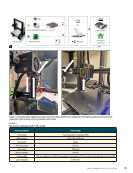
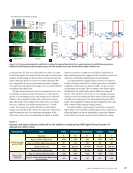
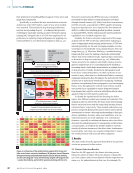
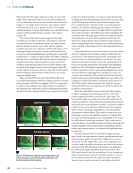
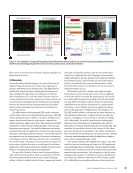
The system used in this study is shown in Figure 1a and
involved a testbed created using an FDM printer that inte-
grated data from AE monitoring (shown as 1) and optical mon-
itoring (shown as 2). To ensure defect correction, a feedback
control loop was required to be integrated into the system
(shown as the last two steps in Figure 1a). Additionally, an
offline trainable model was required to operate during the
manufacturing process, necessitating seamless integration
between the digital model and the sensor network. To test the
real-time system, demonstrations were required to showcase
the achieved data fusion and emphasize its advantages and
potential applicability to other contexts. There was also a
requirement to integrate visualization tools throughout the
process to enhance user understanding and decision-making.
Since the digital thread incorporated live data ingestion from
multiple sources, a robust data-handling methodology was
required to avoid large data files being stored, which would
bottleneck the system workflow. This comprehensive system
design aimed to enhance the efficiency and accuracy of AM
processes. Specific technical details for the system in Figure 1a
are provided in more depth in the following sections. AE
and optical sensing were prioritized over alternatives such
as infrared thermography because (1) AE responds on the
sub-millisecond timescales of extrusion-related transients and
is sensitive to subsurface events that thermal imaging cannot
resolve [10, 11, 59], and (2) RGB imaging is the most cost-effective
modality for direct, layer-resolved surface inspection.
Thermography remains a valuable complementary modality
and could be added through the deep ensemble fusion (DEF)
model’s modular feature-extraction layer in future work [6, 8].
2.1.2. SYSTEM ARCHITECTURE AND SPECIFICATIONS
The architecture shown in Figure 1 provides a comprehensive
overview of the digital thread for AM used in this investigation,
each step representing a distinct component of the closed-loop
system. The testbed for this study was a commercially available
3D printer selected for its flexibility in configurability due to its
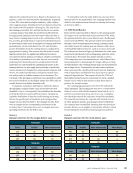
open framework design. The printer settings used are shown
in Table 1. For all results presented in this study, polylactic acid
(PLA) filament was used.
Pipelines 1 and 2 in Figure 1a illustrate the use of hetero-
geneous NDE techniques for monitoring the 3D printer. The
digital thread facilitated a seamless flow of information, from
sensors through a processing node to the relay of corrective
instructions via the printer controller back to the 3D printer.
Overall, Figure 1a is divided into three computing layers: edge,
fog, and cloud. The authors have used this type of decentral-
ized computing to reduce bottlenecks in real-time systems
[42–44]. Edge computing processes data close to its source,
reducing latency and bandwidth needs, while fog comput-
ing serves as an intermediary layer, optimizing data handling
between edge devices and the cloud. Lastly, cloud comput-
ing offers centralized, large-scale data processing and storage
capabilities.
The AE system shown in Figure 1 incorporated a piezoelec-
tric sensor and the commercially available AE system, chosen
for its capability to output raw waveforms, compatibility with
Python API, and built-in network capabilities. The particular
AE data acquisition (DAQ) system selected offers a maximum
sampling rate of 10 million samples per second (MSPS) and is
housed in a compact casing with 16-bit precision. This device
ME
|
DIGITALTHREAD
34
M AT E R I A L S E V A L U AT I O N • J U LY 2 0 2 6
scope, to gather comprehensive process data [8]. Despite this
diverse data acquisition approach, the absence of an integrated
closed-loop feedback mechanism in their system highlights
a related limitation, which underscores the need for further
research on the integration of heterogeneous sensor data with
real-time, adaptive feedback systems.
This study aims, therefore, to address the reported gaps in
related digital twin system development through (1) building
a digital thread that incorporates diverse sensors for real-
time monitoring, and (2) developing a deep learning archi-
tecture specifically designed for multimodal input leveraging
data fusion. As a test case for heterogeneous sensing, both
time-series (AE) and image-based datasets were leveraged to
classify the defect. Deep learning could process both multi-
modal heterogeneous data, enabling real-time defect detection
and correction. Furthermore, to test the model’s robustness
and flexibility, both single-defect and multi-defect cases were
investigated. The integration of this advanced deep learning
with the digital thread not only facilitates immediate detec-
tion of build issues but also allows for the implementation of a
closed-loop approach, which is an integral part of a digital twin
system.
In contrast to prior AE-based AM monitoring works that use
a single sensing modality and operate offline on extracted hit
features [1, 10, 11, 14, 59, 60], and to vision-based defect-detection
studies that classify still images post-print using CNNs [15, 18,
23–25], the present work makes three combined contributions:
(1) a heterogeneous, time-series and image deep-fusion model
trained with an entropy-regularized loss that handles raw
waveforms and frames jointly (2) demonstration of in-line,
real-time defect correction through a closed-loop digital
thread and (3) a modular edge-fog-cloud architecture in which
the trained model is pluggable and the sensing stack is exten-
sible. This combination of multimodal fusion with real-time
correction has, to the authors’ knowledge, not been reported
for FDM polymer AM.
2. Methods and Approach
The overall technical approach for this research, as well as
background and explanations for the various methods used,
are described in this section.
2.1. Digital Thread
This section describes the first step in our overall approach,
which consists of the method used to create a digital thread for
the components of the FDM printer setup.
2.1.1. SYSTEM REQUIREMENTS
The system used in this study is shown in Figure 1a and
involved a testbed created using an FDM printer that inte-
grated data from AE monitoring (shown as 1) and optical mon-
itoring (shown as 2). To ensure defect correction, a feedback
control loop was required to be integrated into the system
(shown as the last two steps in Figure 1a). Additionally, an
offline trainable model was required to operate during the
manufacturing process, necessitating seamless integration
between the digital model and the sensor network. To test the
real-time system, demonstrations were required to showcase
the achieved data fusion and emphasize its advantages and
potential applicability to other contexts. There was also a
requirement to integrate visualization tools throughout the
process to enhance user understanding and decision-making.
Since the digital thread incorporated live data ingestion from
multiple sources, a robust data-handling methodology was
required to avoid large data files being stored, which would
bottleneck the system workflow. This comprehensive system
design aimed to enhance the efficiency and accuracy of AM
processes. Specific technical details for the system in Figure 1a
are provided in more depth in the following sections. AE
and optical sensing were prioritized over alternatives such
as infrared thermography because (1) AE responds on the
sub-millisecond timescales of extrusion-related transients and
is sensitive to subsurface events that thermal imaging cannot
resolve [10, 11, 59], and (2) RGB imaging is the most cost-effective
modality for direct, layer-resolved surface inspection.
Thermography remains a valuable complementary modality
and could be added through the deep ensemble fusion (DEF)
model’s modular feature-extraction layer in future work [6, 8].
2.1.2. SYSTEM ARCHITECTURE AND SPECIFICATIONS
The architecture shown in Figure 1 provides a comprehensive
overview of the digital thread for AM used in this investigation,
each step representing a distinct component of the closed-loop
system. The testbed for this study was a commercially available
3D printer selected for its flexibility in configurability due to its
open framework design. The printer settings used are shown
in Table 1. For all results presented in this study, polylactic acid
(PLA) filament was used.
Pipelines 1 and 2 in Figure 1a illustrate the use of hetero-
geneous NDE techniques for monitoring the 3D printer. The
digital thread facilitated a seamless flow of information, from
sensors through a processing node to the relay of corrective
instructions via the printer controller back to the 3D printer.
Overall, Figure 1a is divided into three computing layers: edge,
fog, and cloud. The authors have used this type of decentral-
ized computing to reduce bottlenecks in real-time systems
[42–44]. Edge computing processes data close to its source,
reducing latency and bandwidth needs, while fog comput-
ing serves as an intermediary layer, optimizing data handling
between edge devices and the cloud. Lastly, cloud comput-
ing offers centralized, large-scale data processing and storage
capabilities.
The AE system shown in Figure 1 incorporated a piezoelec-
tric sensor and the commercially available AE system, chosen
for its capability to output raw waveforms, compatibility with
Python API, and built-in network capabilities. The particular
AE data acquisition (DAQ) system selected offers a maximum
sampling rate of 10 million samples per second (MSPS) and is
housed in a compact casing with 16-bit precision. This device
ME
|
DIGITALTHREAD
34
M AT E R I A L S E V A L U AT I O N • J U LY 2 0 2 6