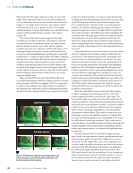
its potential to revolutionize industrial practices in AM. These
advancements also have broader impacts on manufactur-
ing efficiency, cost-effectiveness, and product quality. The
improved monitoring and control enabled by data-driven
models such as the DEF led to a reduction in defects and
waste, resulting in significant cost savings and enhanced oper-
ational efficiency. In a domain where precision and reliability
are crucial, consistent quality maintenance is essential. This
change aligns with the objectives of digital thread technology,
heralding a new standard for intelligent, interconnected manu-
facturing systems.
The extension of this work assesses the model’s robust-
ness by evaluating its performance on layers that were not
included in the training set. This assessment aimed to deter-
mine whether the model was overfitting to the training layer
or capable of generalizing to multiple layers. The methodology
used for this assessment involved utilizing unseen layers for
validation. These layers were selected to span a range of condi-
tions similar to those encountered in the operational environ-
ment. This approach was designed to test the model’s ability
to adapt to new data that it had not been explicitly trained on,
thereby providing a robust evaluation of its generalizability. To
quantify the model’s performance on these new layers, metrics
such as accuracy and recall were used. Accuracy measured the
proportion of total correct predictions (both true positives and
true negatives) among all predictions, while recall focused on
the proportion of actual positives correctly identified by the
model. The analysis phase focused on the rates of false posi-
tives and false negatives. The goal was to achieve high sensitiv-
ity (low false-negative rate) and high specificity (low false-pos-
itive rate). These metrics were crucial for understanding the
model’s ability to accurately identify defects (sensitivity) while
avoiding misclassifying nondefects as defects (specificity).
The intent of this study was to determine the model’s
ability to generalize its learning to layers beyond those it was
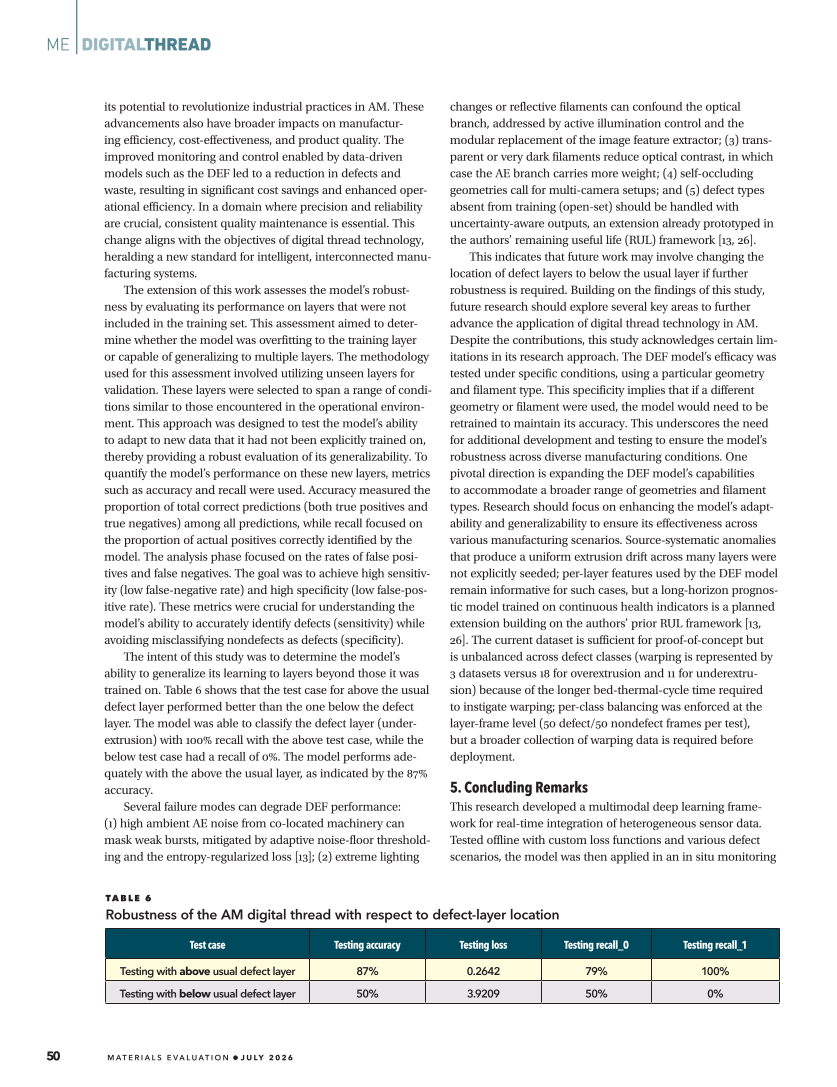
trained on. Table 6 shows that the test case for above the usual
defect layer performed better than the one below the defect
layer. The model was able to classify the defect layer (under-
extrusion) with 100% recall with the above test case, while the
below test case had a recall of 0%. The model performs ade-
quately with the above the usual layer, as indicated by the 87%
accuracy.
Several failure modes can degrade DEF performance:
(1) high ambient AE noise from co-located machinery can
mask weak bursts, mitigated by adaptive noise-floor threshold-
ing and the entropy-regularized loss [13] (2) extreme lighting
changes or reflective filaments can confound the optical
branch, addressed by active illumination control and the
modular replacement of the image feature extractor (3) trans-
parent or very dark filaments reduce optical contrast, in which
case the AE branch carries more weight (4) self-occluding
geometries call for multi-camera setups and (5) defect types
absent from training (open-set) should be handled with
uncertainty-aware outputs, an extension already prototyped in
the authors’ remaining useful life (RUL) framework [13, 26].
This indicates that future work may involve changing the
location of defect layers to below the usual layer if further
robustness is required. Building on the findings of this study,
future research should explore several key areas to further
advance the application of digital thread technology in AM.
Despite the contributions, this study acknowledges certain lim-
itations in its research approach. The DEF model’s efficacy was
tested under specific conditions, using a particular geometry
and filament type. This specificity implies that if a different
geometry or filament were used, the model would need to be
retrained to maintain its accuracy. This underscores the need
for additional development and testing to ensure the model’s
robustness across diverse manufacturing conditions. One
pivotal direction is expanding the DEF model’s capabilities
to accommodate a broader range of geometries and filament
types. Research should focus on enhancing the model’s adapt-
ability and generalizability to ensure its effectiveness across
various manufacturing scenarios. Source-systematic anomalies
that produce a uniform extrusion drift across many layers were
not explicitly seeded per-layer features used by the DEF model
remain informative for such cases, but a long-horizon prognos-
tic model trained on continuous health indicators is a planned
extension building on the authors’ prior RUL framework [13,
26]. The current dataset is sufficient for proof-of-concept but
is unbalanced across defect classes (warping is represented by
3 datasets versus 18 for overextrusion and 11 for underextru-
sion) because of the longer bed-thermal-cycle time required
to instigate warping per-class balancing was enforced at the
layer-frame level (50 defect/50 nondefect frames per test),
but a broader collection of warping data is required before
deployment.
5. Concluding Remarks
This research developed a multimodal deep learning frame-
work for real-time integration of heterogeneous sensor data.
Tested offline with custom loss functions and various defect
scenarios, the model was then applied in an in situ monitoring
ME
|
DIGITALTHREAD
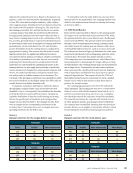
TA B L E 6
Robustness of the AM digital thread with respect to defect-layer location
Test case Testing accuracy Testing loss Testing recall_0 Testing recall_1
Testing with above usual defect layer 87% 0.2642 79% 100%
Testing with below usual defect layer 50% 3.9209 50% 0%
50
M AT E R I A L S E V A L U AT I O N • J U LY 2 0 2 6
advancements also have broader impacts on manufactur-
ing efficiency, cost-effectiveness, and product quality. The
improved monitoring and control enabled by data-driven
models such as the DEF led to a reduction in defects and
waste, resulting in significant cost savings and enhanced oper-
ational efficiency. In a domain where precision and reliability
are crucial, consistent quality maintenance is essential. This
change aligns with the objectives of digital thread technology,
heralding a new standard for intelligent, interconnected manu-
facturing systems.
The extension of this work assesses the model’s robust-
ness by evaluating its performance on layers that were not
included in the training set. This assessment aimed to deter-
mine whether the model was overfitting to the training layer
or capable of generalizing to multiple layers. The methodology
used for this assessment involved utilizing unseen layers for
validation. These layers were selected to span a range of condi-
tions similar to those encountered in the operational environ-
ment. This approach was designed to test the model’s ability
to adapt to new data that it had not been explicitly trained on,
thereby providing a robust evaluation of its generalizability. To
quantify the model’s performance on these new layers, metrics
such as accuracy and recall were used. Accuracy measured the
proportion of total correct predictions (both true positives and
true negatives) among all predictions, while recall focused on
the proportion of actual positives correctly identified by the
model. The analysis phase focused on the rates of false posi-
tives and false negatives. The goal was to achieve high sensitiv-
ity (low false-negative rate) and high specificity (low false-pos-
itive rate). These metrics were crucial for understanding the
model’s ability to accurately identify defects (sensitivity) while
avoiding misclassifying nondefects as defects (specificity).
The intent of this study was to determine the model’s
ability to generalize its learning to layers beyond those it was
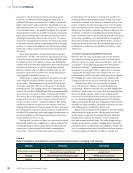
trained on. Table 6 shows that the test case for above the usual
defect layer performed better than the one below the defect
layer. The model was able to classify the defect layer (under-
extrusion) with 100% recall with the above test case, while the
below test case had a recall of 0%. The model performs ade-
quately with the above the usual layer, as indicated by the 87%
accuracy.
Several failure modes can degrade DEF performance:
(1) high ambient AE noise from co-located machinery can
mask weak bursts, mitigated by adaptive noise-floor threshold-
ing and the entropy-regularized loss [13] (2) extreme lighting
changes or reflective filaments can confound the optical
branch, addressed by active illumination control and the
modular replacement of the image feature extractor (3) trans-
parent or very dark filaments reduce optical contrast, in which
case the AE branch carries more weight (4) self-occluding
geometries call for multi-camera setups and (5) defect types
absent from training (open-set) should be handled with
uncertainty-aware outputs, an extension already prototyped in
the authors’ remaining useful life (RUL) framework [13, 26].
This indicates that future work may involve changing the
location of defect layers to below the usual layer if further
robustness is required. Building on the findings of this study,
future research should explore several key areas to further
advance the application of digital thread technology in AM.
Despite the contributions, this study acknowledges certain lim-
itations in its research approach. The DEF model’s efficacy was
tested under specific conditions, using a particular geometry
and filament type. This specificity implies that if a different
geometry or filament were used, the model would need to be
retrained to maintain its accuracy. This underscores the need
for additional development and testing to ensure the model’s
robustness across diverse manufacturing conditions. One
pivotal direction is expanding the DEF model’s capabilities
to accommodate a broader range of geometries and filament
types. Research should focus on enhancing the model’s adapt-
ability and generalizability to ensure its effectiveness across
various manufacturing scenarios. Source-systematic anomalies
that produce a uniform extrusion drift across many layers were
not explicitly seeded per-layer features used by the DEF model
remain informative for such cases, but a long-horizon prognos-
tic model trained on continuous health indicators is a planned
extension building on the authors’ prior RUL framework [13,
26]. The current dataset is sufficient for proof-of-concept but
is unbalanced across defect classes (warping is represented by
3 datasets versus 18 for overextrusion and 11 for underextru-
sion) because of the longer bed-thermal-cycle time required
to instigate warping per-class balancing was enforced at the
layer-frame level (50 defect/50 nondefect frames per test),
but a broader collection of warping data is required before
deployment.
5. Concluding Remarks
This research developed a multimodal deep learning frame-
work for real-time integration of heterogeneous sensor data.
Tested offline with custom loss functions and various defect
scenarios, the model was then applied in an in situ monitoring
ME
|
DIGITALTHREAD
TA B L E 6
Robustness of the AM digital thread with respect to defect-layer location
Test case Testing accuracy Testing loss Testing recall_0 Testing recall_1
Testing with above usual defect layer 87% 0.2642 79% 100%
Testing with below usual defect layer 50% 3.9209 50% 0%
50
M AT E R I A L S E V A L U AT I O N • J U LY 2 0 2 6