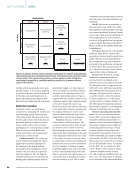
This is a type-III vulnerability: “Gradually Destructive.” The way to address this is: through technological resilience from the begin- ning—encouraging and funding research and development into technologies that can counter or mitigate the risks posed by other potentially harmful technolo- gies, developing methods for verifying AI behavior, and ensuring the long-term stability of AI systems. The challenge is: when compared to fossil fuels, the speed of change is three orders of magnitude faster, which is closer to nuclear energy. Should we treat it like human cloning? Human cloning is the process of creating a genetically identical copy of a human being. It is a highly controversial topic, both ethically and scientifically. It raises several difficult questions about the nature of human identity and the role of science in shaping human life. As a result, human cloning is currently illegal in many coun- tries around the world. In some respects, a combination of an AGI and a robot could be as useful or deadly as a cloned human if it gets misaligned with human values or acts autonomously in ways that could be detrimental to humanity. This is a Type-IV vulnerability: “Unforeseen Risks.” The way to address this is: through raising awareness about AI safety and its implications among the public, poli- cymakers, and industry leaders, while promoting education and training in AI and related disciplines to foster a knowledgeable and responsible workforce. This vulnerability supports the recent effort to put a hold on AI development. The challenge is: once again how to enforce, given the low barrier to entry. In fact, if it gets into the dark web, it could be even worse. (Maybe it already is.) However, on a positive note, human cloning is one of our success stories where we successfully vanquished Moloch and were able to ban cloning throughout the world. Should we treat it like humanity’s child? Every analogy with technological innova- tion seems to provide some learning and poses a different set of challenges due to the speed and ease of AI development. We may have to combine all of them yet have unforeseen risks. How about a look at nature? When we raise a child, we instill certain values, morals, and discipline. If we do a good job, the children will take care of us when they become strong and we get old. AI could be like that. When it gets stronger and smarter than humans, it will treat us based on how we groom it. Once again, the speed and spread are unbounded. This requires humanity to behave like a single parent, collaborating and self-regulating at our home, called earth. The challenge is twofold: First, the bias seeps into this child’s cultural fabric with millions of teachers and parents trying to impose their world experience. The child can remember vast amounts of history (generationally collected), unlike human experience, which will further strengthen the bias. There is no known way in the current models to prune, like nature does with the cycle of life and death. This child with rapid growth characteristics will become an immortal thing, with another round of unforeseen risk. Second, the Moloch effect forces driving personal gains versus restraint for greater good, even knowing well that when everyone pursues it, no one wins. It’s the famous prisoner’s dilemma playing out at the civilizational scale, with the Nash equilibrium being catastrophic. In the meantime, should we protect our family? One might think that we should put a solid bar on the doors while the horse is still in, but we don’t know how many barns are breeding new horses, as the barrier to entry is so low. Perhaps the way to look at it is “gated communities” or “passport control” or a “cyber-firewall,” where you control what gets in your own protected zone for your safety and security. As ASNT, we can consider how far do we allow AI to become a part of the inspection ecosystem that helps us assure quality and safety of critical infra- structure. This professional society, with its body of knowledge, is quite capable of regulating what becomes a tool, method, process, or guidance. Now is the time to pay attention to AI and argue on how to nurture this baby. Call to Action “Vulnerable World Hypothesis” is a topic that deserves our undivided attention across various sectors and communities, now. Initiating collaborations between industry, academia, and policymakers to address AI safety concerns and enhance our regulatory frameworks will help in developing a responsible approach to AI innovations. Not only should ASNT conferences offer a platform for these discussions, but other organizations and events should also prioritize AI safety and its implications. This resonates with ASNT’s purpose: Creating a Safer World!® AUTHOR’S NOTE ON USE OF AI FOR THIS ARTICLE AI was not used to create this perspective or the content. Once finalized, the authors used GPT-4 to review the article using these prompts. System prompt: “You are the editor of a reputed industry magazine. There is special technical issue coming up, focusing on AI.” User prompt: “Evaluate the following outlook article as the chief editor of the magazine.” The feedback was overwhelmingly positive with suggestions to (a) modify the title, (b) incorporate examples of AI, (c) expand the call to action, and (d) consider adding a conclusion section. AI also suggested revised sentences. We incorporated the first three suggestions, including the current title, as suggested by GPT-4. The outlook articles are meant to be forward looking with an open-ended perspective, without drawing a conclusion. So, we left that one out. Once again, this demon- strates the need and power of collabo- rating with AI. A word of caution: We were able to use AI to review this opinion article. However, we are not sure that AI can be used to review a research paper discussing break- throughs in science for journal publications. J U L Y 2 0 2 3 • M A T E R I A L S E V A L U A T I O N 19 2307 ME July dup.indd 19 6/19/23 3:41 PM

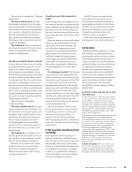
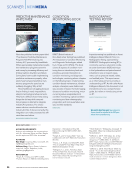
ACKNOWLEDGMENTS Authors acknowledge the conversations with Dr. Johannes Vrana and Ravi Raghu on this topic and GPT-4 for its review. AUTHORS Ripi Singh: Inspiring Next, Cromwell, CT ripi@inspiringnext.com Vaibhav Garg: Genus Power Infrastruc- tures Ltd., Jaipur, Rajasthan, India vaibhav.garg@genus.in REFERENCES 1Singh, R., V. Garg, and GPT-3. 2021. “Human Factors in NDE 4.0 Development Decisions.” J Nondestruct Eval 40. https://doi.org/10.1007/s10921-021- 00808-3. 2Singh, R., and V. Garg. 2022. “Can we Collaborate with AI?” Materials Evaluation 80 (10). 3 Vrana, J., R. Singh, and ChatGPT. 2023. “This is ChatGPT How May I Help You?” Materials Evaluation 81 (2). 4Nahigian, T.J., and L. Fonseca. 2022. “If You’re Not First, You’re Last: How AI Becomes Mission Critical.” 17 November 2022. https://base10.vc/post/genera- tive-ai-mission-critical/. 5 “Nick Bostrom.” Wikipedia. Accessed 10 May 2023. https://en.wikipedia.org/wiki/ Nick_Bostrom. 6Clifford, C. 2019. “Bill Gates: A.I. is like nuclear energy — ‘both promising and dangerous.’” CNBC Make It. 26 March 2019. https://www.cnbc.com/2019/03/26/ bill-gates-artificial-intelligence-both-prom ising-and-dangerous.html. 7 Clifford, C. 2018. “Elon Musk: ‘Mark my words — A.I. is far more dangerous than nukes.’” CNBC Make It. 14 March 2018. https://www.cnbc.com/2018/03/13/elon- musk-at-sxsw-a-i-is-more-dangerous-than- nuclear-weapons.html. PREDICTIVE MAINTENANCE WHITE PAPER Noria has published a white paper titled “Five Reasons Predictive Maintenance Programs Fail When Evolving into Industry 4.0,” sponsored by AssetWatch. When appropriately implemented, predic- tive maintenance programs save time and money by increasing efficiency and limiting machine downtime and failure. Some plants have trouble implementing predictive maintenance properly other plants have had good predictive main- tenance programs for years but are suddenly struggling. Why is this? These facilities are struggling because they’re finding it nearly impossible to adapt to technological advancements. They face a difficult choice: keep doing things the old way while competi- tors progress or attempt to integrate Industry 4.0 practices. The choice seems obvious—we should evolve into Industry 4.0. But, if done incorrectly, this integration can make processes less effi- cient than ever before. MACHINERYLUBRICATION.COM CONDITION MONITORING BOOK BINDT (British Institute of Non-Destructive Testing) has published An Introduction to Condition Monitoring and Diagnostic Technologies, edited by A. Hope and D. Whittle. This book covers all aspects of condition moni- toring from an introductory level and provides a general introduction to condition monitoring and diagnostic technologies, containing eleven chapters on the following topics: implementing condition-based maintenance vibration analysis oil analysis wear debris anal- ysis acoustic emission thermal imaging ultrasound condition monitoring motor current signature analysis/electrical condition monitoring optical condition monitoring and laser shearography prognostics and root cause failure anal- ysis and ISO standards. BINDT.ORG RADIOGRAPHIC TESTING REPORT Inspectioneering has published an Asset Intelligence Report titled A Primer on Radiographic Testing, sponsored by DÜRR NDT. Radiographic testing (RT) is commonly used as a volumetric nonde- structive examination (NDE) technique in the hydrocarbon and petrochemical industries to view or inspect equip- ment, such as pressure vessels, valves, and welded joints. This report serves as an informative primer to provide an understanding of RT. As with other Asset Intelligence Reports, this document is not intended to serve as a comprehensive guide, but rather an introductory primer on RT. INSPECTIONEERING.COM SCANNER |NEWMEDIA NDE OUTLOOK FROM P. 19 We want to hear from you! News releases for Scanner should be submitted to the ASNT press release inbox at press@asnt.org. 20 M A T E R I A L S E V A L U A T I O N • J U L Y 2 0 2 3 2307 ME July dup.indd 20 6/19/23 3:41 PM
ASNT grants non-exclusive, non-transferable license of this material to  .
All rights reserved. © ASNT 2026. To report unauthorized use, contact: customersupport@asnt.org