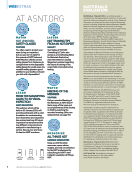
Classroom Training
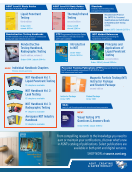
Our best-selling Personnel Training Publications
(PTP) includes two series: Classroom Training
Books (CTB) and the Programmed Instruction
(PI) series. The CTB is designed to be instructor-
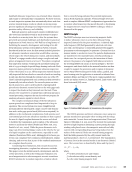
led and includes customizable PowerPoint®
templates and quizzes with answer keys in the
Instructor Package. The PI series (which includes the award-winning
Introduction to NDT) is intended for self-study and can be used to
prepare for ASNT certification exams as well.
NDT Handbooks
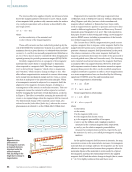
Currently in its fourth edition, ASNT’s
Nondestructive Testing Handbook Series is
considered the bible of the NDT industry, and
for a good reason! Each 500+ page volume
serves up a deep dive into the history, theory,
fundamentals, techniques, and applications
of the method, developed by hundreds of expert contributors
worldwide. Coming soon: Vol. 4: Infrared and Thermal Testing
in 2024!
Study Guides
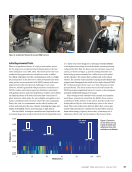
Whether you’re looking to “level up” to NDT
Level II or III, ASNT has you covered with study
materials in every method, from acoustic
emission to visual testing and everything in
between. Our Level II and Level III study guides
and Questions &Answers series are the perfect
companions for studying for ASNT NDT and IRRSP
certification exams.
Personnel Qualification and Standards
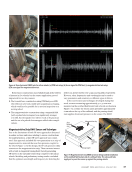
From Recommended Practice No. SNT-TC-1A
to our newest standard, ASNT CP-9712, here
you’ll find all the latest personnel qualification
standards, as well as supporting documentation
such as audit checklists, helpful guides,
interpretations, and model written practices.
And More!
Scan the QR code to browse more books,
including industry-specific handbooks, method
compendiums, quick method reference cards,
translated materials, flipbooks, and handy tools
such as film scales, color charts, and reading
cards.
Explore ASNT Publications
At The Source, you can also read and download
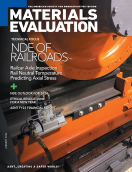
current and past issues of Materials Evaluation,
search our archive of Materials Evaluation dating
back to 2016, conduct a literature search and
save individual research papers from ASNT
journals and conference proceedings to your
personal library, and subscribe and access digital issues of Research
in Nondestructive Evaluation. Go to source.asnt.org and start
exploring today!
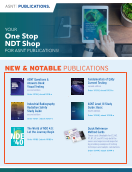
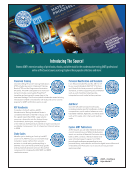
Introducing The Source!
Browse ASNT’s extensive catalog of print books, ebooks, and other tools for the nondestructive testing (NDT) professional
online at The Source (source.asnt.org). Explore these popular collections and more:
ASNT… Creating a
Safer World! ®
2401 ME January.indd 111 12/20/23 8:01 AM
Our best-selling Personnel Training Publications
(PTP) includes two series: Classroom Training
Books (CTB) and the Programmed Instruction
(PI) series. The CTB is designed to be instructor-
led and includes customizable PowerPoint®
templates and quizzes with answer keys in the
Instructor Package. The PI series (which includes the award-winning
Introduction to NDT) is intended for self-study and can be used to
prepare for ASNT certification exams as well.
NDT Handbooks
Currently in its fourth edition, ASNT’s
Nondestructive Testing Handbook Series is
considered the bible of the NDT industry, and
for a good reason! Each 500+ page volume
serves up a deep dive into the history, theory,
fundamentals, techniques, and applications
of the method, developed by hundreds of expert contributors
worldwide. Coming soon: Vol. 4: Infrared and Thermal Testing
in 2024!
Study Guides
Whether you’re looking to “level up” to NDT
Level II or III, ASNT has you covered with study
materials in every method, from acoustic
emission to visual testing and everything in
between. Our Level II and Level III study guides
and Questions &Answers series are the perfect
companions for studying for ASNT NDT and IRRSP
certification exams.
Personnel Qualification and Standards
From Recommended Practice No. SNT-TC-1A
to our newest standard, ASNT CP-9712, here
you’ll find all the latest personnel qualification
standards, as well as supporting documentation
such as audit checklists, helpful guides,
interpretations, and model written practices.
And More!
Scan the QR code to browse more books,
including industry-specific handbooks, method
compendiums, quick method reference cards,
translated materials, flipbooks, and handy tools
such as film scales, color charts, and reading
cards.
Explore ASNT Publications
At The Source, you can also read and download
current and past issues of Materials Evaluation,
search our archive of Materials Evaluation dating
back to 2016, conduct a literature search and
save individual research papers from ASNT
journals and conference proceedings to your
personal library, and subscribe and access digital issues of Research
in Nondestructive Evaluation. Go to source.asnt.org and start
exploring today!
Introducing The Source!
Browse ASNT’s extensive catalog of print books, ebooks, and other tools for the nondestructive testing (NDT) professional
online at The Source (source.asnt.org). Explore these popular collections and more:
ASNT… Creating a
Safer World! ®
2401 ME January.indd 111 12/20/23 8:01 AM