grain size, the model learns an average
representation and is trained to assess
the microstructures more confidently.
“In this case, neither exceptionally clean
data nor large volumes of data are
required for training,” said Dr. Ali Riza
Durmaz, a scientist at Fraunhofer IWM. A
web application developed by Durmaz
and his team visualizes the results. In the
process, explainable artificial intelligence
(AI) approaches provide greater trans-
parency in the model’s decision-making
process.
The deep learning model is used
to classify microstructure images into
different grain size ranges. “The rolling
bearings must meet the microstruc-
tural requirements, meaning that the
grains must not exceed a certain size.
The smaller the grain size, the greater
the strength of the steel,” explained
Durmaz. The higher the number of small
grains, the greater the density of grain
boundaries, that is, the contact surfaces
between the grains. A high density of
grain boundaries prevents plastic defor-
mation of the component even under
very high loads. Even if the material was
slightly but permanently deformed, the
bearing would no longer run smoothly,
and the frictional properties would
be impaired, as would the energy
efficiency.
In addition to grain size, the deep
learning model is also able to distin-
guish between martensitic and bainitic
states as well as between different steel
alloys (variants of the 100Cr6 and C56
families). The model is currently being
implemented in the industrial setting of
Schaeffler Technologies. This provides
the industry partner with a system that
can be used in industrial processes to
identify defects in rolling bearings in
an AI-based and automated manner
with previously unattainable reproduc-
ibility. The workflow, which involves
adapting the AI model to specific mate-
rials, linking it to image processing, and
embedding the model in user-friendly
interfaces, can be easily transferred to
other areas of application. “Our deep
learning model paves the way for
AI-based and automated qualification,
for example, in any situation where
safety-critical components are subjected
to high and cyclic loads, such as electric
drive components or the B-pillar in vehi-
cles,” Durmaz concluded.
L.B. FOSTER HOSTS
CONGRESSMAN AT
OHIO FACILITY
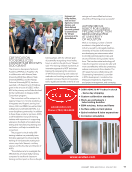
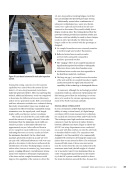
L.B. Foster Co. hosted US House of
Representatives Member Mike Carey
(OH-15) for a tour of the company’s
Dublin, Ohio, facility. L.B. Foster provides
rail, construction, and energy markets
with innovative solutions to build and
maintain their critical infrastructure.
Carey currently serves as a member of
the House Ways and Means Committee,
as well as on the Ways and Means
Subcommittees on Work and Welfare,
and Social Security. Additionally, Carey
serves on the Committee on House
Administration.
“It was a great experience hosting Rep.
Carey and his staff at our facility. Being
able to showcase our technologies and
products to show how we strive to make
the rail industry safer is paramount to
our mission as a company,” said William
Treacy, Executive Vice President and
Chief Growth Officer at L.B. Foster.
“Hosting the Congressman at our Dublin
facility was a terrific time it was especially
great to showcase how the WILD IV tech-
nology is providing tangible safety bene-
fits to our customers,” added Michael
O’Connell, General Manager – Salient for
L.B. Foster Co.
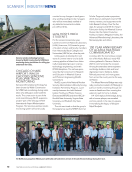
The Dublin, Ohio, facility employs over
20 highly skilled workers to oversee the
manufacturing and final assembly of
electronics, software development and
testing, electronics hardware develop-
ment and testing, mechanical design,
electronics field service, and machining
of mechanical components. The primary
products manufactured on-site include
L.B. Foster’s wheel impact load detectors
(WILDs) and friction management (FM)
control boxes.
L.B. Foster’s WILDs are used to help
the North American railroad industry
identify unsafe conditions related to
railcar wheels. Unsafe conditions that
are detected and can lead to a train
derailment include overloaded and
imbalanced cars, high wheel impacts
to the rail, and hunting trucks. With the
data collected by the WILDs, railroads
can prioritize maintenance based on
the type of defect. This has resulted in a
major reduction in rail and wheel failures
and derailments since their introduction,
which has ultimately led to greater safety
gains in the rail industry overall.
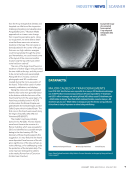
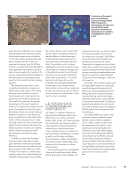
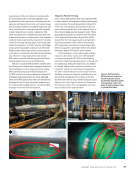
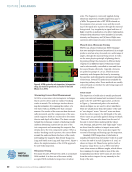
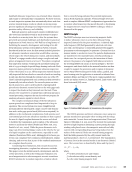
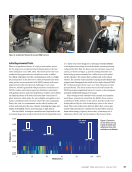
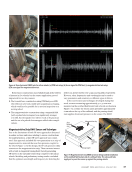
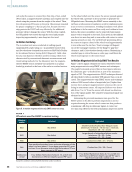
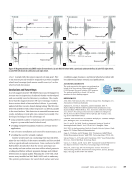
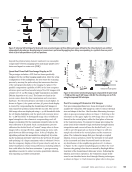
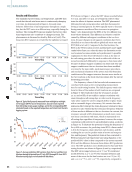
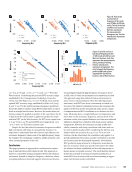
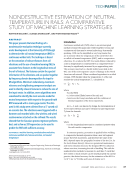
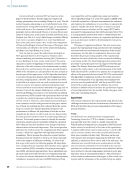
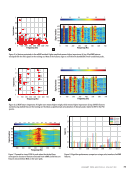
Actual: B7 Predicted B7
30 μm
Visualization of the model’s
grain size qualification:
(a) using an example bainitic
100Cr6 image with a
heterogeneous microstructure
(b) areas that the model
gives close consideration to,
specifically coarse crystallites,
are highlighted in red and
yellow.
J A N U A R Y 2 0 2 4 • M A T E R I A L S E V A L U A T I O N 13
2401 ME January.indd 13 12/20/23 8:01 AM
©
FRAUNHOFER
IWM
representation and is trained to assess
the microstructures more confidently.
“In this case, neither exceptionally clean
data nor large volumes of data are
required for training,” said Dr. Ali Riza
Durmaz, a scientist at Fraunhofer IWM. A
web application developed by Durmaz
and his team visualizes the results. In the
process, explainable artificial intelligence
(AI) approaches provide greater trans-
parency in the model’s decision-making
process.
The deep learning model is used
to classify microstructure images into
different grain size ranges. “The rolling
bearings must meet the microstruc-
tural requirements, meaning that the
grains must not exceed a certain size.
The smaller the grain size, the greater
the strength of the steel,” explained
Durmaz. The higher the number of small
grains, the greater the density of grain
boundaries, that is, the contact surfaces
between the grains. A high density of
grain boundaries prevents plastic defor-
mation of the component even under
very high loads. Even if the material was
slightly but permanently deformed, the
bearing would no longer run smoothly,
and the frictional properties would
be impaired, as would the energy
efficiency.
In addition to grain size, the deep
learning model is also able to distin-
guish between martensitic and bainitic
states as well as between different steel
alloys (variants of the 100Cr6 and C56
families). The model is currently being
implemented in the industrial setting of
Schaeffler Technologies. This provides
the industry partner with a system that
can be used in industrial processes to
identify defects in rolling bearings in
an AI-based and automated manner
with previously unattainable reproduc-
ibility. The workflow, which involves
adapting the AI model to specific mate-
rials, linking it to image processing, and
embedding the model in user-friendly
interfaces, can be easily transferred to
other areas of application. “Our deep
learning model paves the way for
AI-based and automated qualification,
for example, in any situation where
safety-critical components are subjected
to high and cyclic loads, such as electric
drive components or the B-pillar in vehi-
cles,” Durmaz concluded.
L.B. FOSTER HOSTS
CONGRESSMAN AT
OHIO FACILITY
L.B. Foster Co. hosted US House of
Representatives Member Mike Carey
(OH-15) for a tour of the company’s
Dublin, Ohio, facility. L.B. Foster provides
rail, construction, and energy markets
with innovative solutions to build and
maintain their critical infrastructure.
Carey currently serves as a member of
the House Ways and Means Committee,
as well as on the Ways and Means
Subcommittees on Work and Welfare,
and Social Security. Additionally, Carey
serves on the Committee on House
Administration.
“It was a great experience hosting Rep.
Carey and his staff at our facility. Being
able to showcase our technologies and
products to show how we strive to make
the rail industry safer is paramount to
our mission as a company,” said William
Treacy, Executive Vice President and
Chief Growth Officer at L.B. Foster.
“Hosting the Congressman at our Dublin
facility was a terrific time it was especially
great to showcase how the WILD IV tech-
nology is providing tangible safety bene-
fits to our customers,” added Michael
O’Connell, General Manager – Salient for
L.B. Foster Co.
The Dublin, Ohio, facility employs over
20 highly skilled workers to oversee the
manufacturing and final assembly of
electronics, software development and
testing, electronics hardware develop-
ment and testing, mechanical design,
electronics field service, and machining
of mechanical components. The primary
products manufactured on-site include
L.B. Foster’s wheel impact load detectors
(WILDs) and friction management (FM)
control boxes.
L.B. Foster’s WILDs are used to help
the North American railroad industry
identify unsafe conditions related to
railcar wheels. Unsafe conditions that
are detected and can lead to a train
derailment include overloaded and
imbalanced cars, high wheel impacts
to the rail, and hunting trucks. With the
data collected by the WILDs, railroads
can prioritize maintenance based on
the type of defect. This has resulted in a
major reduction in rail and wheel failures
and derailments since their introduction,
which has ultimately led to greater safety
gains in the rail industry overall.
Actual: B7 Predicted B7
30 μm
Visualization of the model’s
grain size qualification:
(a) using an example bainitic
100Cr6 image with a
heterogeneous microstructure
(b) areas that the model
gives close consideration to,
specifically coarse crystallites,
are highlighted in red and
yellow.
J A N U A R Y 2 0 2 4 • M A T E R I A L S E V A L U A T I O N 13
2401 ME January.indd 13 12/20/23 8:01 AM
©
FRAUNHOFER
IWM