than the X-ray energies that dentists and
hospitals use. We found the inspection
challenge interesting and valuable when
Amgueddfa Cymru – Museum Wales
approached us—it was a nice change
from inspecting aeroplane parts. Using
our equipment, we were able to deter-
mine that there were coins at various
locations in the bag. The coins were so
densely packed in the center of the pot
that even our high-radiation energies
could not penetrate through the entire
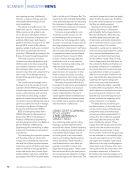
pot. Nevertheless, we could reveal some
of the layout of the coins and confirm
it wasn’t only the top of the pot where
coins had been cached.”
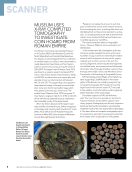
The scan of the larger hoard found no
evidence of further bags in the pot below
the two visible at the top, and this proved
to be correct as the pot was emptied.
Along with the CT scans, a series of
photographs and 3D models were
created during the micro-excavation of
the hoard. These will be used in further
research, publications, and displays.
Taking the coins out in layers revealed
that the older coins were generally closer
to the bottom while the last coins of the
hoard were found in the upper layers. The
hoard was probably buried in AD 270
at a time when the Roman Empire was
split between the Central Empire and the
Gallic Empire, which included Britain. The
final coins in this hoard were issued during
the reigns of Quintillus (AD 270) and
Victorinus (AD 269–271).
The smaller hoard was probably
buried in the AD 220s. The two hoards
were found close to the remains of a
Roman building, which was excavated in
2013 and identified as a possible temple
dating to the third century AD. The
discovery of these hoards supports this
suggestion. It is very likely that the hoards
were deposited here because of the reli-
gious significance of the site, perhaps as
votive offerings, or for safekeeping under
the protection of the temple’s deity. The
coins may have belonged to soldiers
at the nearby Roman fort of Canovium
(located near Caerhun).
INDUSTRYNEWS
|
SCANNER
DATAFACTS |
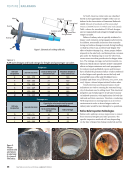
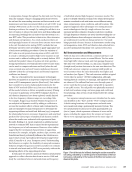
MAJOR CAUSES OF TRAIN DERAILMENTS
From 2018–2022, detail fractures were responsible for as many as 222 derailments and damage
cost of US$79 million. Transverse/compound fissures (TF) were responsible for 77 derailments
and US$21 million in damage, and vertical split head (VSH) defects caused 83 derailments and
~US$20 million in damage. These three defects combined, therefore, caused as many as ~80
derailments per year and ~US$25 million in damage per year. The detection and quantification
of these flaws is clearly of importance to railroad safety and efficiency.
Source: Federal Railroad Association’s Safety Statistics. For more information, see the paper by Huang and Lanza di
Scalea on page 51.
Transverse/compound fissures Vertical split head defects Detail fractures
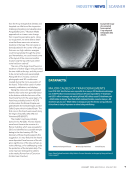
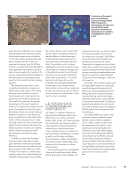
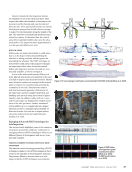
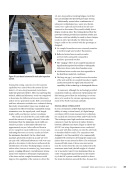
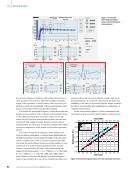
Example 2D image
slice extracted
from acquired
X-ray computed
tomography data
volume.
J A N U A R Y 2 0 2 4 • M A T E R I A L S E V A L U A T I O N 9
2401 ME January.indd 9 12/20/23 8:01 AM
hospitals use. We found the inspection
challenge interesting and valuable when
Amgueddfa Cymru – Museum Wales
approached us—it was a nice change
from inspecting aeroplane parts. Using
our equipment, we were able to deter-
mine that there were coins at various
locations in the bag. The coins were so
densely packed in the center of the pot
that even our high-radiation energies
could not penetrate through the entire
pot. Nevertheless, we could reveal some
of the layout of the coins and confirm
it wasn’t only the top of the pot where
coins had been cached.”
The scan of the larger hoard found no
evidence of further bags in the pot below
the two visible at the top, and this proved
to be correct as the pot was emptied.
Along with the CT scans, a series of
photographs and 3D models were
created during the micro-excavation of
the hoard. These will be used in further
research, publications, and displays.
Taking the coins out in layers revealed
that the older coins were generally closer
to the bottom while the last coins of the
hoard were found in the upper layers. The
hoard was probably buried in AD 270
at a time when the Roman Empire was
split between the Central Empire and the
Gallic Empire, which included Britain. The
final coins in this hoard were issued during
the reigns of Quintillus (AD 270) and
Victorinus (AD 269–271).
The smaller hoard was probably
buried in the AD 220s. The two hoards
were found close to the remains of a
Roman building, which was excavated in
2013 and identified as a possible temple
dating to the third century AD. The
discovery of these hoards supports this
suggestion. It is very likely that the hoards
were deposited here because of the reli-
gious significance of the site, perhaps as
votive offerings, or for safekeeping under
the protection of the temple’s deity. The
coins may have belonged to soldiers
at the nearby Roman fort of Canovium
(located near Caerhun).
INDUSTRYNEWS
|
SCANNER
DATAFACTS |
MAJOR CAUSES OF TRAIN DERAILMENTS
From 2018–2022, detail fractures were responsible for as many as 222 derailments and damage
cost of US$79 million. Transverse/compound fissures (TF) were responsible for 77 derailments
and US$21 million in damage, and vertical split head (VSH) defects caused 83 derailments and
~US$20 million in damage. These three defects combined, therefore, caused as many as ~80
derailments per year and ~US$25 million in damage per year. The detection and quantification
of these flaws is clearly of importance to railroad safety and efficiency.
Source: Federal Railroad Association’s Safety Statistics. For more information, see the paper by Huang and Lanza di
Scalea on page 51.
Transverse/compound fissures Vertical split head defects Detail fractures
Example 2D image
slice extracted
from acquired
X-ray computed
tomography data
volume.
J A N U A R Y 2 0 2 4 • M A T E R I A L S E V A L U A T I O N 9
2401 ME January.indd 9 12/20/23 8:01 AM