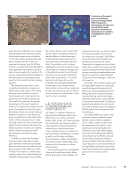
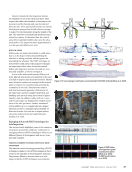
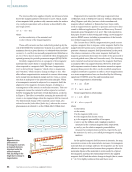
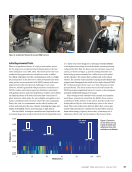
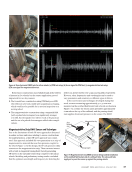
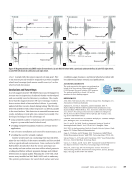
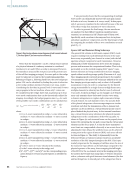
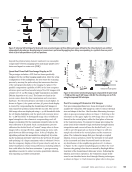
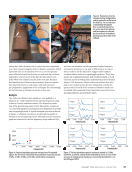
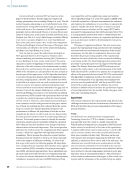
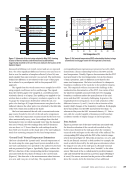
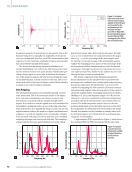
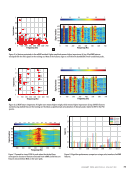
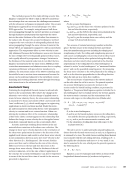
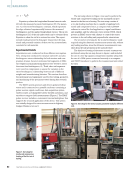
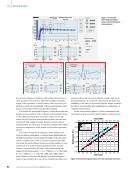
the findings of the in-motion flash IR test on the
axle, with 25-mm-long (and 0.13-mm-wide) EDM
notches oriented relative to the axle centerline at 0°,
90°, and ±45°.
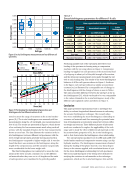
NDE Technology for Axle Inspection Summary
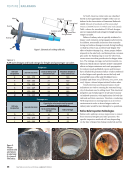
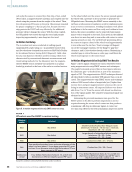
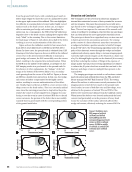
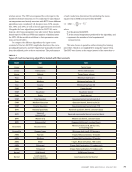
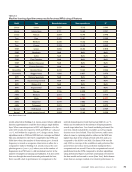
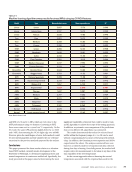
Table 2 summarizes the capabilities and limitations
of different NDE methods for inspecting railway
axles. The table demonstrates that most of the state-
of-the-art NDE systems require the removal of the
wheelsets, bearings, bearing caps, and backing rings
before inspection. As a result, routine and periodic
inspections can only be achieved while the wheel-
sets are removed from the vehicle.
Challenges and Opportunities in North
America
North American freight railroads operate heavy axle
loads consisting of 130 metric ton cars, or 33 metric
ton axle loads. Currently, over 1.6 million freight
cars and 26 000 locomotives are in use on North
American railroads. The structural integrity of
rolling stock equipment is of the utmost importance
to the railroads and their customers, and it is essen-
tial for the safe and efficient operation of the rail-
roads. Periodic inspection is prescribed for finding
defects and out-of-tolerance conditions.
Such inspection is regulated by the AAR and the
US Department of Transportation (USDOT) Federal
Railroad Administration (FRA). Traditionally, the
manual inspection of railcars and their compo-
nents has been carried out visually while the train
is stopped in rail yards. This manual inspection
process is labor-intensive, requires a substantial
time commitment, and is limited to portions of
components that are visible to a person walking
by the rail car. Furthermore, because there are no
digital records of the inspection history, it is impos-
sible to trend and predict failures. Near real-time
automated inspection of railcars and components
while the cars are in service is an effective way to
record equipment component health. Moreover,
it increases the inspection rate, reduces operator
subjectivity, eliminates exposure of humans to yard
hazards, and increases the rate at which potentially
failing components can be identified. Finally, it
will be possible to provide a digital history of every
inspection, trending component condition, and pro-
active maintenance (rather than reactive repair).
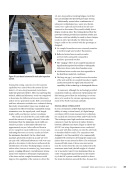
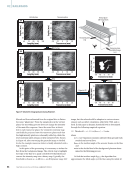
NDE technologies exist for inspecting rail,
railcar wheels, and other components in a moving
train however, there are currently no technologies
capable of reliably and comprehensively inspecting
the axles of a moving train. These technologies are
sought by North American railroads. Using input
from the North American railroads, MxV Rail has
produced a requirements document for in-motion
automated axle defect detectors. The following
excerpt from the document summarizes the attri-
butes of an ideal system for detecting and charac-
terizing cracked axles for the North American envi-
ronment (AAR SRI 2019):
Ñ The system must be capable of routinely
operating on an automatic, unattended basis.
Ñ The system shall be capable of accurate and
reliable full performance inspection and evalu-
ation at track speeds typical of mainline traffic
at the yard approach, which would be a desired
minimum speed of 32 kph, with an absolute
minimum speed of 19 kph.
Ñ The system must also be capable of accurately
(99% detection rate) and reliably (1% downtime)
detecting cracked axles while the train is acceler-
ating or decelerating. The false positive rate shall
be below 0.001% (10 axles out of 1 000 000).
Ñ The system must handle all train car makeups
and types in all loading states, whether loaded,
empty, or partially loaded.
Ñ The system shall inspect and analyze all axles of
each car in each train that passes the site.
Ñ The system shall function reliably in temperatures
ranging from –40 to 49 °C and in an atmosphere
ranging from extremely dry, to rain, snow, and
fog.
Ñ Field equipment shall be installed to operate
under all environmental conditions.
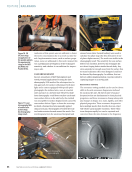
MxV Rail, on behalf of the AAR Strategic
Research Initiative (SRI) program, is promoting an
automated cracked axle detection technology eval-
uation that has the potential to detect axle indica-
tions on a moving train. Stakeholders are invited to
demonstrate their NDE technologies at MxV Rail’s
new test facility to the level the technical advisory
group has defined in the requirements (AAR SRI
2019).
Conclusions
Most railcar axle inspection NDE methods require
accessibility to all surfaces of the axles (which
entails the removal of wheels and bearing compo-
nents). This is impossible for a moving railcar and
not applicable as a wayside system. Most available
NDE technologies cannot inspect beyond the axle
barrel. Contacting NDE technologies and those
requiring removal of the wheels and bearings
cannot be applied to moving equipment. Also,
for noncontacting NDE technologies, the input
of inspection energy and/or the detection of any
J A N U A R Y 2 0 2 4 • M A T E R I A L S E V A L U A T I O N 37
2401 ME January.indd 37 12/20/23 8:01 AM
axle, with 25-mm-long (and 0.13-mm-wide) EDM
notches oriented relative to the axle centerline at 0°,
90°, and ±45°.
NDE Technology for Axle Inspection Summary
Table 2 summarizes the capabilities and limitations
of different NDE methods for inspecting railway
axles. The table demonstrates that most of the state-
of-the-art NDE systems require the removal of the
wheelsets, bearings, bearing caps, and backing rings
before inspection. As a result, routine and periodic
inspections can only be achieved while the wheel-
sets are removed from the vehicle.
Challenges and Opportunities in North
America
North American freight railroads operate heavy axle
loads consisting of 130 metric ton cars, or 33 metric
ton axle loads. Currently, over 1.6 million freight
cars and 26 000 locomotives are in use on North
American railroads. The structural integrity of
rolling stock equipment is of the utmost importance
to the railroads and their customers, and it is essen-
tial for the safe and efficient operation of the rail-
roads. Periodic inspection is prescribed for finding
defects and out-of-tolerance conditions.
Such inspection is regulated by the AAR and the
US Department of Transportation (USDOT) Federal
Railroad Administration (FRA). Traditionally, the
manual inspection of railcars and their compo-
nents has been carried out visually while the train
is stopped in rail yards. This manual inspection
process is labor-intensive, requires a substantial
time commitment, and is limited to portions of
components that are visible to a person walking
by the rail car. Furthermore, because there are no
digital records of the inspection history, it is impos-
sible to trend and predict failures. Near real-time
automated inspection of railcars and components
while the cars are in service is an effective way to
record equipment component health. Moreover,
it increases the inspection rate, reduces operator
subjectivity, eliminates exposure of humans to yard
hazards, and increases the rate at which potentially
failing components can be identified. Finally, it
will be possible to provide a digital history of every
inspection, trending component condition, and pro-
active maintenance (rather than reactive repair).
NDE technologies exist for inspecting rail,
railcar wheels, and other components in a moving
train however, there are currently no technologies
capable of reliably and comprehensively inspecting
the axles of a moving train. These technologies are
sought by North American railroads. Using input
from the North American railroads, MxV Rail has
produced a requirements document for in-motion
automated axle defect detectors. The following
excerpt from the document summarizes the attri-
butes of an ideal system for detecting and charac-
terizing cracked axles for the North American envi-
ronment (AAR SRI 2019):
Ñ The system must be capable of routinely
operating on an automatic, unattended basis.
Ñ The system shall be capable of accurate and
reliable full performance inspection and evalu-
ation at track speeds typical of mainline traffic
at the yard approach, which would be a desired
minimum speed of 32 kph, with an absolute
minimum speed of 19 kph.
Ñ The system must also be capable of accurately
(99% detection rate) and reliably (1% downtime)
detecting cracked axles while the train is acceler-
ating or decelerating. The false positive rate shall
be below 0.001% (10 axles out of 1 000 000).
Ñ The system must handle all train car makeups
and types in all loading states, whether loaded,
empty, or partially loaded.
Ñ The system shall inspect and analyze all axles of
each car in each train that passes the site.
Ñ The system shall function reliably in temperatures
ranging from –40 to 49 °C and in an atmosphere
ranging from extremely dry, to rain, snow, and
fog.
Ñ Field equipment shall be installed to operate
under all environmental conditions.
MxV Rail, on behalf of the AAR Strategic
Research Initiative (SRI) program, is promoting an
automated cracked axle detection technology eval-
uation that has the potential to detect axle indica-
tions on a moving train. Stakeholders are invited to
demonstrate their NDE technologies at MxV Rail’s
new test facility to the level the technical advisory
group has defined in the requirements (AAR SRI
2019).
Conclusions
Most railcar axle inspection NDE methods require
accessibility to all surfaces of the axles (which
entails the removal of wheels and bearing compo-
nents). This is impossible for a moving railcar and
not applicable as a wayside system. Most available
NDE technologies cannot inspect beyond the axle
barrel. Contacting NDE technologies and those
requiring removal of the wheels and bearings
cannot be applied to moving equipment. Also,
for noncontacting NDE technologies, the input
of inspection energy and/or the detection of any
J A N U A R Y 2 0 2 4 • M A T E R I A L S E V A L U A T I O N 37
2401 ME January.indd 37 12/20/23 8:01 AM