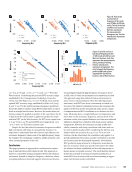
1.37 °C (2.46 °F) and –2.778 × 10⁻¹⁰ °C (4.68 × 10⁻¹⁰ °F) for the
West location. Considering the practical RNT accuracy range
established by the Transportation Technology Center Inc.
(TTCI, now MxV Rail) is ±5.6 °C (±10 °F) (Read 2005) and the
optimal RNT accuracy range established by Kish et al. (2013)
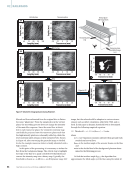
is ±2.8 °C (±5 °F), the 31 kHz resonance frequency prediction
shows the ability to predict strain/RNT around these accuracy
levels at a single fixed location. However, the results from one
location cannot be applied at another. In the case where the fit
to data from the East location is applied to predict the strain
and thus RNT on the West location, the RNT error ranges from
17 to 24 °C (32 to 44 °F) and the RNT error ranges from –21 to
–12 °C (–38 to –22 °F) for the converse case.
Despite the fact that selected resonance frequencies exhibit
high correlation with strain at one particular location, it is
important to understand that other factors may influence the
resonance frequency values even at the high-frequency range
for example, the rail damage condition, profile geometry, and
other material properties of the rail.
Conclusions
This paper presents an approach for nondestructive estima-
tion of axial rail stress state (strain) in situ. The approach is
based on contactless sensing of impulse-driven rail vibration
resonances. Instead of using low-frequency vibrations, where
corrupting influences from rail support structures are known,
we investigated relatively high-frequency resonances above
20 kHz, four of which are prominent and consistently excited.
The approach using data collected from a rail structure in
active service is demonstrated, where the rail temperature,
axial strain, and RNT have been continuously recorded over
two years. We studied correlations between the resonance fre-
quency of the four modes and axial rail strain across a range
of temperatures and RNT conditions at two distinct test loca-
tions. All modes show a coupled influence of temperature and
stress state on the resonance frequency, and, for most of the
vibration modes, this coupled behavior and other unconfirmed
influences disrupt the correlation with strain across varying
temperature. However, the resonance around 31 kHz does
exhibit consistent and strong correlation with strain and can
be used to predict in-place RNT considering the full two-year
dataset within an accuracy of ±3.33 °C (±6 °F) at one test
location. On the other hand, the correlation only applies to a
specific individual test location, and the correlation at another
test location must be determined separately. Nevertheless,
RNT prediction using a linear fit to frequency-strain data for
this one resonance mode at a specific test location for which
the relation has been established and the rail temperature is
known shows acceptable accuracy. The result thereby demon-
strates the potential of resonance frequency prediction of
strain/RNT from in-service rail structures assuming an appro-
priate rail vibration mode is identified.
Frequency (Hz)
200
–200
37 000 37 100 37 200
0
Frequency (Hz)
200
–200
39 300 39 400 39 500
0
Frequency (Hz)
200
–200
76 400 76 600 76 800
0
East
West
East
West
East
West
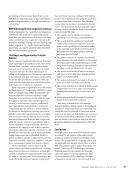
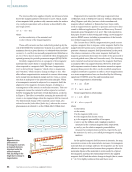
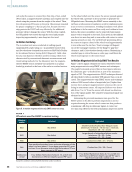
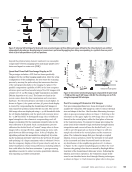
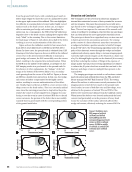
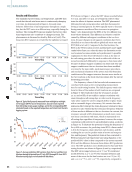
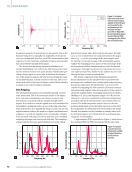
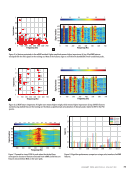
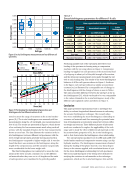
Figure 8. Axial strain
as a function of
frequency of the mode
at (a) 37 kHz (b) 39 kHz
and (c) 76 kHz at the East
and West test locations.
Each line represents
the measurements
during one day. Positive-
valued strain represents
compression.
East
y =–3.017 x +93932.330
R2 =0.98
y =–2.518 x +78191.829
R2 =0.94
West
Frequency (Hz)
RNT error (°F)
400
300
200
30 950 31 000 31 050 31 100 31 150 31 200 31 250
–8 –6 –4 –2 0 2
25
20
15
10
5
0 4 6 8
100
0
–100
–200
–300
–400
RNT error (°F)
–8 –6 –4 –2 0 2
10
8
6
2
4
0 4 6 8
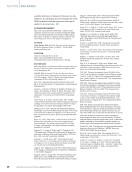
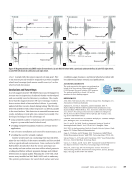
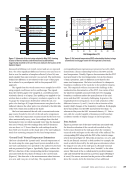
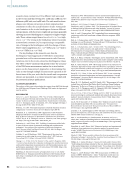
Figure 9. (a) Axial strain as a
function of frequency for the
31 kHz mode at both East and
West test locations. Each line
represents the measurements
during one day of testing.
Positive-valued strain
represents compression. The
error between the frequency-
predicted RNT and system-
reported RNT: (b) the East
location and (c) West location.
J A N U A R Y 2 0 2 4 • M A T E R I A L S E V A L U A T I O N 65
2401 ME January.indd 65 12/20/23 8:01 AM
Microstrain Microstrain Microstrain
Microstrain
Counts
Counts
West location. Considering the practical RNT accuracy range
established by the Transportation Technology Center Inc.
(TTCI, now MxV Rail) is ±5.6 °C (±10 °F) (Read 2005) and the
optimal RNT accuracy range established by Kish et al. (2013)
is ±2.8 °C (±5 °F), the 31 kHz resonance frequency prediction
shows the ability to predict strain/RNT around these accuracy
levels at a single fixed location. However, the results from one
location cannot be applied at another. In the case where the fit
to data from the East location is applied to predict the strain
and thus RNT on the West location, the RNT error ranges from
17 to 24 °C (32 to 44 °F) and the RNT error ranges from –21 to
–12 °C (–38 to –22 °F) for the converse case.
Despite the fact that selected resonance frequencies exhibit
high correlation with strain at one particular location, it is
important to understand that other factors may influence the
resonance frequency values even at the high-frequency range
for example, the rail damage condition, profile geometry, and
other material properties of the rail.
Conclusions
This paper presents an approach for nondestructive estima-
tion of axial rail stress state (strain) in situ. The approach is
based on contactless sensing of impulse-driven rail vibration
resonances. Instead of using low-frequency vibrations, where
corrupting influences from rail support structures are known,
we investigated relatively high-frequency resonances above
20 kHz, four of which are prominent and consistently excited.
The approach using data collected from a rail structure in
active service is demonstrated, where the rail temperature,
axial strain, and RNT have been continuously recorded over
two years. We studied correlations between the resonance fre-
quency of the four modes and axial rail strain across a range
of temperatures and RNT conditions at two distinct test loca-
tions. All modes show a coupled influence of temperature and
stress state on the resonance frequency, and, for most of the
vibration modes, this coupled behavior and other unconfirmed
influences disrupt the correlation with strain across varying
temperature. However, the resonance around 31 kHz does
exhibit consistent and strong correlation with strain and can
be used to predict in-place RNT considering the full two-year
dataset within an accuracy of ±3.33 °C (±6 °F) at one test
location. On the other hand, the correlation only applies to a
specific individual test location, and the correlation at another
test location must be determined separately. Nevertheless,
RNT prediction using a linear fit to frequency-strain data for
this one resonance mode at a specific test location for which
the relation has been established and the rail temperature is
known shows acceptable accuracy. The result thereby demon-
strates the potential of resonance frequency prediction of
strain/RNT from in-service rail structures assuming an appro-
priate rail vibration mode is identified.
Frequency (Hz)
200
–200
37 000 37 100 37 200
0
Frequency (Hz)
200
–200
39 300 39 400 39 500
0
Frequency (Hz)
200
–200
76 400 76 600 76 800
0
East
West
East
West
East
West
Figure 8. Axial strain
as a function of
frequency of the mode
at (a) 37 kHz (b) 39 kHz
and (c) 76 kHz at the East
and West test locations.
Each line represents
the measurements
during one day. Positive-
valued strain represents
compression.
East
y =–3.017 x +93932.330
R2 =0.98
y =–2.518 x +78191.829
R2 =0.94
West
Frequency (Hz)
RNT error (°F)
400
300
200
30 950 31 000 31 050 31 100 31 150 31 200 31 250
–8 –6 –4 –2 0 2
25
20
15
10
5
0 4 6 8
100
0
–100
–200
–300
–400
RNT error (°F)
–8 –6 –4 –2 0 2
10
8
6
2
4
0 4 6 8
Figure 9. (a) Axial strain as a
function of frequency for the
31 kHz mode at both East and
West test locations. Each line
represents the measurements
during one day of testing.
Positive-valued strain
represents compression. The
error between the frequency-
predicted RNT and system-
reported RNT: (b) the East
location and (c) West location.
J A N U A R Y 2 0 2 4 • M A T E R I A L S E V A L U A T I O N 65
2401 ME January.indd 65 12/20/23 8:01 AM
Microstrain Microstrain Microstrain
Microstrain
Counts
Counts