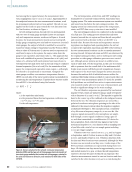
The method proposed in this study utilizing acoustic bire-
fringence continues the effort to find an effective nondestruc-
tive technique that can overcome the challenges encountered
with the ultrasonic techniques investigated earlier. The acoustic
birefringence approach has several advantages over other
USM approaches. For example, using ultrasonic bulk shear
waves propagating through the rail web provides an averaged
through-thickness measurement that represents the stress
state in the entire thickness of the rail rather than stresses in
the surface only. Because the acoustic birefringence method
compares the wave velocities of orthogonally polarized shear
waves propagating through the same volume of material, the
texture effects are minimized compared to other acoustoelastic
approaches. The temperature effect on wave velocity is natu-
rally eliminated because the birefringence uses a ratio between
the time of flight (ToF) of orthogonally polarized shear waves,
each equally affected by temperature changes. Variations in
the thickness of the material under test do not affect the bire-
fringence measurement for the same reason. EMATs provide
contactless measurement and eliminate errors due to coupling
variations problematic with piezoelectric transducers. In
addition, the noncontact nature of the EMAT technology may
be suitable for an in-motion stress measurement because the
sensor can be positioned adjacent to the rail without contact,
launching and receiving ultrasonic waves through electromag-
netic interactions in the rail material itself.
Acoustoelastic Theory
Evaluating the longitudinal thermal stresses in railroad rails
based on the acoustoelastic effect relates the change in the
ultrasonic wave velocity with the change of applied stress or
strain. In linear elasticity theory, the stress-strain relationship
is assumed to be linear and consists of first- and second-order
Lamé coefficients (λ, µ), which usually appear in engineering
applications as elastic and shear moduli. Under this isotro-
pic and homogeneous solid media theory, wave propagation
velocity is constant and is not a stress function. When con-
sidering the nonlinear effect of the constitutive relationship,
a third-order elastic constant appears in the relationship that
defines the change in wave velocity due to the applied stress/
strain field, commonly known as the acoustoelastic effect.
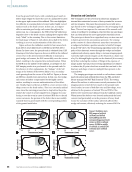
Acoustic anisotropy resulting from stresses in the rail
material shows variations in the shear wave velocities. The
change in shear wave velocity depends on the orientation of
the shear wave polarization direction to the direction of the
applied loads/stresses and results in a fast shear wave velocity
in one polarization direction and a slow wave velocity in the
other direction (i.e., birefringence). The acoustic birefrin-
gence used here can be defined as the ratio of the velocity
differences between the fast and slow directions to the
average shear wave velocity. When the thickness of the rail
section is unknown, or for the sake of direct application of
the concept, the acoustic birefringence can also be expressed
in terms of the fast and slow time of travels for the waves as
presented in Equation 2:
(2) B = Vfast − Vslow _
Vavg
= tslow − tfast _
tavg
where
B is the acoustic birefringence,
Vfast and Vslow are the shear wave velocities polarized in the
fast and slow directions, respectively,
tfast and tslow are the ToFs for the shear wave polarized in the
fast and slow directions, respectively, and
Vavg and tavg are the average shear wave velocity and the
average ToFs from both directions.
Two sources of material anisotropy manifest as birefrin-
gence. The first source is the residual stresses and texture
from the manufacturing process including the shaping and
straightening of rails. The rolling and straightening process of
rails causes crystallographic textures that result in shear waves
having fast travel velocity when polarized along the rolling
directions and slow velocity when polarized in the direction
perpendicular to the rolling direction. This birefringence is
referred to as the “in situ birefringence” or “unstressed birefrin-
gence” and can be quantified using Equation 2 by measuring
the shear wave velocities or the ToFs polarized in the rolling as
well as in the direction perpendicular to the rolling direction
when the rails are in a stress-free condition.
The second source of anisotropy is the stresses induced
on the rails when the rail is in service. The general equation
for acoustic birefringence accounts for stresses in the
section under the biaxial loading condition, as presented in
Equation 3. The general birefringence equation includes the in
situ birefringence due to residual stresses, the stresses applied,
the stress-acoustic constants, and the orientations of the
stresses with respect to the rolling direction (Okada 1980).
(3) B = {[B0 + m1(σ1 + σ2) + m2(σ1 − σ2)cos2θ]2
+ [m3(σ1 − σ2)sin2θ]2}21
where
B0 is the in situ birefringence,
σ1 and σ2 are the biaxial in-plane stresses in the rolling direc-
tion and the direction perpendicular to rolling, respectively,
m1, m2, and m3 are the stress-acoustic constants, and
θ is the orientation of rolling direction with respect to the
in-plane stress (σ1).
The rail in service is under primarily uniaxial loading con-
ditions from the thermal stresses and, as such, σ2 in Equation 3
is assumed to be zero. The axial stresses resulting from thermal
load coincide with the rail’s rolling direction, resulting in θ =0.
To simplify the calculations and since m2 is very small, it can
also be assumed to be zero, which puts the general equation in
the following form:
(4) B = B0 + m1 σ1
Equation 4 can be rearranged and written in terms of the
longitudinal thermal stresses (σ) as shown in Equation 5:
J A N U A R Y 2 0 2 4 • M A T E R I A L S E V A L U A T I O N 81
2401 ME January.indd 81 12/20/23 8:01 AM
fringence continues the effort to find an effective nondestruc-
tive technique that can overcome the challenges encountered
with the ultrasonic techniques investigated earlier. The acoustic
birefringence approach has several advantages over other
USM approaches. For example, using ultrasonic bulk shear
waves propagating through the rail web provides an averaged
through-thickness measurement that represents the stress
state in the entire thickness of the rail rather than stresses in
the surface only. Because the acoustic birefringence method
compares the wave velocities of orthogonally polarized shear
waves propagating through the same volume of material, the
texture effects are minimized compared to other acoustoelastic
approaches. The temperature effect on wave velocity is natu-
rally eliminated because the birefringence uses a ratio between
the time of flight (ToF) of orthogonally polarized shear waves,
each equally affected by temperature changes. Variations in
the thickness of the material under test do not affect the bire-
fringence measurement for the same reason. EMATs provide
contactless measurement and eliminate errors due to coupling
variations problematic with piezoelectric transducers. In
addition, the noncontact nature of the EMAT technology may
be suitable for an in-motion stress measurement because the
sensor can be positioned adjacent to the rail without contact,
launching and receiving ultrasonic waves through electromag-
netic interactions in the rail material itself.
Acoustoelastic Theory
Evaluating the longitudinal thermal stresses in railroad rails
based on the acoustoelastic effect relates the change in the
ultrasonic wave velocity with the change of applied stress or
strain. In linear elasticity theory, the stress-strain relationship
is assumed to be linear and consists of first- and second-order
Lamé coefficients (λ, µ), which usually appear in engineering
applications as elastic and shear moduli. Under this isotro-
pic and homogeneous solid media theory, wave propagation
velocity is constant and is not a stress function. When con-
sidering the nonlinear effect of the constitutive relationship,
a third-order elastic constant appears in the relationship that
defines the change in wave velocity due to the applied stress/
strain field, commonly known as the acoustoelastic effect.
Acoustic anisotropy resulting from stresses in the rail
material shows variations in the shear wave velocities. The
change in shear wave velocity depends on the orientation of
the shear wave polarization direction to the direction of the
applied loads/stresses and results in a fast shear wave velocity
in one polarization direction and a slow wave velocity in the
other direction (i.e., birefringence). The acoustic birefrin-
gence used here can be defined as the ratio of the velocity
differences between the fast and slow directions to the
average shear wave velocity. When the thickness of the rail
section is unknown, or for the sake of direct application of
the concept, the acoustic birefringence can also be expressed
in terms of the fast and slow time of travels for the waves as
presented in Equation 2:
(2) B = Vfast − Vslow _
Vavg
= tslow − tfast _
tavg
where
B is the acoustic birefringence,
Vfast and Vslow are the shear wave velocities polarized in the
fast and slow directions, respectively,
tfast and tslow are the ToFs for the shear wave polarized in the
fast and slow directions, respectively, and
Vavg and tavg are the average shear wave velocity and the
average ToFs from both directions.
Two sources of material anisotropy manifest as birefrin-
gence. The first source is the residual stresses and texture
from the manufacturing process including the shaping and
straightening of rails. The rolling and straightening process of
rails causes crystallographic textures that result in shear waves
having fast travel velocity when polarized along the rolling
directions and slow velocity when polarized in the direction
perpendicular to the rolling direction. This birefringence is
referred to as the “in situ birefringence” or “unstressed birefrin-
gence” and can be quantified using Equation 2 by measuring
the shear wave velocities or the ToFs polarized in the rolling as
well as in the direction perpendicular to the rolling direction
when the rails are in a stress-free condition.
The second source of anisotropy is the stresses induced
on the rails when the rail is in service. The general equation
for acoustic birefringence accounts for stresses in the
section under the biaxial loading condition, as presented in
Equation 3. The general birefringence equation includes the in
situ birefringence due to residual stresses, the stresses applied,
the stress-acoustic constants, and the orientations of the
stresses with respect to the rolling direction (Okada 1980).
(3) B = {[B0 + m1(σ1 + σ2) + m2(σ1 − σ2)cos2θ]2
+ [m3(σ1 − σ2)sin2θ]2}21
where
B0 is the in situ birefringence,
σ1 and σ2 are the biaxial in-plane stresses in the rolling direc-
tion and the direction perpendicular to rolling, respectively,
m1, m2, and m3 are the stress-acoustic constants, and
θ is the orientation of rolling direction with respect to the
in-plane stress (σ1).
The rail in service is under primarily uniaxial loading con-
ditions from the thermal stresses and, as such, σ2 in Equation 3
is assumed to be zero. The axial stresses resulting from thermal
load coincide with the rail’s rolling direction, resulting in θ =0.
To simplify the calculations and since m2 is very small, it can
also be assumed to be zero, which puts the general equation in
the following form:
(4) B = B0 + m1 σ1
Equation 4 can be rearranged and written in terms of the
longitudinal thermal stresses (σ) as shown in Equation 5:
J A N U A R Y 2 0 2 4 • M A T E R I A L S E V A L U A T I O N 81
2401 ME January.indd 81 12/20/23 8:01 AM