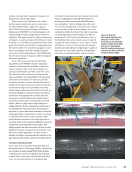
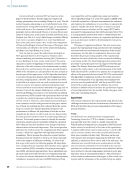
Several commercial axle inspection systems
are available for use in the shop and depot. They
require that either the wheelsets or bearings be dis-
mounted, and the bearing end caps be removed
from the axle. These automated systems use various
fixed phased array probes for full-volume coverage
to inspect for discontinuities along the length of the
axle. The wheelset is automatically positioned and
rotated in a gantry. At the same time, the vertical
arms deliver gimbaled holders that carry the ultra-
sonic probes. The inspection takes approximately 4
to 5 min per axle (Marty et al. 2012).
HOLLOW AXLES
Hollow axles are inspected similarly to solid axles—
that is, in the depot without disassembling the
wheelset or during overhaul, which requires dis-
assembling the wheelset. The PAUT technique, as
described for solid axles, is the primary technique
for inspecting hollow axles. Several automated
hollow axle inspection systems exist and are com-
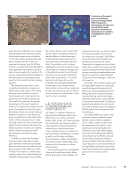
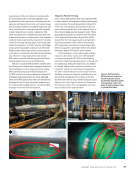
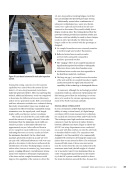
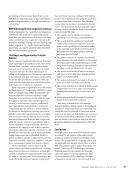
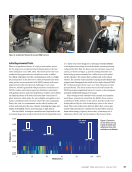
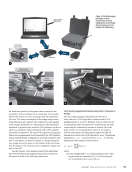
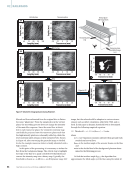
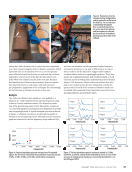
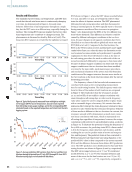
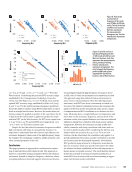
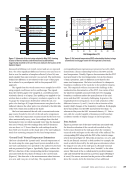
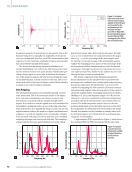
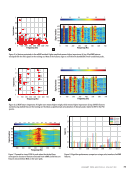
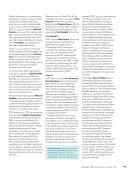
mercially available, as shown in Figure 6.
In one of the automated systems (Marty et al.
2012), phased array probes are mounted on the end
of a shaft to inspect axles from the borehole. Phased
array ultrasonic probes are arranged in the internal
probe to inspect for circumferential and axial dis-
continuities in the axle. Simultaneous rotation
and axial movements generate a helical scan of
the entire axle, and the complete inspection and
handling time per axle using this system is approx-
imately 6 min. In addition, online roll-out C-scan
and B-scan images are displayed for reliable assess-
ment of the axle specimen. Another automated
system utilizes up to 10 angular and zero-degree
ultrasonic probes to maximize the probability of
detection in axles. For each set of angled probes,
one probe looks both forward and backward
(Gauna et al. 2018).
Emerging/Advanced NDE Technologies for
Axle Inspection
This section briefly highlights some of the initiatives
researchers around the world have conducted on
emerging/advanced NDE technologies, which are at
different phases of development and are not com-
mercially available.
INDUCED CURRENT FOCUSING POTENTIAL DROP
TECHNIQUE
The induced current focusing potential drop (ICFPD)
technique is similar to the ACFM technique in that it
works on the principle of electromagnetic induction.
The primary difference between these two tech-
niques is that the ICFPD technique uses induction
High-angle
scan
Zero-degree
scan
Far-end
scan
Solid axle
Near-end
scan
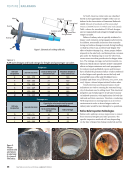
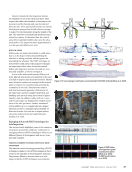
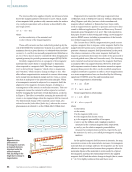
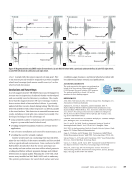
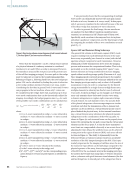
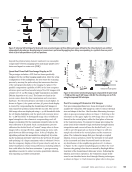
Figure 5. UT scan coverage in solid axles: (a) conventional UT (b) PAUT methods (Marty et al. 2012).
Figure 6. PAUT hollow
axle inspection system:
(a) production system
(Marty et al. 2012)
(b) PAUT results (Gauna
et al. 2018).
J A N U A R Y 2 0 2 4 • M A T E R I A L S E V A L U A T I O N 31
2401 ME January.indd 31 12/20/23 8:01 AM
are available for use in the shop and depot. They
require that either the wheelsets or bearings be dis-
mounted, and the bearing end caps be removed
from the axle. These automated systems use various
fixed phased array probes for full-volume coverage
to inspect for discontinuities along the length of the
axle. The wheelset is automatically positioned and
rotated in a gantry. At the same time, the vertical
arms deliver gimbaled holders that carry the ultra-
sonic probes. The inspection takes approximately 4
to 5 min per axle (Marty et al. 2012).
HOLLOW AXLES
Hollow axles are inspected similarly to solid axles—
that is, in the depot without disassembling the
wheelset or during overhaul, which requires dis-
assembling the wheelset. The PAUT technique, as
described for solid axles, is the primary technique
for inspecting hollow axles. Several automated
hollow axle inspection systems exist and are com-
mercially available, as shown in Figure 6.
In one of the automated systems (Marty et al.
2012), phased array probes are mounted on the end
of a shaft to inspect axles from the borehole. Phased
array ultrasonic probes are arranged in the internal
probe to inspect for circumferential and axial dis-
continuities in the axle. Simultaneous rotation
and axial movements generate a helical scan of
the entire axle, and the complete inspection and
handling time per axle using this system is approx-
imately 6 min. In addition, online roll-out C-scan
and B-scan images are displayed for reliable assess-
ment of the axle specimen. Another automated
system utilizes up to 10 angular and zero-degree
ultrasonic probes to maximize the probability of
detection in axles. For each set of angled probes,
one probe looks both forward and backward
(Gauna et al. 2018).
Emerging/Advanced NDE Technologies for
Axle Inspection
This section briefly highlights some of the initiatives
researchers around the world have conducted on
emerging/advanced NDE technologies, which are at
different phases of development and are not com-
mercially available.
INDUCED CURRENT FOCUSING POTENTIAL DROP
TECHNIQUE
The induced current focusing potential drop (ICFPD)
technique is similar to the ACFM technique in that it
works on the principle of electromagnetic induction.
The primary difference between these two tech-
niques is that the ICFPD technique uses induction
High-angle
scan
Zero-degree
scan
Far-end
scan
Solid axle
Near-end
scan
Figure 5. UT scan coverage in solid axles: (a) conventional UT (b) PAUT methods (Marty et al. 2012).
Figure 6. PAUT hollow
axle inspection system:
(a) production system
(Marty et al. 2012)
(b) PAUT results (Gauna
et al. 2018).
J A N U A R Y 2 0 2 4 • M A T E R I A L S E V A L U A T I O N 31
2401 ME January.indd 31 12/20/23 8:01 AM