During this testing, concerns over the system’s
capability were raised when the system did not
detect a 178-mm-long (measured circumferen-
tially) lab-generated defect. After encountering this
setback, additional laboratory work was completed
to determine the differences between laboratory
and in-service generated cracks. Both conventional
and laser ultrasonic methods were evaluated during
this study. Several defect types were studied and
compared for reflected energy, transmitted energy,
attenuation over the signal path, crack length,
depth, width, and fracture surface conditions.
This study revealed that the crack width influ-
enced the amount of energy reflected. It was also
determined that the minimum crack width nec-
essary to produce a detectable reflection was
approximately 20 µm. Axles collected from in
service ranged in crack width from 11.6 to 32.6 µm,
indicating that some in-service cracks are below
the minimum threshold. On the other hand,
machine-generated notches in an axle are over
250 µm wide. Additional laboratory work was com-
pleted to determine if other factors influenced the
identification of surface-breaking fatigue cracks in
railcar axles. Sources of variation (e.g., laser source
power, coupling efficiency, and ultrasonic attenu-
ation) were studied to determine if optimization
of the laser and air-coupled transducers could
improve the capability of the system to detect the
178-mm-long surface-breaking fatigue crack that
was not identified by the FAST prototype system.
Additionally, several other combinations of
ultrasonic technologies (e.g., water jets, thermi-
onics) were explored and tested in the lab envi-
ronment to determine if they could reliably detect
fatigue cracks in axles. The testing showed that the
prototype system provided inconsistent results and
therefore could not reliably be used to detect fatigue
cracks in axles. Specifically, the following chal-
lenges could not be resolved with the prototype as
designed:
Ñ Air-coupled transducers were extremely sensitive
to incident angle and weather fluctuations.
Ñ Reflected waves from in-service cracks
were severely attenuated compared to
machine-generated notches.
Ñ The “ringing” effect of air-coupled transducers
significantly impaired the ability to distinguish
reflections from cracks from baseline noise.
Ñ Additional wave modes were less repeatable in
the field than under lab conditions.
Ñ The large air gap (~406 mm) between the surface
of the axle and the air-coupled transducer signifi-
cantly attenuated the signal and reduced the
capability of the technology to distinguish defects.
In summary, although the technology provided
consistent results in a laboratory environment, the
field testing proved that the technology is too sen-
sitive to be used in the extreme operating environ-
ment of the North American railroads.
DIGITAL IMAGE CORRELATION
In 2016, researchers at MxV Rail explored the fea-
sibility of using a vision-based, 3D digital image
correlation (DIC) strain measurement technology
for cracked axle detection (Witte and Poudel 2016).
The technique uses high-resolution stereovision
cameras to track the motion of surface features
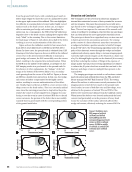
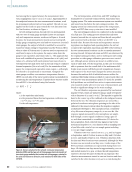
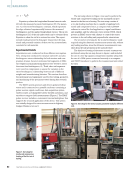
between different load states. Figure 10 shows the
3D DIC test setup. Experiments were conducted
on an axle with thin notches cut into the axle body
to simulate shallow cracks. The experiment was
designed to test the sensitivity of a commercially
available DIC system for detecting the strain local-
ization that occurs around a defect. The technique
measured bulk strain of about 300 microstrain
near the notch when the axle was subjected to the
maximum static load (the full weight of a loaded
car at 119 metric tons). It was determined that an
order-of-magnitude improvement in the sensitiv-
ity of the DIC system would be needed to detect
the strain localization around the flaw, because the
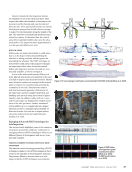
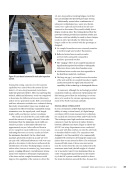
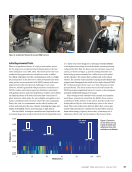
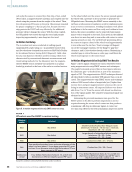
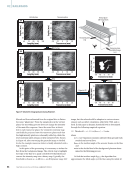
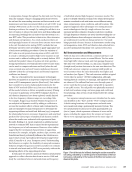
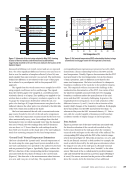
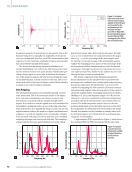
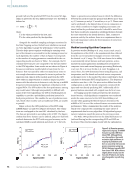
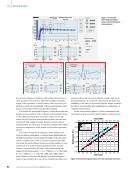
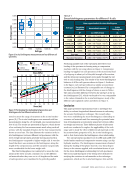
Figure 9. Laser-based automated in-track axle inspection
system.
J A N U A R Y 2 0 2 4 • M A T E R I A L S E V A L U A T I O N 33
2401 ME January.indd 33 12/20/23 8:01 AM
capability were raised when the system did not
detect a 178-mm-long (measured circumferen-
tially) lab-generated defect. After encountering this
setback, additional laboratory work was completed
to determine the differences between laboratory
and in-service generated cracks. Both conventional
and laser ultrasonic methods were evaluated during
this study. Several defect types were studied and
compared for reflected energy, transmitted energy,
attenuation over the signal path, crack length,
depth, width, and fracture surface conditions.
This study revealed that the crack width influ-
enced the amount of energy reflected. It was also
determined that the minimum crack width nec-
essary to produce a detectable reflection was
approximately 20 µm. Axles collected from in
service ranged in crack width from 11.6 to 32.6 µm,
indicating that some in-service cracks are below
the minimum threshold. On the other hand,
machine-generated notches in an axle are over
250 µm wide. Additional laboratory work was com-
pleted to determine if other factors influenced the
identification of surface-breaking fatigue cracks in
railcar axles. Sources of variation (e.g., laser source
power, coupling efficiency, and ultrasonic attenu-
ation) were studied to determine if optimization
of the laser and air-coupled transducers could
improve the capability of the system to detect the
178-mm-long surface-breaking fatigue crack that
was not identified by the FAST prototype system.
Additionally, several other combinations of
ultrasonic technologies (e.g., water jets, thermi-
onics) were explored and tested in the lab envi-
ronment to determine if they could reliably detect
fatigue cracks in axles. The testing showed that the
prototype system provided inconsistent results and
therefore could not reliably be used to detect fatigue
cracks in axles. Specifically, the following chal-
lenges could not be resolved with the prototype as
designed:
Ñ Air-coupled transducers were extremely sensitive
to incident angle and weather fluctuations.
Ñ Reflected waves from in-service cracks
were severely attenuated compared to
machine-generated notches.
Ñ The “ringing” effect of air-coupled transducers
significantly impaired the ability to distinguish
reflections from cracks from baseline noise.
Ñ Additional wave modes were less repeatable in
the field than under lab conditions.
Ñ The large air gap (~406 mm) between the surface
of the axle and the air-coupled transducer signifi-
cantly attenuated the signal and reduced the
capability of the technology to distinguish defects.
In summary, although the technology provided
consistent results in a laboratory environment, the
field testing proved that the technology is too sen-
sitive to be used in the extreme operating environ-
ment of the North American railroads.
DIGITAL IMAGE CORRELATION
In 2016, researchers at MxV Rail explored the fea-
sibility of using a vision-based, 3D digital image
correlation (DIC) strain measurement technology
for cracked axle detection (Witte and Poudel 2016).
The technique uses high-resolution stereovision
cameras to track the motion of surface features
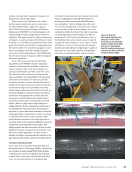
between different load states. Figure 10 shows the
3D DIC test setup. Experiments were conducted
on an axle with thin notches cut into the axle body
to simulate shallow cracks. The experiment was
designed to test the sensitivity of a commercially
available DIC system for detecting the strain local-
ization that occurs around a defect. The technique
measured bulk strain of about 300 microstrain
near the notch when the axle was subjected to the
maximum static load (the full weight of a loaded
car at 119 metric tons). It was determined that an
order-of-magnitude improvement in the sensitiv-
ity of the DIC system would be needed to detect
the strain localization around the flaw, because the
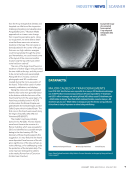
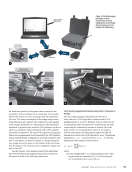
Figure 9. Laser-based automated in-track axle inspection
system.
J A N U A R Y 2 0 2 4 • M A T E R I A L S E V A L U A T I O N 33
2401 ME January.indd 33 12/20/23 8:01 AM