0
0
0.2
0.4
0.6
0.8
1
200 100 400 300 600 500 700
Frequency (Hz)
0 200 100 400 300 600 500 700
Frequency (Hz)
600
500
400
300
200
100
0
0 0.2 0.4 0.6 0.8 1
51
122
56
58 288 399
375
495
482
674
640
487
321 132
134
123
43
42
41 67
64
136
196
198
116
113
97
81 57
85
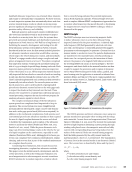
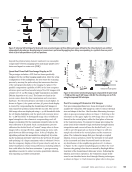
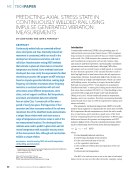
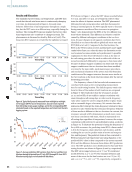
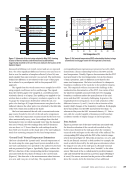
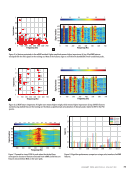
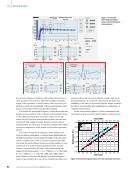
Figure 5. (a) features extracted via the mRMR method. Higher amplitude means higher importance (b) top 30 mRMR features
overlayed with the FDD signals in the training set. Most of the features align or are within the bandwidth of well-established peaks.
0
0
0.5
1
1.5
2
2.5
3
200 100 400 300 600 500 700
Frequency (Hz)
0 200 100 400 300 600 500 700
Frequency (Hz)
600
500
400
300
200
100
0
0 0.2 0.4 0.6 0.8 1
51
56
57 53
58
54
52
64
61 146
245
350
341
349
353
244
476
500
508
505
506
509
502
205
199 65
60
55
151
49
50
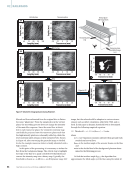
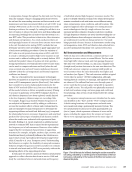
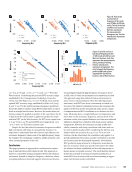
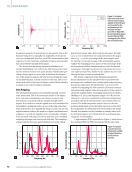
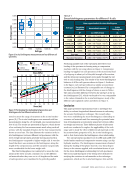
Figure 6. (a) NCA feature importance. A higher score means higher weight, which means higher importance: (b) top 30 NCA features
overlaid using dashed lines on the training set. NCA does a significant job at localization of relevant peaks related to RNT in the PSD
spectra.
280 400 420 300 320 340 360 380
Frequency (Hz)
600
500
400
300
200
100
0
0 0.2 0.3 0.1 0.4 0.5 0.6 0.7 0.8 0.9 1
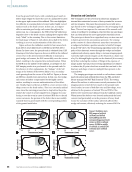
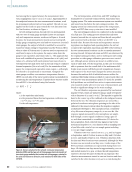
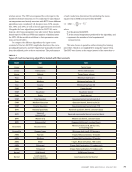
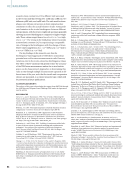
Figure 7. Zoomed-in view of 350 Hz peak where the dashed lines
correspond to location of features extracted from mRMR. Solid lines are
features extracted from NCA on the same peak.
LR
0
0.5
1
0.5
2
2.5
3
Tree SVM Ensemble GPR ANN Kernel
700 features
100 features
30 features
20 features
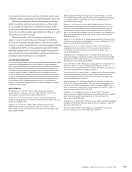
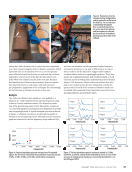
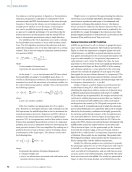
Figure 8. Algorithm performance comparison using a select number of mRMR
features.
J A N U A R Y 2 0 2 4 • M A T E R I A L S E V A L U A T I O N 73
2401 ME January.indd 73 12/20/23 8:01 AM
Signal
number Importance
Signal
number Importance
Signal
number MAE
(°C)
0
0.2
0.4
0.6
0.8
1
200 100 400 300 600 500 700
Frequency (Hz)
0 200 100 400 300 600 500 700
Frequency (Hz)
600
500
400
300
200
100
0
0 0.2 0.4 0.6 0.8 1
51
122
56
58 288 399
375
495
482
674
640
487
321 132
134
123
43
42
41 67
64
136
196
198
116
113
97
81 57
85
Figure 5. (a) features extracted via the mRMR method. Higher amplitude means higher importance (b) top 30 mRMR features
overlayed with the FDD signals in the training set. Most of the features align or are within the bandwidth of well-established peaks.
0
0
0.5
1
1.5
2
2.5
3
200 100 400 300 600 500 700
Frequency (Hz)
0 200 100 400 300 600 500 700
Frequency (Hz)
600
500
400
300
200
100
0
0 0.2 0.4 0.6 0.8 1
51
56
57 53
58
54
52
64
61 146
245
350
341
349
353
244
476
500
508
505
506
509
502
205
199 65
60
55
151
49
50
Figure 6. (a) NCA feature importance. A higher score means higher weight, which means higher importance: (b) top 30 NCA features
overlaid using dashed lines on the training set. NCA does a significant job at localization of relevant peaks related to RNT in the PSD
spectra.
280 400 420 300 320 340 360 380
Frequency (Hz)
600
500
400
300
200
100
0
0 0.2 0.3 0.1 0.4 0.5 0.6 0.7 0.8 0.9 1
Figure 7. Zoomed-in view of 350 Hz peak where the dashed lines
correspond to location of features extracted from mRMR. Solid lines are
features extracted from NCA on the same peak.
LR
0
0.5
1
0.5
2
2.5
3
Tree SVM Ensemble GPR ANN Kernel
700 features
100 features
30 features
20 features
Figure 8. Algorithm performance comparison using a select number of mRMR
features.
J A N U A R Y 2 0 2 4 • M A T E R I A L S E V A L U A T I O N 73
2401 ME January.indd 73 12/20/23 8:01 AM
Signal
number Importance
Signal
number Importance
Signal
number MAE
(°C)