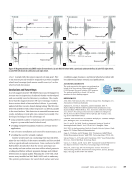
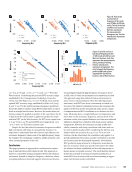
tested to assess the range of variations in the in situ birefrin-
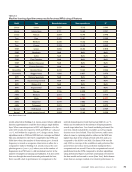
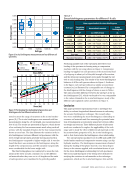
gence (B0). The in situ birefringence was assessed with four
measurements along the 4 ft rail length, one measurement per
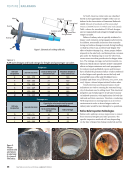
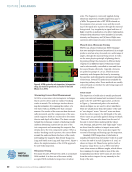
foot of rail. The results are presented in Figure 6, which shows
a box enclosing the four measurements made along each rail
section, with the standard deviation for the four measurements
shown as error bars. The data illustrate the variation in the in
situ birefringence between different rail specimens, with the
lower-weight rail specimen generally showing increased in
situ birefringence compared to higher-weight rails. It was also
found that there was variation in the birefringence along the
length of the rail specimens, and this variation was generally
more considerable for the lower-weight rails.
The third testing phase was conducted to assess the vari-
ations in the stress-acoustic constant (m1) on the different
rail materials after they were cut to 1 ft lengths and the ends
of each specimen were machined to be perfectly parallel.
Producing parallel ends of the specimen allowed for end
loading of the specimen in bearing using a compression
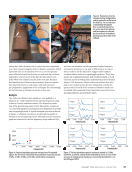
machine with the test setup shown in Figure 2. Compression
loading was applied on each specimen at the incremental load
of 50 kips up to about 50% of the yield strength of the section,
and the ultrasonic measurements were made through the rail
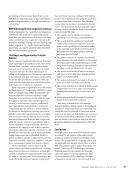
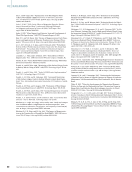
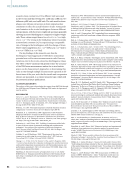
web at each loading step. The results of the stress-birefringence
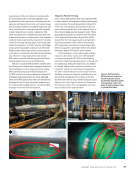
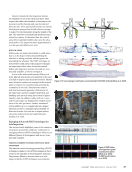
behavior of all the rail types are shown in Figure 7. As shown
in the figure, each rail type indicates a similar acoustoelastic
constant (m1) as illustrated by a comparable rate of change in
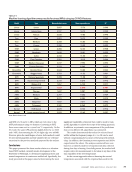
the birefringence with the change of stress, as seen in Table 1.
The only noticeable difference between the rail types is the in
situ birefringence (B0), which was found to be very comparable
to the values obtained in the in situ birefringence study of the
different rails explained earlier and shown in Figure 6.
Conclusion
This paper presented experimental work to investigate the
ability to evaluate longitudinal thermal stresses in rails using
the acoustic birefringence technique. The research objec-
tives were establishing the stress-birefringence relationship in
common rail materials and then assessing the potential varia-
tion of fundamental acoustoelastic properties between differ-
ent weight rail sections. Three different phases of laboratory
work were conducted to explore the applicability of the tech-
nique and to study the effect of different rail materials on the
key acoustoelastic properties of B0, the in situ birefringence,
and m1 that characterize the birefringence-stress relationship.
Two rail specimens machined out of 136RE and 141RE were
loaded under tensile and compressive stresses using a 220 kip
hydraulic machine. The birefringence measurement obtained
during the loading of this phase showed a very linear depen-
dency on the stresses applied, with correlation factors of 99%
for the stress-birefringence relationship for both specimens.
The second and third parts of the testing were dedicated to
studying the variations in rail materials on the technique
parameters, which are the in situ birefringence (B0) and the
0.40%
0.35%
0.30%
0.25%
0.20%
0.15%
0.10%
0.05%
0.00%
115RE 119RE 136RE (A) 136RE (B) 141RE
Rail type
Figure 6. In situ birefringence measurements on four different rail
specimens.
T A B L E 1
Stress-birefringence parameters for different 1 ft rails
Rail type
Linear regression data for stress-birefringence
Correlation
coefficient Acoustoelastic constant In situ
birefringence
R2 m1 (1/MPa [1/ksi]) B0
115RE 0.997 8.96 × 10⁻⁶ (6.18 × 10⁻⁵) 2.25 × 10⁻³
119RE 0.998 8.44 × 10⁻⁶ (5.82 × 10⁻⁵) 2.59 × 10⁻³
136RE (A) 0.997 9.44 × 10⁻⁶ (6.51 × 10⁻⁵) 1.50 × 10⁻³
136RE (B) 0.998 9.27 × 10⁻⁶ (6.39 × 10⁻⁵) 1.01 × 10⁻³
141RE 0.996 8.96 × 10⁻⁶ (6.17 × 10⁻⁵) 1.74 × 10⁻³
Average 9.01 × 10⁻⁶ (6.22 × 10⁻⁵) 1.82 × 10⁻³
Standard deviation 3.83 × 10⁻⁷ (2.64 × 10⁻⁶) 6.21 × 10⁻⁴
45 40 30 35 20 25 10 15 0
0 34 69 103 138 172 207 241 276 310
5
Stress (ksi)
Stress (MPa)
0.00%
0.10%
0.20%
0.30%
0.40%
0.50%
0.60%
115RE
Linear (115RE)
119RE
Linear (119RE)
136RE (A)
Linear (136RE [A])
136RE (B)
Linear (136RE [B])
141RE
Linear (141RE)
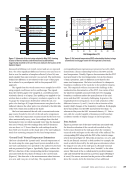
Figure 7. Plot showing the relationship between stress and
birefringence for five different sections of rail.
J A N U A R Y 2 0 2 4 • M A T E R I A L S E V A L U A T I O N 85
2401 ME January.indd 85 12/20/23 8:01 AM
Birefringence
(B%)
Birefringence
(B%)
gence (B0). The in situ birefringence was assessed with four
measurements along the 4 ft rail length, one measurement per
foot of rail. The results are presented in Figure 6, which shows
a box enclosing the four measurements made along each rail
section, with the standard deviation for the four measurements
shown as error bars. The data illustrate the variation in the in
situ birefringence between different rail specimens, with the
lower-weight rail specimen generally showing increased in
situ birefringence compared to higher-weight rails. It was also
found that there was variation in the birefringence along the
length of the rail specimens, and this variation was generally
more considerable for the lower-weight rails.
The third testing phase was conducted to assess the vari-
ations in the stress-acoustic constant (m1) on the different
rail materials after they were cut to 1 ft lengths and the ends
of each specimen were machined to be perfectly parallel.
Producing parallel ends of the specimen allowed for end
loading of the specimen in bearing using a compression
machine with the test setup shown in Figure 2. Compression
loading was applied on each specimen at the incremental load
of 50 kips up to about 50% of the yield strength of the section,
and the ultrasonic measurements were made through the rail
web at each loading step. The results of the stress-birefringence
behavior of all the rail types are shown in Figure 7. As shown
in the figure, each rail type indicates a similar acoustoelastic
constant (m1) as illustrated by a comparable rate of change in
the birefringence with the change of stress, as seen in Table 1.
The only noticeable difference between the rail types is the in
situ birefringence (B0), which was found to be very comparable
to the values obtained in the in situ birefringence study of the
different rails explained earlier and shown in Figure 6.
Conclusion
This paper presented experimental work to investigate the
ability to evaluate longitudinal thermal stresses in rails using
the acoustic birefringence technique. The research objec-
tives were establishing the stress-birefringence relationship in
common rail materials and then assessing the potential varia-
tion of fundamental acoustoelastic properties between differ-
ent weight rail sections. Three different phases of laboratory
work were conducted to explore the applicability of the tech-
nique and to study the effect of different rail materials on the
key acoustoelastic properties of B0, the in situ birefringence,
and m1 that characterize the birefringence-stress relationship.
Two rail specimens machined out of 136RE and 141RE were
loaded under tensile and compressive stresses using a 220 kip
hydraulic machine. The birefringence measurement obtained
during the loading of this phase showed a very linear depen-
dency on the stresses applied, with correlation factors of 99%
for the stress-birefringence relationship for both specimens.
The second and third parts of the testing were dedicated to
studying the variations in rail materials on the technique
parameters, which are the in situ birefringence (B0) and the
0.40%
0.35%
0.30%
0.25%
0.20%
0.15%
0.10%
0.05%
0.00%
115RE 119RE 136RE (A) 136RE (B) 141RE
Rail type
Figure 6. In situ birefringence measurements on four different rail
specimens.
T A B L E 1
Stress-birefringence parameters for different 1 ft rails
Rail type
Linear regression data for stress-birefringence
Correlation
coefficient Acoustoelastic constant In situ
birefringence
R2 m1 (1/MPa [1/ksi]) B0
115RE 0.997 8.96 × 10⁻⁶ (6.18 × 10⁻⁵) 2.25 × 10⁻³
119RE 0.998 8.44 × 10⁻⁶ (5.82 × 10⁻⁵) 2.59 × 10⁻³
136RE (A) 0.997 9.44 × 10⁻⁶ (6.51 × 10⁻⁵) 1.50 × 10⁻³
136RE (B) 0.998 9.27 × 10⁻⁶ (6.39 × 10⁻⁵) 1.01 × 10⁻³
141RE 0.996 8.96 × 10⁻⁶ (6.17 × 10⁻⁵) 1.74 × 10⁻³
Average 9.01 × 10⁻⁶ (6.22 × 10⁻⁵) 1.82 × 10⁻³
Standard deviation 3.83 × 10⁻⁷ (2.64 × 10⁻⁶) 6.21 × 10⁻⁴
45 40 30 35 20 25 10 15 0
0 34 69 103 138 172 207 241 276 310
5
Stress (ksi)
Stress (MPa)
0.00%
0.10%
0.20%
0.30%
0.40%
0.50%
0.60%
115RE
Linear (115RE)
119RE
Linear (119RE)
136RE (A)
Linear (136RE [A])
136RE (B)
Linear (136RE [B])
141RE
Linear (141RE)
Figure 7. Plot showing the relationship between stress and
birefringence for five different sections of rail.
J A N U A R Y 2 0 2 4 • M A T E R I A L S E V A L U A T I O N 85
2401 ME January.indd 85 12/20/23 8:01 AM
Birefringence
(B%)
Birefringence
(B%)