860 M A T E R I A L S E V A L U A T I O N • J U L Y 2 0 2 0 systems replacing professionals in NDT anytime soon—the medical industry is perfect proof of this. The reality is that despite the fact that the medical industry is now using AI to help interpret images, they still cannot keep up with the tsunami of data that is being generated by the new technolo- gies. There needs to be a paradigm shift in the perception of these helping technologies. Robots help us to move parts and reduce the amount of physical labor and the cloud makes archiving and processing results much easier, while AI helps us to improve our evaluation capabilities. No doubt, our jobs will change and the activities we perform will be more computer oriented. This requires requalification and learning/adopting of new skills, but in the end, every machine needs a human to supervise it (Meyendorf et al. 2019). Consider the other industrial revolutions like electrification: it happened, and we have more jobs than ever before. It is more important to approach this new technology with openness and to embrace the opportunities it has for us. The biggest threat would be to wait for the things to come and get disrupted by others who adopted them earlier. Industry experts even state that companies not investing in the emerging technologies face a significant risk of being put out of business by more efficient local competition or the emerging global competition (BDI 2015). REFERENCES ASTM, 2018, ASTM E2737 – Standard Practice for Digital Detector Array Performance Evaluation and Long-Term Stability, ASTM International, West Conshohocken, PA. BDI, 2015, “The Digital Transformation of Industry, a Report for the Federation of German Industries (BDI) produced by Roland Berger Strategy Consultants,” available at https://www.rolandberger.com/ publications/publication_pdf/roland_berger_digital_transformation _of_industry_20150315.pdf. Beaumont, P.W.R., C. Soutis, and A. Hodzic (eds.), 2015, “Radiographic Testing,” Structural Integrity and Durability of Advanced Composites, Woodhead Publishing, Cambridge, UK. du Plessis, A., I. Yadroitsava, and I. Yadroitsev, 2020, “Effects of Defects on Mechanical Properties in Metal Additive Manufacturing: A Review Focusing on X-ray Tomography Insights,” Materials & Design, Vol. 187, doi: 10.1016/j.matdes.2019.108385. Epicor, 2020, “What is Industry 4.0—the Industrial Internet of Things (IIoT)?” available at https://www.epicor.com/en-us/resource- center/articles/what-is-industry-4-0/. IFR, 2018, “Positioning Paper: Robots and the Workplace of the Future,” International Federation of Robotics, Frankfurt, Germany. Küpper, Daniel, 2020, “Embracing Industry 4.0 and Rediscovering Growth,” available at https://www.bcg.com/capabilities/operations/ embracing-industry-4.0-rediscovering-growth.aspx. Kurz, J.H., A. Jüngert, S. Dugan, G. Dobmann, and C. Boller, 2013, “Relia- bility Considerations of NDT by Probability of Detection (POD) Determi- nation Using Ultrasound Phased Array,” Engineering Failure Analysis, Vol. 35, pp. 609–617. Madni, A.M., C.C. Madni, and S.D. Lucero, 2019, “Leveraging Digital Twin Technology in Model-Based Systems Engineering,” Systems, Vol. 71, No. 1, doi:10.3390/systems7010007. Meyendorf, N.G., L.J. Bond, J. Curtis-Beard, S. Heilmann, S. Pal, R. Schallert, H. Scholz, and C. Wunderlich, 2017, “NDE 4.0—NDE for the 21st Century— The Internet of Things and Cyber-Physical Systems Will Revolutionize NDE,” 15th Asia Pacific Conference for Non-Destructive Testing (APCNDT2017), 13–17 November, Singapore, Singapore. OPC, 2020, “Welcome to the World of OPC,” OPC Foundation, available at https://opcfoundation.org/about/opc-technologies/opc-ua/. Perner, P., U. Zscherpel, and C. Jacobsen, 2001, “A Comparison between Neural Networks and Decision Trees based on Data from Industrial Radi- ographic Testing,” Pattern Recognition Letters, Vol. 22, No. 1, pp. 47–54. Singh, R., 2019, “NDE 4.0: The Next Revolution in Nondestructive Testing and Evaluation: What and How?” Materials Evaluation, Vol. 77, No. 1, pp. 45–50. Vaidya, S., P. Ambad, and S. Bhosle, 2018, “Industry 4.0 – A Glimpse,” Procedia Manufacturing, Vol. 20, pp. 233–238. VisiConsult, 2019, “VisiConsult Supports Automotive Sector with 100% Inspection by Real Inline CT Solution,” 19 December 2019, available at https://visiconsult.de/supports-automotive/. VisiConsult, 2020a, “Computed Tomography,” available at https:// visiconsult.de/technology/computed-tomography/. VisiConsult, 2020b, “Automated Inspection,” available at https:// visiconsult.de/technology/automated-defect-recognition/. Voelker, C., 2003, “If a Picture Is Worth 1,000 Words, then Pervasive, Ubiquitous Imaging Is Priceless: DICONDE, the Universally Compatible Nondestructive Evaluation Image File Format,” ASTM Standardization News, Vol. 31, No. 10, pp. 32–33. Vrana, J., 2019, “NDE 4.0 and Its Use for Predictive Maintenance,” ASNT Annual Conference, 18–21 November, Las Vegas, NV. ME TECHNICAL PAPER w ndt 4.0: opportunity or threat?

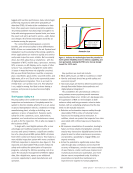
J U L Y 2 0 2 0 • M A T E R I A L S E V A L U A T I O N 861 ME TECHNICAL PAPER w A B S T R A C T Case studies of Industry 4.0 usually focus on manufacturing or logistics. While these are also important disciplines in the oil and gas industry, manufacturing and logistics are not the first things that come to mind when addressing the challenges related to safety and asset integrity. However, the technologies that are commonly associated with Industry 4.0, such as supply chain management solutions, robotics, additive manufacturing, and big data, play a major role in nondestructive testing (NDT). The owner/operators of installations in the oil and gas industry certainly support these trends and routinely request these technologies to be applied to NDT. This paper will explore how the discourse on Industry 4.0 applies to NDT 4.0 and how the trending technologies mentioned previ- ously play a role in innovations. This will be done by showing where the technologies have been applied in research and development efforts currently underway. The first case study focuses on tube testing. The second focuses on the inspection of large structures such as storage tanks, pipelines, and vessels. These case studies will highlight how applying NDT 4.0 concepts contributes to increased quality of testing, and ultimately to safety and asset integrity in the oil and gas industry. KEYWORDS: NDT 4.0, tube testing, storage tank inspection, eddy current testing, MFL, oil and gas industry, nonintrusive inspection Introduction The signs of a new industrial revolution are all around us. Established industrial giants are stumbling, and new ones are emerging in every aspect of our lives. Although we may not yet know exactly where this will go for us, it is obvious that things are changing. The term “Industry 4.0” originated in 2011 from a working group within the German federal government. Klaus Schwab, chairman of the World Economic Forum, coined the term “fourth industrial revolution” and brought Industry 4.0 to the world’s attention. These concepts have been adopted by several nondestructive testing (NDT) societies, first in Germany by the German Society for Non- Destructive Testing (DGZfP), and more recently by the American Society for Nondestructive Testing (ASNT) and the British Institute for Non-Destructive Testing (BINDT), to establish a platform for guiding the NDT community during this global transformation. Industry 4.0 refers to industry that makes productive use of digital connections between all parts of society. Technologies like autonomous vehicles, robotics, artificial intelligence (AI), and personalized manufacturing including additive manufacturing (AM) all fall under the umbrella of Industry 4.0. It is important to realize that NDT is already associated with many of the component technologies involved in Industry 4.0. To collect big data, sensors and measurements are needed. NDT is one of the fields associated with data collection, sensors, and measurements. Robotics have been used for a long time in NDT, and NDT has important prac- tical experience to contribute, such as experience in the spatial positioning of data and accuracy of measurement. Products made with AM will require testing before they can be used for critical applications, and NDT has a role to play here as well. Industrial Revolutions Industry 4.0 is not the only theory on industrial revolutions. Such theories go back to early economists like Schumpeter (1939) and Kuznets (1930). After the dot-com crisis of 2000 and financial crisis of 2008, these theories have been revived. Perez (2002) offers some useful concepts on the process of successive industrial revolutions. She describes that each tech- nological revolution has an installation period, in which the technology gets developed and installed, but does not yet create societal value then, there is a deployment period in which the real value is realized and society changes. In the installation period, the technologies get invented and the infrastructure installed (for example, the internet). In the Deployment of Digital NDT Solutions in the Oil and Gas Industry by Casper Wassink*†, Marc Grenier*, Olivier Roy*, and Neil Pearson* * Eddyfi Technologies, 3425 Rue Pierre-Ardouin, Québec, QC G1P 0B3, Canada † Corresponding author: +31 654350235 cwassink@eddyfi.com Materials Evaluation 78 (7): 861–868 https://doi.org/10.32548/2020.me-04138 ©2020 American Society for Nondestructive Testing
ASNT grants non-exclusive, non-transferable license of this material to  .
All rights reserved. © ASNT 2026. To report unauthorized use, contact: customersupport@asnt.org