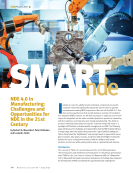
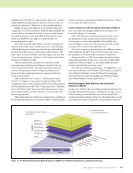
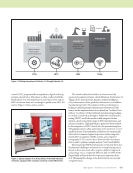
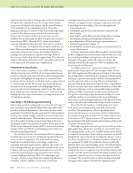
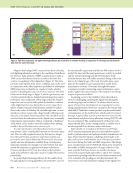
852 M A T E R I A L S E V A L U A T I O N • J U L Y 2 0 2 0 ME TECHNICAL PAPER w A B S T R A C T There is no doubt that the world currently is in the midst of a technology-driven transformation that is evidenced in our everyday lives via technical advances like self-driving cars and artificial intelli- gence. The world around us is changing at a rapid pace, and this also affects the way we produce nearly everything. Entire industries are trans- formed, resulting in major implications for profes- sionals in many fields. This transition is so compelling that it has been named “Industry 4.0,” the fourth industrial revolution. A variety of disrup- tive factors are compounding one another and have a massive impact on the status quo. These include robotics, big data, additive manufacturing, integrated systems, augmented reality, cloud computing, the Internet of Things, and much more. The NDT industry cannot escape these funda- mental changes. Nearly all methods are impacted—some more, others less. Therefore, the question arises: Is this an opportunity or a threat? This paper will explore these fundamental shifts using some specific examples from the field of radiography, as this is the field of expertise of the author. Also, the radiographic testing method is among those that will see the biggest changes caused by the new technology, as we have already seen in the medical realm. KEYWORDS: NDT 4.0, connected computer systems, cloud utilization, Internet of Things, IoT, smart factories, big data, artificial intelligence, AI, autonomous robots, predictive maintenance, additive manufacturing Introduction: What Is Industry 4.0? The concept of NDT 4.0 (Vaidya et al. 2018) is simply a subset of change sectors that are driven by the far bigger movement of Industry 4.0. It is important to understand where the term comes from (Epicor 2020). Figure 1 shows the different phases. The first industrial revolution happened between the late 1700s and early 1800s. During this period, manufacturing evolved from focusing on manual labor performed by people to a more optimized form of labor by using water and steam-powered engines in addition to other types of machine tools. In radiographic testing (RT), this phase is represented by the status of using analog film and isotopes. In the early part of the 20th century, the world entered the second industrial revolution with the use of electricity in factories. The introduction of electricity enabled manufac- turers to increase efficiency and helped make factory machinery more productive. It was during this phase that mass production concepts, such as the assembly line, were introduced to boost productivity. The legacy of the Ford Motor Co. is a great example of that period. In RT, the note- worthy changes in this phase would be the incorporation of electric components in order to improve the process and workflow. Particularly, this goes along with the usage of X-ray tubes that replaced the use of isotopes, simple manipulators, and automated film developers. Starting in the late 1950s, a third industrial revolution slowly began to emerge as manufacturers began incorporating more electronic—and eventually computer-based—technology into their factories. During this period, manufacturers began experiencing a shift that put less emphasis on analog and mechanical technology and more on digital technology and automation software. Within the RT world, this phase is char- acterized by the transition to digital detectors, numerical NDT 4.0: Opportunity or Threat? by Lennart Schulenburg* Materials Evaluation 78 (7): 852–860 https://doi.org/10.32548/2020.me-04134 ©2020 American Society for Nondestructive Testing * VisiConsult X-ray Systems & Solutions GmbH, Brandenbrooker Weg 2-4, D-23617 Stockelsdorf, Germany l.schulenburg@visiconsult.de

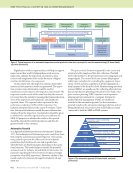
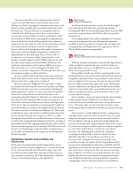
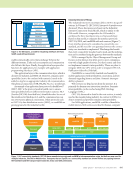
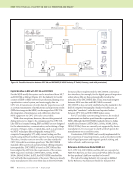
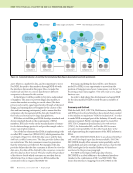
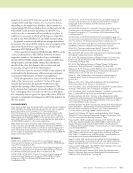
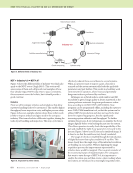
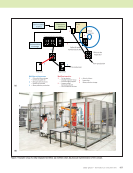
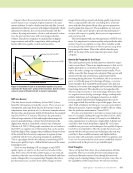
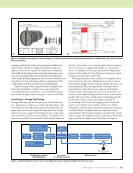
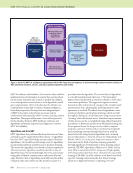
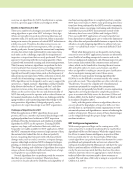
J U L Y 2 0 2 0 • M A T E R I A L S E V A L U A T I O N 853 control (NC) programmable manipulators, digital archiving systems, and robotics. This phase is often confused with the fourth phase. It is very important to note that a robot and an ERP connection alone are not enough to qualify as an NDT 4.0 system. Figure 2 shows such a system. The fourth industrial revolution is characterized by connected computer systems, cloud utilization, the Internet of Things (IoT), smart factories, big data, artificial intelligence (AI), autonomous robots, predictive maintenance, and additive manufacturing (AM). The adoption of these technologies is leading to substantial improvements in productivity and effi- ciency. As this implementation is not merely an “evolution” but rather a “revolution” of the traditional manufacturing paradigm, it is widely considered as disruptive. Within the nondestructive testing (NDT) world, this results in fully integrated in-line systems, cloud connectivity, usage of AI for interpretation, and advanced analytics. High performance gains have been realized by the integration of NDT directly into the manufacturing line. Self-adapting systems allow automation to be used even on very small batch sizes. Discontinuities and defects are automatically detected and compared against inspection criteria using auto- mated defect recognition (ADR) systems, and computed tomography (CT) is used to three-dimensionally reconstruct objects and to perform complex analysis (VisiConsult 2020a). This means that NDT professionals on the shop floor face fundamental challenges and may have a steep learning curve ahead, as these new tools often require a different approach and perhaps even a completely different skill set (IFR 2018). Digital skills and know-how become more important than ever. Managing this change is the key for future success and competitiveness. Figure 2. Typical example of an X-ray cabinet of the third industrial revolution, equipped with computer numerical control (CNC) drives. Industry 1.0 Mechanization, steam power, and weaving loom Industry 2.0 Mass production, assembly line, and electrical energy Industry 3.0 Automation, computers, and electronics Industry 4.0 Cyber-physical systems, Internet of Things (IoT), and networks Today 1969 1870 1784 Figure 1. Defining innovations of Industry 1.0 through Industry 4.0.
ASNT grants non-exclusive, non-transferable license of this material to  .
All rights reserved. © ASNT 2026. To report unauthorized use, contact: customersupport@asnt.org