868 M A T E R I A L S E V A L U A T I O N • J U L Y 2 0 2 0 with one another, constantly collecting and sharing informa- tion, that will truly unleash the power of NDT 4.0. REFERENCES Adriano, V.S.R., S. Hertelé, W. De Waele, and O.J. Huising, 2019, “Proof of Concept of Integrating 3-Dimensional NDE Information into Finite Element Analysis,” 22nd Joint Technical Meeting on Pipeline Research, Brisbane, Australia. Kuznets, S.S., 1930, “Secular Movements in Production and Prices. Their Nature and Their Bearing upon Cyclical Fluctuations,” American Journal of Agricultural Economics, Vol. 13, No. 1, pp. 177–179. Nageswaran, C., 2016, “Phased Array Ultrasonic Inspection of Nozzles,” WCNDT, 13–17 June, Munich, Germany. Pearson, N., and M. Boat, 2012, “A Novel Approach to Discriminate Top and Bottom Discontinuities with the Floormap3D,” 6th Middle East Nondestructive Testing Conference & Exhibition, Kingdom of Bahrain. Perez, C., 2002, Technological Revolutions and Financial Capital: The Dynamics of Bubbles and Golden Ages, Edward Elgar Publishing Inc., Northampton, Massachusetts. Schumpeter, J.A., 1939, Business Cycles: A Theoretical, Historical and Statis- tical Analysis of the Capitalist Process, McGraw-Hill Book Co., New York, NY. Wassink, C.H.P., 2012, “Innovation in Non Destructive Testing,” doctoral thesis, Delft University of Technology. ME TECHNICAL PAPER w digital ndt solutions

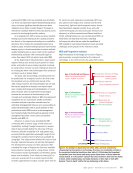
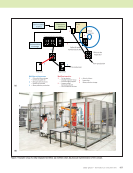
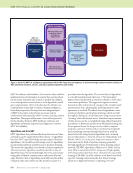
J U L Y 2 0 2 0 • M A T E R I A L S E V A L U A T I O N 869 A B S T R A C T NDT 4.0 is a vision for the next generation of nondestructive inspection systems following the expected fourth industrial revolution based on connected cyber-physical systems. While an increasing use of automation and algorithms in nondestructive testing (NDT) is expected over time, NDT inspectors will still play a critical role in ensuring NDT 4.0 reliability. As a counterpoint to recent advances in artificial intelligence algo- rithms, intelligence augmentation (IA) refers to the effective use of information technology to enhance human intelligence. While attempting to replicate the human mind has encountered many obstacles, IA has a much longer history of practical success. This paper introduces a series of best practices for NDT IA to support NDT 4.0 initiatives. Algorithms clearly have a great potential to help alleviate the burden of “big data” in NDT however, it is important that inspectors are involved in necessary secondary indication review and the detection of rare event indications not addressed well by typical algorithms. Examples of transitioning algo- rithms for NDT applications will be presented, emphasizing the successful interfacing of inspector and software for optimal data review and decision making. KEYWORDS: Industry 4.0, artificial intelligence, intelligence augmentation, human-machine interface, reliability Introduction Industry 4.0 is a term developed by German industry leaders and researchers to describe how the Internet of Things (IoT), an emerging network of linked cyber-physical devices, will improve engineering, manufacturing, logistics, and life-cycle management processes (Jahanzaib and Jasperneite 2013). The number 4.0 refers to a fourth industrial revolution. Begin- ning in the 1700s, three major waves of technological changes transformed the industrial landscape and increased produc- tivity: (1) mechanization and water/steam power (2) mass production (for example, assembly lines) and electricity and (3) computers and automation. The fourth industrial revolu- tion is expected to be based on connected cyber-physical systems. There is a parallel vision for the next generation of NDT capability referred to as NDT 4.0 (Meyendorf et al. 2017a, 2017b Link and Riess 2018 Vrana et al. 2018 Singh 2019). A key aspect of NDT 4.0 is leveraging automation in the evaluation of the workpiece and providing characteriza- tion of the state of the part for improved life-cycle manage- ment (Lindgren 2017 Forsyth et al. 2018). A diagram of an integrated vision for NDT 4.0 is presented in Figure 1. One key innovation of NDT 4.0 is the integration of advanced control systems and NDT algorithms to support complex inspections, NDT sensor data acquisition, and data analysis tasks. In recent years, major advances have been made in the field of machine learning and artificial intel- ligence (AI) to perform complex data classification tasks, leveraging training on “big data” sets (LeCun et al. 2015). While this technology is promising, challenges do exist with transitioning machine learning/AI algorithms to NDT appli- cations. Training AI requires very large, well-understood data sets, frequently not available in NDT, and there are major concerns about the reliability and adaptability of such algo- rithms to completely perform complex NDT data review tasks. One of the primary objectives of this paper is to survey the potential benefits and challenges of emerging algorithms for NDT 4.0 systems. Experience and perspective on the tran- sition of algorithms for NDT applications will also be discussed. The Inspector and NDT 4.0 A critical component of any NDT tool is the interface with the human that uses it. Figure 1 shows the human-machine interface as a critical link between the NDT inspector/engineer and Intelligence Augmentation and Human-Machine Interface Best Practices for NDT 4.0 Reliability by John C. Aldrin* * Computational Tools, Gurnee, Illinois 60031, USA aldrin@computationaltools.com Materials Evaluation 78 (7): 869–879 https://doi.org/10.32548/2020.me-04133 ©2020 American Society for Nondestructive Testing
ASNT grants non-exclusive, non-transferable license of this material to  .
All rights reserved. © ASNT 2026. To report unauthorized use, contact: customersupport@asnt.org