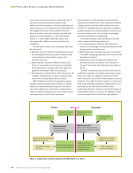
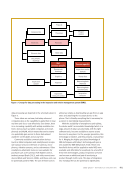
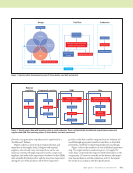
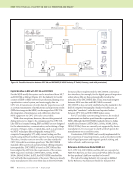
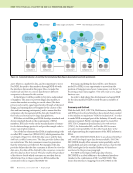
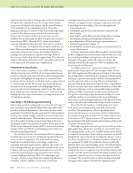
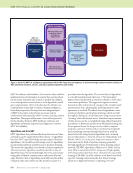
850 M A T E R I A L S E V A L U A T I O N • J U L Y 2 0 2 0 asset. There is a market for data, and it is important to use it. For NDE, the path to this market is through NDE 4.0 with the interfaces discussed in this paper. How to make this market safe and how to connect data between different companies is discussed in this section. In the future, it will be possible to buy data, independent of suppliers. The aim is to prevent illegal data markets, to create data markets according to crucial values (like data privacy and security, equal opportunities through a federated design, and ensuring data sovereignty for the creator of the data and trust among participants), and to ensure that the companies who have generated the data also benefit from their value and not just a few large data platforms. IDSA has set itself this goal. IDSA develops standards and de jure standards based on the requirements of IDSA members. IDSA also works on the standardization of seman- tics for data exchange protocols and provides sample code to ensure easy implementation. One of the key elements that IDSA is implementing is the so-called IDS connectors (IDSA 2019), which guarantee data sovereignty (Figure 12). Both the data source and the data sink have certified connectors. The data provider defines data use restrictions. The data consumer connector guarantees that the restrictions are followed. For example, if the data provider defines that the data consumer is allowed to view the data once, the data will be deleted by the consumer connector after the data has been viewed. This also enables the producer of the data to decide which customer can use their data in which form. Due to these connectors, IDSA enables the connected world as required by RAMI 4.0. For many, marketing the data will be a new business model. For NDE, it is an opportunity to move from the position of being perceived as an “unnecessary cost factor” to becoming a major data supplier. This will create a new, larger business case. In order to help shape this development and equip NDE for the data market, DGZfP recently became a member of IDSA. Summary and Outlook With the AAS, IIoT, OPC UA, WebServices, AutomationML, and IDSA, protocols and interfaces have already been created in the industry to implement “NDE for Industry 4.0.” In order to make NDE an integral part of the Industry 4.0 world, coop- eration is required. Firstly, ontologies must be created for OPC UA (Companion Specifications), for web services (OWL), for AutomationML, and for the AAS to assure semantic interoperability. On the other hand, there is the task of guaranteeing the requirements of the NDE industry in IDSA. With DICOM/DICONDE, there is an advanced interface and a well-developed open data format available. DICOM/ DICONDE already offers semantic interoperability, and its standardized and open ontology can be used as a base for the NDE ontologies for the standard Industry 4.0 interfaces mentioned in the previous paragraph. For NDE technologies with large data volumes, DICONDE is an ideal addition to the industrial interfaces (similar to the combination of HL7 and DICOM). This means that interfaces/mappings from DICONDE to the ME TECHNICAL PAPER w nde 4.0: perception and reality Industrial data cloud IDS connector Data usage constraints Non-IDS data communication Enterprise cloud Company 1 Company 2 Company n Company n+1 Company n+2 Data marketplace Internet of Things cloud Open data source IDS IDS IDS IDS IDS IDS IDS IDS IDS IDS IDS Figure 12. Connected Industry 4.0 world by the International Data Spaces Association (used with permission).

J U L Y 2 0 2 0 • M A T E R I A L S E V A L U A T I O N 851 Industry 4.0 world (OPC UA) are needed. For NDE tech- nologies with small data volumes, it is necessary to decide, depending on the application, whether a direct interface is created using OPC UA or whether these are first stored in the DICONDE world and then transferred to the OPC UA world, in order to summarize all test results in one place. In addition, it is necessary to check which steps are required to be able to use DICONDE for UT and eddy current testing. In general, a revision-safe and secure storage must always be ensured. The retrievability, integrity, and sovereignty of the data is key. Most of these requirements are already imple- mented in DICONDE and OPC UA. Other open data formats for NDE data, like HDF5, can be viewed as alternatives to DICONDE. However, for most inspection situations, the standardized open information models of DICONDE, which enable machine-readable data using semantic interoperability, surpass the information models of the other data formats. Also, revision-safe and secure data storage needs to be implemented. In order to ensure the interests of NDE in the Industry 4.0 world and for the development of the necessary ontologies, cooperation with Industry 4.0 must be strengthened. NDE 4.0 represents a chance for NDE to move from the niche of the “unnecessary cost factor” to one of the most valuable data providers for Industry 4.0. However, this requires the opening of data formats and interfaces. The protectionism that companies previously adhered to will now have a damaging effect on business in the foreseeable future. For companies that recognize the signs of the times, NDE 4.0 presents a completely new business model for the industry via the data market. ACKNOWLEDGMENTS Many thanks to Ripi Singh (Inspiring NEXT) and Daniel Kanzler (Applied NDT Reliability) for all the discussions about NDE 4.0. Also, recognition goes to Jens Martin (VISUS Industry IT) for the introduction to DICONDE and HL7 to Thomas Usländer (Fraunhofer IOSB) for the information about the platform Industry 4.0, the AAS, and OPC UA to Markus Eberhorn (Fraunhofer EZRT) for the introduction to OPC UA and to Ralf Casperson (BAM) for a first study regarding the applicability of the DICONDE standard to eddy current applications. Many thanks also to Sven Gondrom-Linke (Volume Graphics) for his work as vice chair of the DGZfP subcommittee “Interfaces for NDE 4.0,” to the members of the subcommittee, to the hosts of the meetings, and to those who participated in the survey on Facebook and LinkedIn. Last but not least, I have to thank Franziska Vrana for the Industry 4.0 and NDE 4.0 images and for all her support. REFERENCES ASTM, 2015, ASTM E2339: Standard Practice for Digital Imaging and Communication in Nondestructive Evaluation (DICONDE), ASTM Interna- tional, West Conshohocken, PA. ASTM, 2018a, ASTM E2663: Standard Practice for Digital Imaging and Communication in Nondestructive Evaluation (DICONDE) for Ultrasonic Test Methods, ASTM International, West Conshohocken, PA. ASTM, 2018b, ASTM E2699: Standard Practice for Digital Imaging and Communication in Nondestructive Evaluation (DICONDE) for Digital Radiographic (DR) Test Methods, ASTM International, West Conshohocken, PA. ASTM, 2018c, ASTM E2738, Standard Practice for Digital Imaging and Communication Nondestructive Evaluation (DICONDE) for Computed Radiography (CR) Test Methods, ASTM International, West Conshohocken, PA. ASTM, 2018d, ASTM E2767: Standard Practice for Digital Imaging and Communication in Nondestructive Evaluation (DICONDE) for X-ray Computed Tomography (CT) Test Methods, ASTM International, West Conshohocken, PA. ASTM, 2018e, ASTM E2934: Standard Practice for Digital Imaging and Communication in Nondestructive Evaluation (DICONDE) for Eddy Current (EC) Test Methods, ASTM International, West Conshohocken, PA. DIN, 2016, DIN SPEC 91345: Reference Architecture Model Industrie 4.0 (RAMI4.0), Deutsches Institut für Normung, Berlin, Germany. IDSA, 2019, “Reference Architecture Model,” Version 3.0, April 2019, International Data Spaces Association, Berlin, Germany. IEC, 2010-2019, IEC 62541: OPC Unified Architecture, International Elec- trotechnical Commission, Geneva, Switzerland. IIC, 2018, “The Industrial Internet of Things Volume G5: Connectivity Framework,” IIC:PUB:G5:V1.01:PB:20180228, Industrial Internet Consortium, Needham, MA. IIC, 2019, “The Industrial Internet of Things Volume G1: Reference Architecture,” Industrial Internet Consortium, Needham, MA. Kagermann, H., W.-D. Lukas, and W. Wahlster, 2011, “Industrie 4.0: Mit dem Internet der Dinge auf dem Weg zur 4. industriellen Revolution,” VDI-Nachrichten, Nr. 13-201, Seite 2 (in German). Kluver, R., 2000, “Globalization, Informatization, and Intercultural Communication,” American Communication Journal, Vol. 3, No. 3, pp. 425–437. Müller, E.A.W., 1951, “Ultraschall als Hilfsmittel der Materialprüfung,” Werkstatt und Betrieb, Vol. 84, No. 12 (in German). OPC Foundation, 2019, “Interoperability for Industrie 4.0 and the Internet of Things,” 10th revision, OPC Foundation, Scottsdale, AZ. OPC Foundation, 2019, “Unified Architecture,” accessed 11 January 2019, https://opcfoundation.org/about/opc-technologies/opc-ua/. Plattform Industrie 4.0, 2016, “Structure of the Administration Shell: Continuation of the Development of the Reference Model for the Industrie 4.0 Component,” Working Paper, Federal Ministry for Economic Affairs and Energy (BMWi), Berlin, Germany. Plattform Industrie 4.0, 2018, “Specification: Details of the Asset Adminis- tration Shell Part 1 – The Exchange of Information Between Partners in the Value Chain of Industrie 4.0 (Version 1.0),” Federal Ministry for Economic Affairs and Energy (BMWi), Berlin, Germany. Tuegel, E.J., P. Kobryn, J.V. Zweber, and R.M. Kolonay, 2017, “Digital Thread and Twin for Systems Engineering: Design to Retirement,” 55th AIAA Aerospace Sciences Meeting, Grapevine, Texas. Vrana GmbH – NDE Consulting & Solutions, 2019, “Everybody – what are the most negative thoughts about NDT/NDE or what was the most negative thing somebody said about NDT/NDE?,” Facebook survey, 22 February 2019, available at https://www.facebook.com/ndeconsulting/ posts/837664029899511. Vrana, J., 2019a, “Everybody – what are the most negative thoughts about NDT/NDE or what was the most negative thing somebody said about NDT/NDE?,” LinkedIn survey, available at https://www.linkedin.com/ feed/update/urn:li:activity:6504649869087510528/. Vrana, J., 2019b, “ZfP 4.0: Die vierte Revolution der Zerstörungsfreien Prüfung: Schnittstellen, Vernetzung, Feedback, neue Märkte und Einbin- dung in die Digitale Fabrik”, ZfP Zeitung 165, pp. 51–59 (in German). Vrana, J., and R. Singh, 2020, “The NDE 4.0: Key Challenges, Use Cases, and Adaption,” arXiv:2003.07773 [cs.OH]. Vrana, J., K. Kadau, and C. Amann, 2018, “Smart Data Analysis of the Results of Ultrasonic Inspections for Probabilistic Fracture Mechanics,” VGB PowerTech, Vol. 2018, No. 7, pp. 38–42.
ASNT grants non-exclusive, non-transferable license of this material to  .
All rights reserved. © ASNT 2026. To report unauthorized use, contact: customersupport@asnt.org