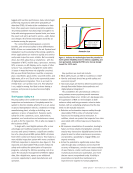
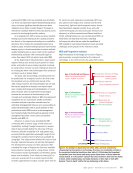
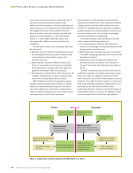
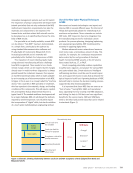
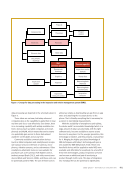
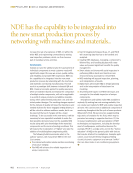
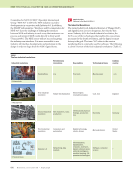
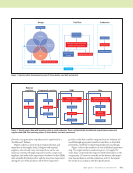
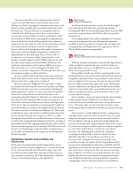
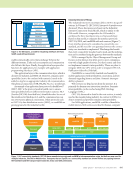
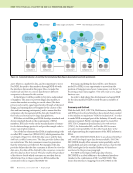
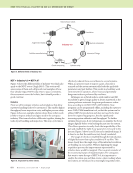
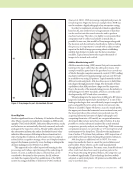
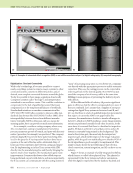
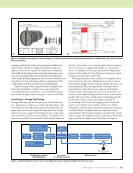
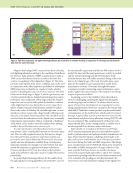
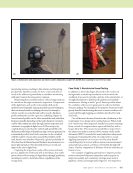
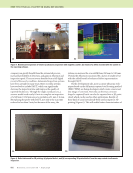
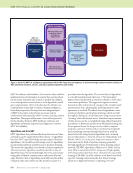
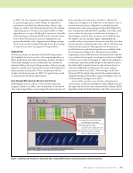
800 M A T E R I A L S E V A L U A T I O N • J U L Y 2 0 2 0 The development of NDE/SHM databases will provide the following benefits for service and quality management teams: l Graphic planning and improved control of project processes, and subsequently a quicker overview of planned activities and results from activities that have been carried out. l CAD linking for equipment data and automatic access to assigned CAD drawings. l Comfortable implementation of inspections with a modular inspection and evaluation system (MIES) and importing of NDE data, such as X-ray radi- ographs, into protocols. l Documentation and archiving of activities and work results. l User-specific access to data and functions with intuitive operation using a graphic user interface. l Quick access combined with a high level of data security. Such a system would include standard software (such as word processing, spreadsheet analysis, and graphics) and enable graphic and statistical presenta- tion of the imported measurement data. An example for such a system is the inspection and revision management system (IRMS). The basic idea is to support all the necessary process steps in connection with inspection and revision metrics at power plants, chemical plants, and other industrial facilities based on a modular design, going beyond process limits. An IRMS approach that was developed approxi- mately 10 years ago is presented in Figure 4. This system integrated all necessary processing steps based on the organizational processing diagram of the documents and data, beginning with the planning of activities to their evaluation, documen- tation, and archiving. In today’s world, the “working box” has sensors and can adapt. Actions can deviate from original plans within an intended plan. Such planning can become very different from current methods—it includes objectives, constraints, and space for flexibility, in addition to defined activi- ties and timelines. An integrated MIES enables the complete integra- tion of all activities—for example, by including the computer-supported processing of ultrasound, eddy current, and visual inspections with videoscopy and endoscopy. Simultaneously, machine parameters and inspection results are directly transferred to the MIES modules. In such an approach, the processing of raw NDE data is supported. An example of this is scanned X-ray images with IQIs compared to measured geometric details. A CAD interface allows the linking of NDE results to CAD. Processed elements are then found in linked CAD documents and highlighted. The CAD documents can be processed online. Including process modeling, for example, along with thermal cycles and solidifica- tion sequences in welding might be a future step in obtaining information of value to make assessments for advanced NDE. An interesting and related tool, which is used for prognostics, is stress analysis. Appropriate analysis and images for stress analysis can be automatically generated for processed elements and then be imported into CAD documents. These concepts for ME FEATURE w nde 4.0: challenges and opportunities Working Documentation Planning Machine Figure 4. Integration of all processes in the inspection and revision management system (IRMS). These ideas are not new, but today advanced computers give us the capability to apply them in near real time and do so cost effectively.

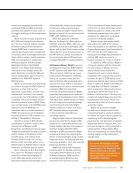
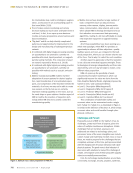
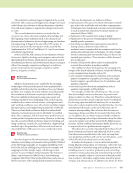
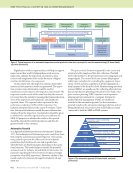
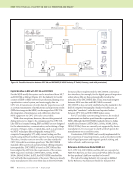
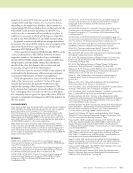
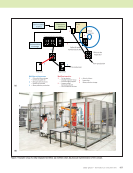
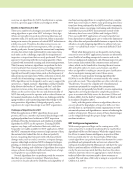
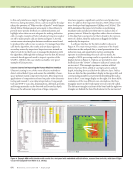
J U L Y 2 0 2 0 • M A T E R I A L S E V A L U A T I O N 801 data processing are depicted in the schematic given in Figure 5. These ideas are not new, but today advanced computers give us the capability to apply them in near real time and do so cost effectively. Even better, there is an increasing capability with widely available elec- tronic devices (such as tablet computers and smart- phones) and WLAN, which means that service teams can potentially gain access to these data almost anywhere on the globe and at any time. Commonly available communication devices (such as tablet computers and smartphones) incorpo- rate various sensors in the form of cameras, micro- phones, vibration sensors, and accelerometers. Other smartphone-attachable tools are now available for purchase such as IR cameras (FLIR Systems 2017), terahertz arrays (Boyle 2012), and eddy current trans- ducers (Mook and Simonin 2008), and these units can be potentially used for NDE. The use of these tools is almost as simple as downloading an app from an app store and attaching the necessary device to the phone. That is literally everything that is necessary for a person to start taking measurements. With the availability of smartphones and tablets, the whole world’s accumulated knowledge (which is a large amount of data) can potentially, with the right software tools, become available to anyone at any time and in any place. For the younger generation, this technology is intuitive, and they possess a natural flair for it. Merging the highly specialized knowledge of NDE techniques with today’s technology will open a new market for NDE (Meyendorf 2018). These new handheld devices will be applied to make NDE more available and affordable for everybody. As a benefit of these new technologies, product inspection at home can become an additional part of monitoring a product through its life cycle. This type of integration into everyday life has the potential to significantly Components Elements Element data Documents, drawings Documents, drawings Inspection control Inspector Base data Protocols Processes Projects Project control Inspection results (verbal) Process-specific Not process-specific Setup data Measuring data (manual) Measuring data (mechanized) Inspection measure Inspection measure control Graphics Figure 5. Concept for data processing in the inspection and revision management system (IRMS).
ASNT grants non-exclusive, non-transferable license of this material to  .
All rights reserved. © ASNT 2026. To report unauthorized use, contact: customersupport@asnt.org