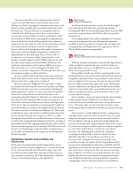
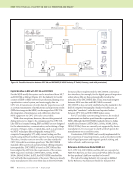
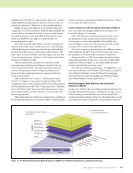
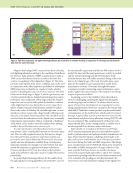
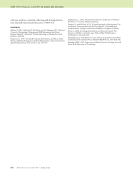
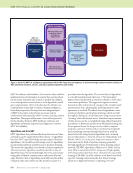
840 M A T E R I A L S E V A L U A T I O N • J U L Y 2 0 2 0 ME TECHNICAL PAPER w nde 4.0: perception and reality l “Each NDE method’s own limitations for defect characteriza- tion make it harder for techs to master all methods to find all anomalies. [A] UT expert may not confirm [their] finding by RT method since [they’re] not [an] expert in RT, [making] it more specific to [an] individual with that skill. Which is hard for each tech to master all methods.” l “So many NDT inspectors who have not enough experience and little knowledge of welding making false calls.” l “I don’t inspect chips [parts of components that will be removed in machining steps after NDT].” l “Lack of ethics in certification/qualification/training of technicians.” The second group of responses is related to the external perception or criticism of the benefits of NDT, or comments addressed to examiners: l “Many times, other engineers and project managers never include NDT engineering in planning because they believe they know everything there is to know about NDT. Many times, mindlessly prescribing methods that cannot detect the flaws or just throwing it in after planning with[out] even thinking. NDT Level IIIs and engineers should always be included in design and planning phases. This will save money [in] the long run.” l “Why don’t you inspect at a different location?” l “You mustn’t look for indications in [the] area you expect defects.” l “You can use another method then the findings are acceptable.” l “We don’t need NDT—you only test [and introduce] flaws into the material.” l “NDT in civil engineering: ‘We don’t need NDT, the safety factors in design will cover any flaws (and probabilities will cover any uncertainties).’” l “It’s ‘no value added.’” l “Production brake.” l “Unnecessary cost factor.” l “NDT does not have any value at all. It only sorts out parts that in reality are good. I don’t want it and I would never ever do it, but my customer insists on it.” As an NDE sector, these points must be accepted as a point of view, evaluated, and considered as opportunities for continual improvements in our field. The first group of answers is about training, morality, and reliability. These topics relate mainly to “Industry 4.0 for NDE” and “human considerations.” “Industry 4.0 for NDE” could also be called emerging technologies for NDE and cover topics like the use of AI, machine learning, deep learning, big and smart data processing and visualization, cloud computing, augmented/ virtual/mixed reality, blockchains, 5G, quantum computers, enhanced robotics and drones, and revision-safe data formats and storage for a safer, cheaper, faster, and more reliable inspection ecosystem. Human considerations include topics like management and leadership 4.0, digital transformation and organizational behavior, training and certification, standards and best practices, human factors, and human- computer interaction (Vrana and Singh 2020). The second group of responses shows that NDE is seen by many as an unnecessary cost factor and relates mainly to “NDE for Industry 4.0.” This paper focuses on NDE for Industry 4.0. Industry 4.0 for NDE and human considerations are not considered further in this paper. NDE 4.0 is the chance for the NDE industry to free itself from this niche. Until now, NDE methods have “only” been used to search for indications in order to meet standards that many customers think are unnecessary. But NDE can do more. NDE offers a view into components and joints and is therefore an ideal database for use in digital engineering (Tuegel et al. 2017), better lifing calculations or fracture mechanical models (Vrana et al. 2018), the prediction of production problems, the improvement of production, and more. This must be used. For this purpose, however, the results of the inspection must be made available digitally so that customers can evaluate the results. It therefore requires standardized, semantic, manufacturer-independent interfaces and standardized open data formats. This also requires a change of the thought processes for inspectors. Comments such as “I don’t inspect chips” show that the concepts of Industry and NDE 4.0 need to be presented to inspectors. In the context of Industry 4.0, all information is important. Test results from areas that will later be machined also contain valuable information that can be used, for example, to improve lifing models (lifing analysis is the generic term for the lifetime calculation methods used in engineering, such as fracture mechanics or fatigue lifing). Integration of NDE in Product Development, Production, and Operation As indicated previously, NDE, as an integral part of the product development process, industrial production, and industrial operation, provides the quality assurance means needed by industry. During the product development process (Figure 1), the specifications for production and inspection are created through the cooperation of experts from design, material sciences, production, and NDE. These are inspected to optimize design and inspections. The value of NDE can already be seen here, as NDE offers a look into the prototypes and can therefore make a significant contribution to improving design and production. This requires interfaces for the statistical evaluation of the data (together with the process data from the inspections). The data that can be obtained during subsequent serial production and service provide an even better picture of the components produced and their joints. This allows further improvements in design and production. In addition, the data Watch the video What Is NDE 4.0?

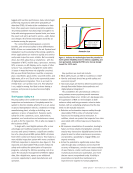
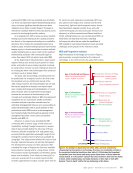
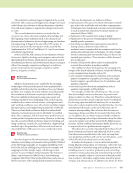
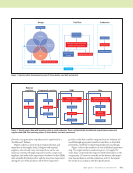
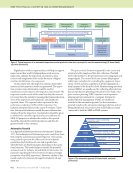
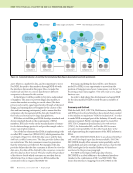
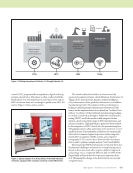
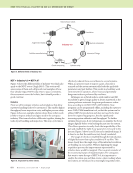
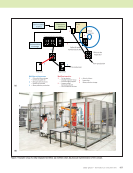
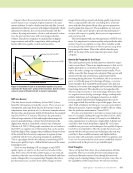
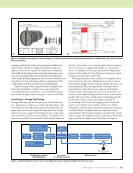
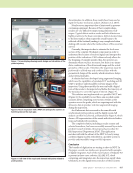
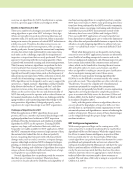
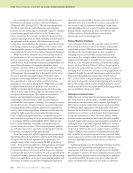
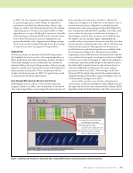
J U L Y 2 0 2 0 • M A T E R I A L S E V A L U A T I O N 841 allow the next generation of products to be optimized in a “feedforward” fashion. Figure 2 shows a closer look at serial production and inspection in the supply chain. It begins with material suppliers, who already carry out inspections on the raw material, continues through inspections at the component suppliers, and ends at the inspections conducted at the OEMs who assemble the final product and the in-service inspections during the use of the products. All of these inspections provide results that could be integrated into an Industry 4.0 world through appropriate interfaces and thus, as described previously, contribute to improving production and design. Figure 3 shows the interfaces of each individual inspection step. The input interfaces marked in green (1) supply the order data (2) provide the inspector with information on the component (3) serve to correctly set the devices, the inspec- tion, the mechanics, and the evaluation and (4) document the results in accordance with the specifications. Inspection Production Inspection Production Machining Inspection Receiving and acceptance inspections Machining Assembly Service inspection Commissioning and acceptance inspections Operation End of life Material suppliers Component suppliers OEM User Figure 2. Typical supply chain with inspection steps in serial production. There could potentially be additional steps between component suppliers and OEM, like machining shops. (© Vrana GmbH, used with permission). Design NDE Design Standards NDE specifications Material science Manufacturing Field test inspections and additional inspections Optimization NDE Optimization design Production prototype(s) Inspection Production Commissioning Design Field Test Production Feedback Figure 1. Typical product development process (© Vrana GmbH, used with permission).
ASNT grants non-exclusive, non-transferable license of this material to  .
All rights reserved. © ASNT 2026. To report unauthorized use, contact: customersupport@asnt.org