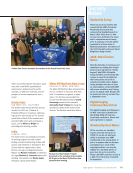
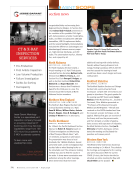
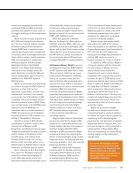
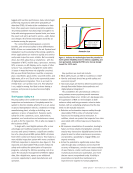
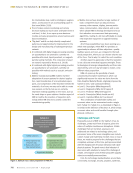
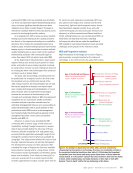
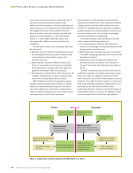
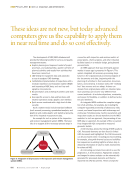
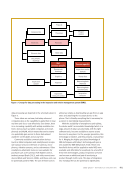
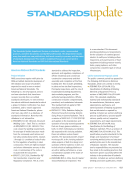
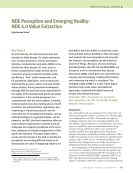
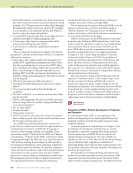
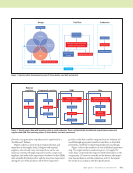
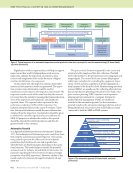
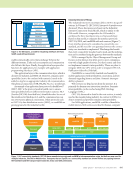
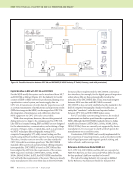
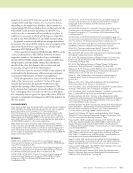
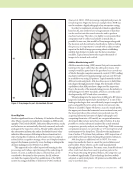
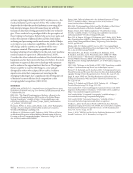
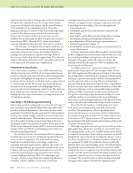
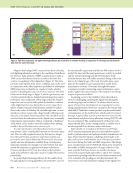
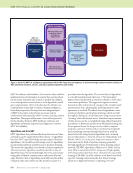
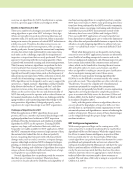
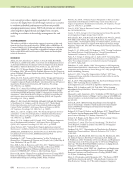
844 M A T E R I A L S E V A L U A T I O N • J U L Y 2 0 2 0 Where data security is the necessary basis, data sover- eignty goes one step further protecting data. Data sovereignty guarantees the sovereignty of data for its creator or its owner. Data itself, if not artistic, is legally not protected by any copy- right. Therefore, currently if a dataset is submitted to somebody else, only individual contracts can hinder the receiver from forwarding or selling the data (even if it is submitted using data encryption). Therefore, two measures have to be implemented to guarantee data sovereignty: (1) legal documents need to be prepared and (2) software and interfaces need to be implemented to restrict the use of the receiver in order to adhere to the rules of the submitter. In the industrial world, data sovereignty is assured by measures like the ones discussed at the end of this paper. This enables the creation of reasonable digital twins, leads to added value, and creates new markets. Industry 4.0 Asset Administrative Shell Plattform Industrie 4.0 started the development of the Industry 4.0 asset administration shell (AAS) in 2015 (Plat- tform Industrie 4.0 2016, 2018). The AAS is the virtual repre- sentation of each asset—its digital twin. An asset can be a device, but also a component, a plant, an entire factory, a software, or even a person/operator/inspector. Each AAS consists of a manifest and a component manager (Figure 5). The manifest is a table of contents that provides all of the information about the asset in the header. In the body, the manifest references all data stored by the asset and all functions that can be performed by the asset. The manifest is defined in XML or JSON (Plattform Indus- trie 4.0 2018). The component manager contains the actual implementations and realizes the interaction, functionality, and high-performance data queries. Each AAS and each individual asset must have a globally unique identifier (ID), which is stored in the header. The ID of the AAS is the ID of the type of component—for example, whether it is a drill or a conveyor belt. The ID of the asset is the ID of the instance—meaning whether it is drill 1, 2, or 25. AASs may be nested within one another. The AAS for a production line can reference the AAS of the various processing machines, inspection machines, and so on. The AAS for an inspection system can, for example, contain the AAS for the mechanical drives, the sensors, and the actual test system. People, such as operators or inspectors, are also repre- sented by an AAS. For example, there may be an AAS for a Level III UT inspector specializing in the inspection of castings. This inspector receives the assigned task via a tablet or an augmented reality platform, and the results are stored digitally by the inspector. This shows that Industry 4.0 is not striving for a deserted factory. For Industry 4.0, networking is crucial, and results must be available digitally. It does not require automation. For some work steps, especially repetitive tasks, it makes more sense to use automated solutions. But for other work steps, a human being is more effective. Interfaces The introduction showed the need for standardized, vendor- independent interfaces, and the AAS provides a standardized virtual representation of each asset describing the function- ality and interfaces offered by the asset. But what are the inter- faces in this context? Is it the question regarding the physical interface? The question regarding USB, Wi-Fi, or 5G? The question regarding transmission control protocol/internet protocol (TCP/IP), hypertext transfer protocol (http), exten- sible markup language (XML), or OPC UA? Before further discussion, the term “interface” must be defined in more detail. Open Systems Interconnection Model The open systems interconnection (OSI) model (Figure 6) gives an overview of the different abstraction layers of digital interfaces and helps to select the interfaces that are decisive for NDE 4.0. The lowest level represents the physical connec- tion, such as a cable or radio connection. The first OSI layer—the transmission of the individual bits—runs via this connection. The information to be transmitted is combined with transmitter and receiver addresses and other information in the data link layer to form frames. Information packets are “tied” in the network layer and combined into segments in the transport layer. The layers above are the so-called host layers. The session layer is responsible for process communication. The presenta- tion layer is responsible for converting the data from a system-independent to a system-dependent format and thus ME TECHNICAL PAPER w nde 4.0: perception and reality Figure 5. Industry 4.0 asset administration shell for an ultrasonic testing system (© Vrana GmbH, used with permission).

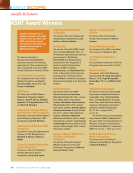
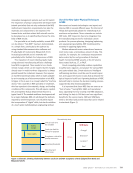
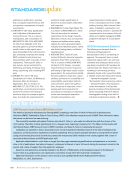
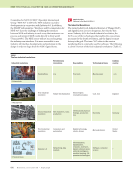
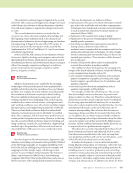
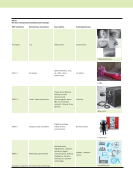
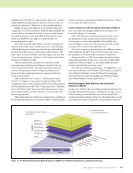
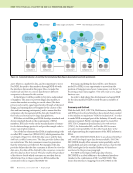
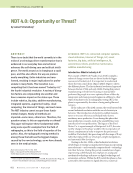
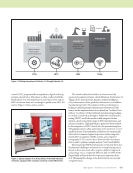
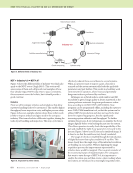
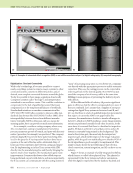
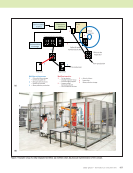
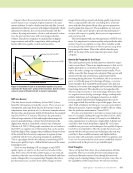
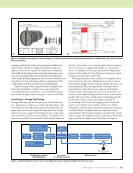
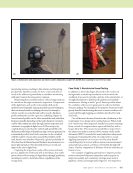
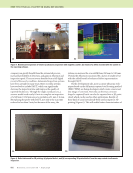
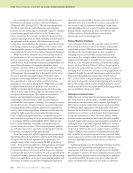
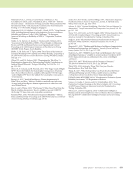
J U L Y 2 0 2 0 • M A T E R I A L S E V A L U A T I O N 845 enables syntactically correct data exchange between the different systems. Tasks such as encryption and compression also fall into this layer. Finally, the application layer provides functions for applications for example, with application programming interfaces (API). The application layer is the communication layer, which is decisive for Industry and NDE 4.0. However, semantic inter- operability (not to be confused with syntactic) needs to be added on top for an appropriate Industry 4.0 communication. The physical connection (USB, WLAN, 5G, etc.) is irrelevant. An example of an application layer protocol is health level 7 (HL7). HL7 is the protocol used in health care to ensure interoperability between different information systems. HL7 (besides DICOM, described later) should therefore be one of the interfaces for Medicine 4.0, and the communication can run over various physical connections. Other protocols such as OPC UA, data distribution service (DDS), or oneM2M are gaining ground in the industrial world. Industrial Internet of Things The Industrial Internet Consortium defines IIoT in its specifi- cations. In Volume G5 (IIC 2018), Internet 4.0 interfaces are discussed. Those discussions are based on the Industrial Internet Connectivity Stack Model, which is similar to the OSI model. However, compared to the OSI model, it combines the three host layers into one framework layer. Based on this model, it compares the interface protocols OPC UA, DDS, and oneM2M with web services (Figure 7). Every interface protocol is considered a connectivity core standard, and the need for core gateways between the connec- tivity core standards is emphasized. This brings the benefit that every connectivity standard can be used, and the informa- tion can be combined using the gateways between the standards. DDS is managed by the Object Management Group and focuses on low-latency, low-jitter, peer-to-peer communica- tion with a high quality of service. It is data-centric and does not implement semantic interoperability. There are plans to integrate DDS into OPC UA in order to integrate OPC UA Publication-Subscribe (PubSub). OneM2M is a connectivity standard used mainly for mobile applications with intermittent connections and low demands regarding latency and jitter. Semantic interoper- ability is planned. Web services use http, known from the internet. It is primarily for human user interaction interfaces. Semantic interoperability can be reached using Web Ontology Language (OWL). OPC UA, discussed in detail in the next section, is mainly used in the manufacturing industry. In contrast to DDS, it is object oriented and provides semantic interoperability. For NDE applications, oneM2M could be of benefit for mobile devices. Web services are ideal for human-computer Transmitter Receiver Application Presentation Session Transport Network 1 2 3 4 5 6 7 Data link Physical Physical connection Figure 6. The OSI layers, a model for visualizing interfaces (© Vrana GmbH, used with permission). Physical Link Network Transport Framework Distributed data interoperability and management TSN/ Ethernet (802.1, 802.3) DDS DDSI-RTPS CoAP MQTT HTTP OPC UA bin TCP TCP UDP Internet protocol (IP) oneM2M Web services OPC UA Wireless PAN (802.15) Wireless LAN (802.11 Wi-Fi) Wireless 2G/3G/LTE (3GPP) Wireless wide area (802.16) Telecommunications origin Manufacturing origin Figure 7. IIoT connectivity standards. OPC UA has a manufacturing origin and oneM2M a telecommunication origin, but both are now used for multiple industries, like DDS or WebServices. Transports that are specific to a connectivity standard are shown without any spacing between the framework and the transport layer boxes (IIC 2018, used with permission). Media layers Host layers
ASNT grants non-exclusive, non-transferable license of this material to  .
All rights reserved. © ASNT 2026. To report unauthorized use, contact: customersupport@asnt.org