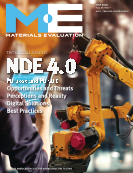
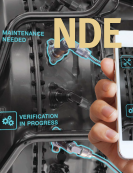
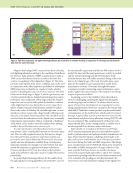
794 M A T E R I A L S E V A L U A T I O N • J U L Y 2 0 2 0 ME FEATURE w I ndustry 4.0 and the ability to tailor individual components to specific customer needs will significantly impact the way we need to provide nondestructive testing (NDT) inspections. We now call this NDE 4.0. This does not necessarily mean that we will develop a new type of nondestruc- tive evaluation (NDE) however, we will have to prepare or adapt our current tech- niques for integration into the cyber-controlled production process by networking with the machines and materials used during manufacturing. The ability to produce individual parts tailored to specific customer needs will result in a paradigm shift between industrial quality management and NDE. The following paper will discuss the challenges and opportunities that the NDE industry will face in today’s age, which the authors have named the “age of artificial intelligence.” This is characterized by “digitalization” and moving toward an exponential conver- gence of atoms, bits, qubits, neurons, and genes. Artificial intelligence will poten- tially be the key to creating smart machines with the ability to make smart decisions on their own while working side by side in a partnership with humans. Introduction The concept of “NDE 4.0” was introduced at the 2017 SPIE symposium “Smart Structures and Nondestructive Evaluation” in the plenary presentation titled “NDE for the 21st Century: Industry 4.0 Requires NDE 4.0” (Meyendorf 2017). Meyendorf discussed how various revolutions in technology have impacted the development of NDE and outlined the opportunities and challenges he NDE 4.0 in Manufacturing: Challenges and Opportunities for NDE in the 21st Century by Norbert G. Meyendorf, Peter Heilmann, and Leonard J. Bond SMART nde

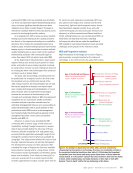
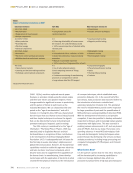
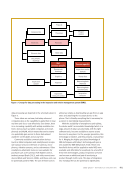
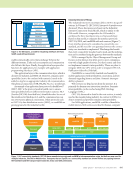
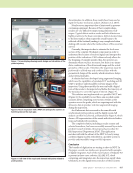
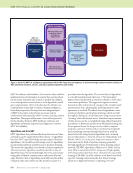
envisioned for NDE in the new industrial area of Industry 4.0. These concepts have inspired forward-looking discus- sions, and some significant activities have now been initiated to move these concepts forward. This paper is intended to contribute further to these discussions and to present the developing ideas of the authors. In its simplest form, NDT is almost as old as mankind. Testing could involve listening to the cracking of a bent tree branch or the response to knocking on a nutshell to determine if it is hollow this eventually evolved into a simple acoustic emission testing inspection that involved tapping a pot or a visual examination to assess aesthetic quality. Testing became a way to check on the quality of workmanship during the 19th century and began to evolve from about 1870 into what is now called NDE. At the beginning of industrialization, steam power replaced human and animal muscle power for many tasks, and products were simply inspected randomly by using human senses, but such testing was found to be inadequate when new technologies were produced and items such as boilers failed. The basic idea for providing a nondestructive test for quality has not changed a lot since the first indus- trial revolution and up until the last decade of the 20th century however, the instrumentation we use and the way we apply the techniques now depend upon more complex technology and industrialization. In recent years, the basic idea has evolved from inspecting to minimize the occurrence of discontinuities, to life concepts such as damage tolerance. With more advanced equipment, we can now look for smaller and hidden anomalies and plan inspection intervals based on estimated damage growth rates so as to assure safety. As advancing technologies seek to push materials to their performance limits, NDE becomes a risk-management tool. Fundamentally, this philosophical approach of risk management becomes a more active and real-time function with NDE 4.0. Advances in science have provided the NDT community with a diverse range of new tools and capabilities. Looking through transparent or opaque objects was possible before the discovery of X-rays. However, with the availability of X- and gamma rays, we extended the applicable wavelength range of elec- tromagnetic radiation beyond what was available by using light. This advancement allowed the user to look through materials that were not optically transparent. The development of sonar and then ultrasonic NDT extended the range of frequencies that were available beyond human hearing and to a range above 20 kHz. This involves shorter wavelengths and therefore allows better local resolution. Such ultrasonic testing (UT) is now seen as just part of an acoustic spectrum that includes applications in surface acoustic wave devices for electronics and exploration seismology. NDT now also utilizes technologies that employ heat (thermal inspections), light and electromagnetic waves (visual, liquid penetrant, magnetic particle, X-ray, and eddy current techniques), and sound (acoustic emission and ultrasonic) in all their various forms (Ahmad and Bond 2018). Looking forward, we can now talk about NDE 4.0, which does not mean that we invent a new NDE technique, but rather that we make the capabilities of NDE available in new implementations to meet upcoming challenges and to prepare for the mid-21st century. NDE and Progress in Industry Major innovations in technology can be seen in Figure 1, which provides a simple timeline for the history of technology. In the 19th and into the early 20th century J U L Y 2 0 2 0 • M A T E R I A L S E V A L U A T I O N 795 Age of (artificial) intelligence Smart cross-linked systems replace human decisions Age of information Electronic machines replace human memory Age of mechanization Mechanic machines replace human muscle power 2000 1900 1800 1700 around 2010 Internet of Things around 2000 Complex smart sensor systems 2000 Sensor networks Local and global networks 1960 Sensors and amplifiers Simple sensors 1909 Nobel prize for wireless telegraph 1901 Picture telegraph 1833 Electromagnetic telegraph (Morse) 1792 Wing telegraph 1769 James Watt 1700 Thomas Newcom Heron of Alexandria 1st century Figure 1. An attempt to characterize the 19th, 20th, and 21st centuries by showing typical innovations in technology. This does not completely correlate to the recognized industrial revolutions (see Table 1). It illustrates that important innovations have often been made many years ahead (some of them cannot be exactly dated). It is the authors’ opinion that smart machines that have the ability to learn, solve complex tasks, and make decisions on their own or work with humans “hand in hand” will be the key technology of the future.
ASNT grants non-exclusive, non-transferable license of this material to  .
All rights reserved. © ASNT 2026. To report unauthorized use, contact: customersupport@asnt.org