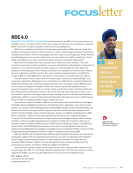
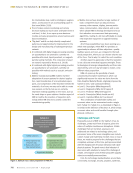
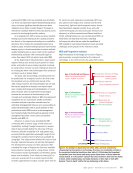
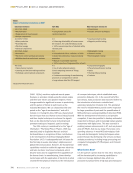
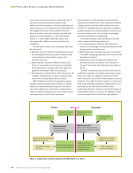
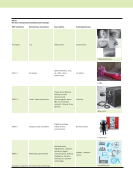
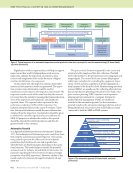
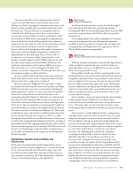
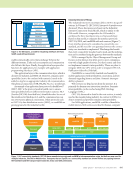
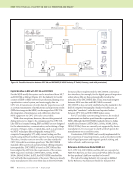
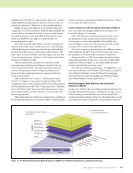
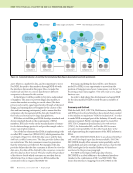
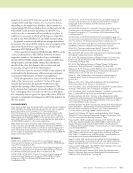
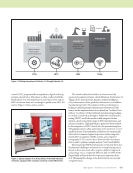
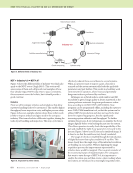
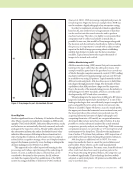
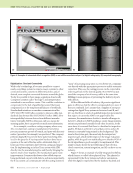
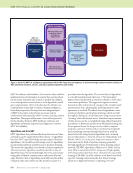
838 M A T E R I A L S E V A L U A T I O N • J U L Y 2 0 2 0 ME TECHNICAL PAPER w nde 4.0: perception and reality cyber-physical systems to make decisions independently is growing. This results in the need for data transparency and the need for open standardized interfaces with semantic interop- erability between all devices in the industry. To drive these developments, the term Industry 4.0 was created in the year 2011 (Kagermann et al. 2011). Within a very short time, especially in Germany, many projects and groups were created with the aim of standardizing development, like Platform Industrie 4.0 and the International Data Spaces Association (IDSA). Without them, the fourth industrial revolution cannot function. Similarly, the Industrial Internet Consortium (IIC) was established in the United States in 2014 to work on IIoT standards. So, even from a hardware standpoint, the fourth industrial revolution uses the technical principles of the third revolu- tion, but leads to a completely new transparency of informa- tion through the informatization, digitalization, and networking of all machines, equipment, sensors, and people in production and operation. Industry 4.0 enables feedback and “feedforward” loops to be established in production, the ability to determine trends through data analysis, and a better overview to be gained through visualization. The first three industrial revolutions were declared by historians. The fourth, on the other hand, uses the term “4.0” to introduce it. For the reasons given previously, it might be appropriate to speak already of a fourth revolution. However, only history will show whether it is worthy of the name. The Revolutions within NDE Nondestructive testing (NDT) and NDE underwent a similar development compared to industry and can also be divided into four revolutions (Table 2). For the first industrial revolu- tion, the basis was handcrafting that had developed over the millennia. For NDE, the basis is perception. Through their senses, people have been able to “test” objects for thousands of years. They looked at components and joints and smelled, felt, knocked on, and even tasted items to learn something about their condition and interior. The first revolution, or the birth of NDT, took place partly through the introduction of tools that sharpened the human senses and partly through the standardization of testing procedures. Procedures (not necessarily in written form) made the results of the tests comparable, and tools such as lenses, colors, and stethoscopes improved detection capabili- ties. At the same time, industrialization also made it necessary to expand quality assurance measures. The second revolution of NDE, like the second revolution of industry, is characterized by the use of physical and chemical knowledge and electricity. The transformation of electromagnetic or acoustic waves, which lie outside the range of human perception, into signals that can be inter- preted by humans resulted in the ability to “look” into the components. Parallel to industry, microelectronics, digital technology, and computers made the third revolution in NDT possible. Digital inspection equipment, such as X-ray detectors, digital ultrasonic testing (UT) and eddy current equipment, and digital cameras were developed, making it possible to automate inspection. The fourth revolution could become the greatest for NDT, turning the entire business upside down. First, the Industry 4.0 emerging technologies can be used to enhance NDE technologies and NDE data processing (“Industry 4.0 for NDE”). Second, a statistical analysis of NDE data provides insight into reliability, inspection performance, training status, consistency, and value of inspections (“Human Considera- tions”). Finally, NDE is the ideal data source for Industry 4.0 (“NDE for Industry 4.0”) (Vrana and Singh 2020). As with Industry 4.0, the aim is to create new information transparency through informatization and networking. This will turn NDE from a niche product into one of the industry’s most valuable sources of information. Just like in the area of Industry 4.0, this will require a standardization of interfaces and the disclosure of data formats. Companies can now decide whether they want to follow the course of Blockbuster, Quelle, or Karstadt, or rather follow Netflix and Google. Challenges of NDE To illustrate the benefits of NDE 4.0, a nonrepresentative survey on social media was conducted (Vrana GmbH 2019 Vrana 2019a). As the awareness of the benefits of Industry 4.0 and NDE 4.0 is not yet evident in practically any industry, the question was regarding criticism of NDE and inspectors. From this it can be determined how NDE 4.0 can help to master these challenges. A sampling of responses is listed below (to read all the responses, refer to Vrana GmbH 2019 and Vrana 2019a). They show a wide variety of challenges and identify some necessary improvements needed in the industry. Some of the answers might present stereotypes, but even stereotypes can contain a core truth. For a better under- standing, the responses have been grouped and editorial comments within the answers are indicated by brackets. For a more detailed analysis of these comments, refer to the full study (Vrana and Singh 2020). The following answers are related to criticism regarding education and morale in the NDE industry: l “‘NDE is not a skilled trade’ is something I’ve heard over and over by some [people] in ‘skilled trades.’” l “Lack of process knowledge.” l “Lack of surface preparation.” l “Reference is not up to the mark.” l “Risk outcomes for miss-calls in NDE are higher, making it [a] more responsible and skill critical field whether it’s aerospace, pipeline, or refinery work.” Watch the video The Four NDE Revolutions

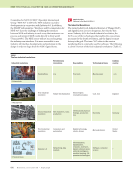
NDT revolutions Revolutionary innovations Key enablers Technological basis Perception n/a Simple tools Human senses © Allan-Hermann Pool NDE 1.0 Procedures Optical elements, soot, oil, chalk, colors, stethoscopes Procedures © BMB NDE 2.0 “View” inside components Chemical and physical findings, such as ultrasonic and electromagnetic waves (MT, ET, microwaves, terahertz, infrared, X-ray, gamma) Electricity (Müller 1951) NDE 3.0 Computers and automation Digital technology, robots, drones, reconstruction Microelectronics © VisiConsult NDE 4.0 Networking, data markets Informatization, digitalization, networks, interfaces, digital communication, artificial intelligence, machine learning, 5G, quantum technologies Software, computer science © Franziska Vrana *Developed in collaboration with Daniel Kanzler and Ripi Singh TABLE 2 The four revolutions of nondestructive testing*
ASNT grants non-exclusive, non-transferable license of this material to  .
All rights reserved. © ASNT 2026. To report unauthorized use, contact: customersupport@asnt.org