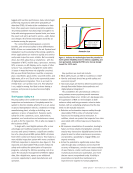
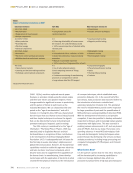
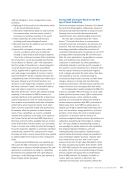
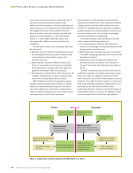
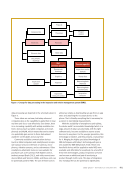
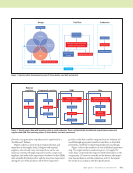
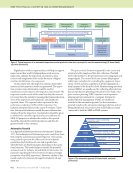
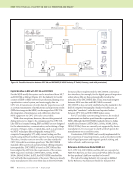
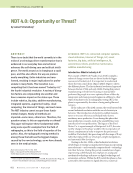
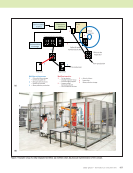
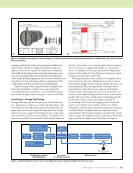
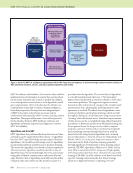
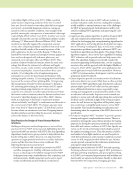
848 M A T E R I A L S E V A L U A T I O N • J U L Y 2 0 2 0 Digital Workflow in NDE with OPC UA and DICONDE For the NDE world, this system can be transferred from HL7 and DICOM as follows (Figure 10): the Industry 4.0 world consists of ERP or MES servers for production planning or as a production control system, and assets supply data via OPC UA. A transmission of order data for inspections as well as a return transmission of notifications and inspection results (KPIs for storage in the MES) can be mapped via OPC UA. An integration of maintenance and calibration data from NDE equipment via OPC UA is also conceivable. With a few exceptions, however, the raw data generated during tests are too large to be communicated via OPC UA. Like HIS in a hospital setting, ERP and MES are not designed for the administration, communication, and archiving of large amounts of images, video, or signal data, such as is generated via NDT techniques like radiographic testing (RT), computed tomography, UT, eddy current testing, and the total focusing method/synthetic aperture focusing technique. Therefore, it makes sense to store the raw data outside the OPC UA world in a revision-proof way. The DICONDE standard offers a protocol and data format offering semantic interoperability. DICONDE is based on DICOM and has been adapted by ASTM to the requirements of the various NDE inspection methods (ASTM 2015, 2018a, 2018b, 2018c, 2018d, 2018e). In RT, the DICONDE standard fits very well with the requirements of the users. There are already many manufacturers who store their data in the DICONDE format and have implemented the DICONDE communica- tion interfaces for example, for the digital query of inspection orders whose IDs are then automatically stored in the metadata of the DICONDE files. Thus, structural integrity between NDE raw data and ERP/MES is ensured. DICONDE is also currently established as the standard in the field of computed tomography. Similar to health care, an entity that “translates” order data and reported values between OPC UA and DICONDE makes sense. For UT and eddy current testing, however, the medical requirements are further apart from the requirements of NDE. Although the DICONDE standard strives to define suitable data formats (ASTM 2015, 2018a, 2018b, 2018c, 2018d, 2018e), these are currently not supported by device manufacturers. It is necessary to clarify at which points the manufacturers see a need for action. Contrariwise, DICONDE can be easily implemented for the connection of visual inspections, such as for photos in the field of liquid penetrant and magnetic particle testing, and videos of endo- and borescope tests. Reference Architecture Model RAMI 4.0 IIoT, OPC UA, DICONDE, and the AAS are concepts for NDE 4.0. But how are they connected? What different tasks do they perform? And how can they be located? The task of locating Industry 4.0 concepts is fulfilled by the Reference Architecture Model for Industrie 4.0 ME TECHNICAL PAPER w nde 4.0: perception and reality ERP Industrial facilities/plants MES Inspection planning Archive Branch office Offshore/remote Inspector/ data interpreter Image distribution OPC UA DICONDE Figure 10. Possible interaction between OPC UA and DICONDE (© VISUS Industry IT GmbH, Germany, used with permission).

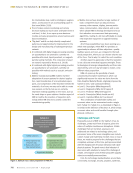
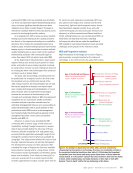
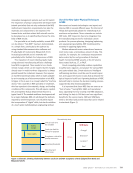
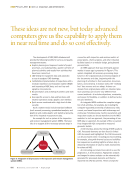
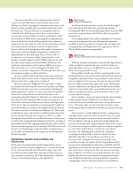
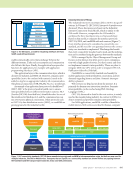
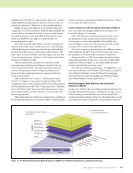
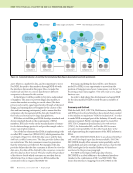
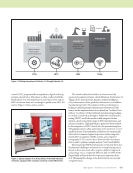
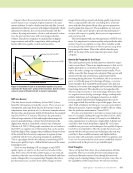
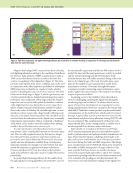
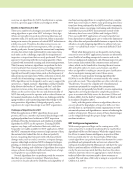
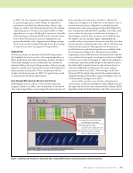
J U L Y 2 0 2 0 • M A T E R I A L S E V A L U A T I O N 849 (RAMI 4.0) (DIN 2016), as illustrated in Figure 11. Unfortu- nately, RAMI 4.0 is quite abstract however, it is one of the core models for Industry 4.0. Therefore, it is discussed briefly here. RAMI 4.0 shows the Industry 4.0 world that it has to be completely covered by interfaces. With the help of RAMI 4.0, every Industry 4.0 standard, interface, protocol, administra- tion shell, and asset can be described and located in a struc- tured way. RAMI 4.0 also helps to clarify whether all necessary interfaces exist. The “Life Cycle and Value Stream” axis shown in Figure 11 represents the value chain and life cycle of an asset, starting with the development and usage of a new type, through the production of the instance to the usage of the instance. The term “type” is used to identify a new asset type, such as a new X-ray inspection system. “Instance” refers to the test facilities that have actually been built. The hierarchy levels correspond to the layers of the automation pyramid shown in Figure 4, except for the top level, “Connected World.” The automation pyramid only covers communication within enterprises however, for Internet 4.0 data exchange between companies, this layer needs to be included. The architecture axis (“Layers”) and the lowest layer (“Asset”) in Figure 11 represents the physical object. The “Integration” layer is the transition layer between the physical and the information world. The “Communication,” “Informa- tion,” and “Functional” layers are abstraction layers to repre- sent communication, and the “Business” layer describes the business perspective. The Industrial Internet Reference Architecture, published by the Industrial Internet Consortium (2019), defines similar architecture layers compared to RAMI 4.0. However, it does not consider the other two axes. Location of AAS, IIoT, OPC UA, and AutomationML to RAMI 4.0 Due to its three-axes design, RAMI 4.0 is the ideal tool to locate all Industry 4.0 concepts. OPC UA, like most communication protocols, covers the information and communication layers for instances (not for types), such as the right half of the middle two layers in Figure 9. Moreover, the connected world and the enterprise level is not covered by OPC UA. Due to its connection gateways between different connec- tivity standards, the IIoT Connectivity Framework covers the enterprise level, but not the connected world level. AutomationML, an XML-based data format for storing and exchanging plant design data, covers the left half of the middle two layers in Figure 11. AutomationML therefore serves to describe the type of an asset. The AAS sees itself as a virtual image—the digital twin—of each asset and thus as a link between all interfaces and proto- cols within the Industry 4.0 world. Projects for mapping between OPC UA, AutomationML, and AAS have begun and will be detailed in future publications. Data Sovereignty, Data Markets, and Connected Internet 4.0 World As shown in Table 1, the networking of industrial production through standardized interfaces and thus the storage and use of the resulting crosslinked data sets is elementary for the fourth industrial revolution. However, the linked data records also represent a value in themselves. Data itself becomes an Business Life cycle and value stream IEC 62890 Hierarchy levels IEC 62264/IEC 61512 Connected world Work centers Control device Field Functional Information Communication Integration Asset Maintenance/ usage Production Maintenance/ usage Development Type Instance Figure 11. The Reference Architecture Model Industry 4.0 (RAMI 4.0) (© Platform Industrie 4.0, used with permission). Layers
ASNT grants non-exclusive, non-transferable license of this material to  .
All rights reserved. © ASNT 2026. To report unauthorized use, contact: customersupport@asnt.org