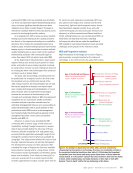
J U L Y 2 0 2 0 • M A T E R I A L S E V A L U A T I O N 837 The industrial revolution began in England in the second half of the 18th century and brought about change from hand- crafted forms of production to the mechanization of produc- tion with steam engines or regenerative energy sources such as water. The second industrial revolution was marked by the economic use of new chemical and physical knowledge and the beginning of new industries such as the chemical and pharmaceutical industries, electrical engineering, and mechan- ical engineering. It began at the end of the 19th century in Germany and led to the introduction of the assembly line (implemented in 1913 at Ford Motor Co.) and to new forms of industrial organization. At the end of the 20th century, the development of micro- electronics, digital technology, and computers ushered in the third industrial revolution, which allowed automated control of industrial production and revolutionized data processing in offices (for example, computers and laptops) as well as in private environments (for example, computers, mobile phones, and game consoles). All these developments were enabled by the emerging technologies of the particular period, were implemented to simplify industrial production, and allowed new and cheaper products. For example, the textile industry started during the first revolution and allowed everybody to afford clothing. However, multiple professions became unnecessary and working conditions were challenging. This, in the long run, resulted in the creation of trade unions, creating better and safer working conditions, more jobs, shorter workdays, longer life expectancies, and a higher living standard for everybody. The second and third revolutions helped to further build industries and made more products affordable (or enabled them, like a computer), but also made more professions and certain product categories unnecessary. However, in the long run, the second and third revolutions improved working and living conditions, created jobs, and resulted in a higher living standard, up to the point that a 40-hour work week and an expected lifetime of 80 years were now considered normal. New developments like informatization, digitization, digi- talization, networking, and semantic interoperability (defined in the following paragraph) are changing/simplifying every- body’s life and are enabling new products for example, web mapping tools (like Google maps), self-driving vacuum cleaners or cars, intelligent virtual assistants (like Amazon’s Alexa), cryptocurrencies (like bitcoin), and ridesharing companies (like Uber). New products like these can be seen as the first outcomes of the starting fourth industrial revolution. The new developments are defined as follows: l Informatization is the process by which information technolo- gies, such as the world wide web and other communication technologies, have transformed economic and social relations to such an extent that cultural and economic barriers are minimized (Kluver 2000). l Digitization is the transition from analog to digital. l Digitalization is the process of using digitized information to simplify specific operations. l Networking uses digital telecommunication networks for sharing resources between nodes, which are machines/assets/computers that use common wire-based or wireless telecommunication technologies. To allow straight- forward communication between the nodes, it is best to use standard open interfaces. These interfaces will be discussed later in this paper. l Semantic interoperability allows nodes to understand the received data and makes it machine readable. The enablers for these developments, the emerging tech- nologies of the fourth industrial revolution, include the following: l new communication channels, such as 5G l new computer technologies for evaluation, such as general- purpose computation on graphics processing units, single- board computers, special hardware for AI calculations, and quantum computers l new ways to protect data from manipulation, such as quantum cryptography and blockchains For example, consider the self-driving car. The car uses data from multiple sensors to determine its position and distance relative to other cars. Therefore, networks between all the sensors and the central computer must be established. By choosing open standardized interfaces, the car manufac- turer only needs to implement the standard interface one time and afterward all sensors can be used. Moreover, due to semantic interoperability, the car knows that the sensor is measuring a distance and that it is located at the front of the car. In addition, the car obtains maps and traffic conditions from web mapping tools and gets information from the other cars in the vicinity, even if they were built by different manu- facturers. All this combined information finally allows the car to map and travel to a predetermined waypoint. This shows the necessity of standardized interfaces for all kinds of systems and sensors and ultimately leads to a situa- tion where sensor manufacturers who insist on using their own proprietary interfaces will soon be out of business—even if they offer the best-suited sensor on the market. A similar development occurs in industrial manufac- turing. Manufacturing shops are starting to collect the data from all kinds of manufacturing and handling machines by installing sensors to monitor production and connecting enterprise resource planning and manufacturing execution systems to simplify, enhance, and secure industrial produc- tion in order to streamline supply chains and allow newer, cheaper, and safer products. In addition, the desire for these Watch the video The Four Industrial Revolutions Watch the video The Why of Industrie and NDE 4.0

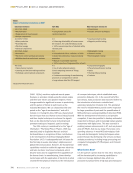
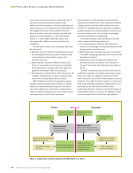
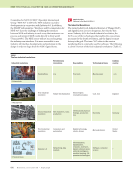
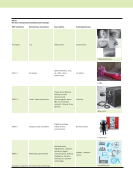
838 M A T E R I A L S E V A L U A T I O N • J U L Y 2 0 2 0 ME TECHNICAL PAPER w nde 4.0: perception and reality cyber-physical systems to make decisions independently is growing. This results in the need for data transparency and the need for open standardized interfaces with semantic interop- erability between all devices in the industry. To drive these developments, the term Industry 4.0 was created in the year 2011 (Kagermann et al. 2011). Within a very short time, especially in Germany, many projects and groups were created with the aim of standardizing development, like Platform Industrie 4.0 and the International Data Spaces Association (IDSA). Without them, the fourth industrial revolution cannot function. Similarly, the Industrial Internet Consortium (IIC) was established in the United States in 2014 to work on IIoT standards. So, even from a hardware standpoint, the fourth industrial revolution uses the technical principles of the third revolu- tion, but leads to a completely new transparency of informa- tion through the informatization, digitalization, and networking of all machines, equipment, sensors, and people in production and operation. Industry 4.0 enables feedback and “feedforward” loops to be established in production, the ability to determine trends through data analysis, and a better overview to be gained through visualization. The first three industrial revolutions were declared by historians. The fourth, on the other hand, uses the term “4.0” to introduce it. For the reasons given previously, it might be appropriate to speak already of a fourth revolution. However, only history will show whether it is worthy of the name. The Revolutions within NDE Nondestructive testing (NDT) and NDE underwent a similar development compared to industry and can also be divided into four revolutions (Table 2). For the first industrial revolu- tion, the basis was handcrafting that had developed over the millennia. For NDE, the basis is perception. Through their senses, people have been able to “test” objects for thousands of years. They looked at components and joints and smelled, felt, knocked on, and even tasted items to learn something about their condition and interior. The first revolution, or the birth of NDT, took place partly through the introduction of tools that sharpened the human senses and partly through the standardization of testing procedures. Procedures (not necessarily in written form) made the results of the tests comparable, and tools such as lenses, colors, and stethoscopes improved detection capabili- ties. At the same time, industrialization also made it necessary to expand quality assurance measures. The second revolution of NDE, like the second revolution of industry, is characterized by the use of physical and chemical knowledge and electricity. The transformation of electromagnetic or acoustic waves, which lie outside the range of human perception, into signals that can be inter- preted by humans resulted in the ability to “look” into the components. Parallel to industry, microelectronics, digital technology, and computers made the third revolution in NDT possible. Digital inspection equipment, such as X-ray detectors, digital ultrasonic testing (UT) and eddy current equipment, and digital cameras were developed, making it possible to automate inspection. The fourth revolution could become the greatest for NDT, turning the entire business upside down. First, the Industry 4.0 emerging technologies can be used to enhance NDE technologies and NDE data processing (“Industry 4.0 for NDE”). Second, a statistical analysis of NDE data provides insight into reliability, inspection performance, training status, consistency, and value of inspections (“Human Considera- tions”). Finally, NDE is the ideal data source for Industry 4.0 (“NDE for Industry 4.0”) (Vrana and Singh 2020). As with Industry 4.0, the aim is to create new information transparency through informatization and networking. This will turn NDE from a niche product into one of the industry’s most valuable sources of information. Just like in the area of Industry 4.0, this will require a standardization of interfaces and the disclosure of data formats. Companies can now decide whether they want to follow the course of Blockbuster, Quelle, or Karstadt, or rather follow Netflix and Google. Challenges of NDE To illustrate the benefits of NDE 4.0, a nonrepresentative survey on social media was conducted (Vrana GmbH 2019 Vrana 2019a). As the awareness of the benefits of Industry 4.0 and NDE 4.0 is not yet evident in practically any industry, the question was regarding criticism of NDE and inspectors. From this it can be determined how NDE 4.0 can help to master these challenges. A sampling of responses is listed below (to read all the responses, refer to Vrana GmbH 2019 and Vrana 2019a). They show a wide variety of challenges and identify some necessary improvements needed in the industry. Some of the answers might present stereotypes, but even stereotypes can contain a core truth. For a better under- standing, the responses have been grouped and editorial comments within the answers are indicated by brackets. For a more detailed analysis of these comments, refer to the full study (Vrana and Singh 2020). The following answers are related to criticism regarding education and morale in the NDE industry: l “‘NDE is not a skilled trade’ is something I’ve heard over and over by some [people] in ‘skilled trades.’” l “Lack of process knowledge.” l “Lack of surface preparation.” l “Reference is not up to the mark.” l “Risk outcomes for miss-calls in NDE are higher, making it [a] more responsible and skill critical field whether it’s aerospace, pipeline, or refinery work.” Watch the video The Four NDE Revolutions
ASNT grants non-exclusive, non-transferable license of this material to  .
All rights reserved. © ASNT 2026. To report unauthorized use, contact: customersupport@asnt.org