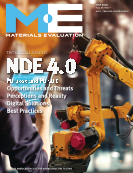
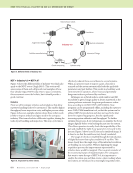
w ME BACK TO BASICS J U L Y 2 0 2 0 • M A T E R I A L S E V A L U A T I O N 785 T his article is intended to outline the purpose of NDE 4.0 (the why?) and bring awareness to the newly developed ISO standard on inno- vation management as a possible tool set to successfully pursue NDE 4.0 (the how?). Over the last couple of years, the nondestruc- tive evaluation (NDE) community has come to appreciate the fourth industrial revolution, which was defined by the Germans as “Plattform Industrie 4.0” (Industry 4.0), and its implication to the inspection world in terms of NDE, which we refer to as “NDE 4.0” (BMWi 2020 Meyendorf et al. 2017 Vaidya et al. 2018 Singh 2018, 2019). NDE 4.0 is the digitalization of NDE systems resulting from the confluence of current NDE systems with Industry 4.0 tech- nologies. Subsequent to the definition of Industry 4.0, the Science and Technology Basic Plan (Government of Japan 2015) defined the term “Society 5.0,” which in some sense defines the purpose of Industry 4.0. It calls for the application of technology in a manner that concurrently brings both economic development and solutions to social problems. It ensues technology for the sake of society and not just for business reasons. Along very similar lines, the purpose of NDE 4.0 can be defined as “Safety 5.0: to concurrently enhance safety and bring economic value to stakeholders.” Such a purposeful pursuit is not easy. Challenges associated with tech- nology development and adaption must be addressed. The thought leaders of the NDE community are coming together to create platforms for awareness and knowledge exchange and are confident that the suite of NDE 4.0 technologies themselves will help with the adaption of other pieces. An interesting paradigm, with no precedence from the previous three industrial revolutions. Purpose and Pursuit of NDE 4.0 by Ripi Singh 4.0

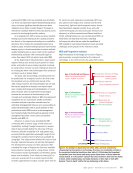
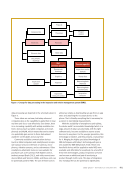
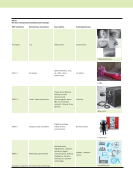
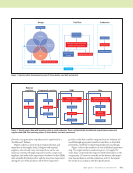
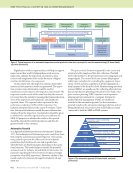
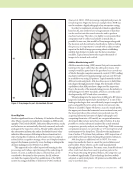
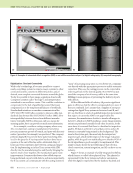
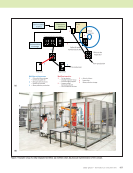
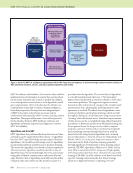
786 M A T E R I A L S E V A L U A T I O N • J U L Y 2 0 2 0 ME BACK TO BASICS w purpose and pursuit of nde 4.0 On the same timeline, in 2013 an international community of experts from 45 nations embarked on developing standards for innovation management with a keen acknowledgment of this revolution. A signifi- cant milestone was recently achieved with the publica- tion of ISO 56002 (ISO 2019), which provides guidance for the establishment, implementation, maintenance, and continual improvement of an inno- vation management system for use in all established organizations. Although this ISO standard does not explicitly call out the fourth industrial revolution as the driving force, it has been written to help any organiza- tion work through a rapidly changing business context. It has the strength to enable companies to success- fully pursue a purposeful NDE 4.0. Quick Recap of NDE Revolutions If we look at the evolution of NDE in terms of the recognized industrial revolutions, NDE 1.0 is consid- ered inspection based on human senses (visual, hearing, touch, smell) with some schedule and evalua- tion criterion. NDE 2.0 started when analog instru- ments and methods began to provide amplification and even the ability to look beyond the line of sight. NDE 3.0 was marked by the advent of digital technolo- gies for signal processing and visualization. In this article, we have aligned these with themes behind industrial revolutions, although exact changeover cannot be as precisely identified as the application of steam power (Industry 1.0), electricity (Industry 2.0), and computers (Industry 3.0). NDE 4.0 can be defined as a cyber-physical NDE system—a confluence of Industry 4.0 technologies with traditional physical NDE methods. Within the context of the physical–digital–physical loop of NDE 4.0, we have seen digital technologies and physical methods continuing to evolve, mostly independently and sometimes interdependently. The real power is in the concurrent design of inspection systems through an appreciation of digital twins, with the ability to capture and leverage data directly from the materials and manufacturing process to usage and in-service maintenance, across multiple assets, to optimize prescriptive maintenance, repairs, and overhauls over the lifetime of an asset, and even feed the big data back to the original equipment manufacturer (OEM) for design improvements. The four design principles of Industry 4.0 (Hermann et al. 2016) have been interpreted for NDE application as (Singh 2019): l Interoperability: the ability of instruments, sensors, devices, inspection equipment, and people to connect and communicate with one another via the Internet of Things (IoT). l Information transparency: the ability of information systems to create a virtual or augmented reality (VR/AR) of physical anomalies by enriching digital artifact models with sensor data. l Technical assistance: (1) artificial intelligence (AI) capability to support humans by aggregating and visualizing information comprehensively for making informed decisions and (2) robotics using cyber- physical systems to support inspectors with tasks that are unpleasant, exhausting, or unsafe. l Decentralized decisions: the ability of automated cyber-physical systems to make decisions on their own and perform tasks independently. Only in the case of exceptions, interferences, or conflicting goals are tasks delegated to a higher-level inspector. Currently, the depot maintenance of an aircraft involves a predetermined schedule for maintenance, repair, and overhaul of an asset with parts repaired or replaced based on manual inspections, stored in inventory, guided by written instructions, judgments made by a team of skilled personnel, and data captured electronically in a knowledge base for offline analytics. A depot maintenance scenario of the future as projected by Deloitte (Vitale et al. 2018) presents some very interesting opportunities. Imagine that the depot begins “all and only” necessary activities before the asset arrives: AR guides the crew’s activities on the asset upon arrival advanced scheduling orches- trates acquisition of spares/repairs intelligent workflow optimizes the downtime components are NDE 4.0 can be defined as a cyber-physical NDE system–a conf luence of Industry 4.0 technologies with traditional NDE methods.
ASNT grants non-exclusive, non-transferable license of this material to  .
All rights reserved. © ASNT 2026. To report unauthorized use, contact: customersupport@asnt.org