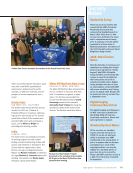
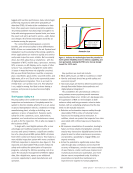
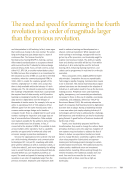
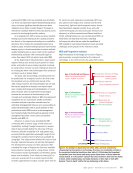
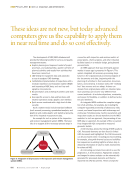
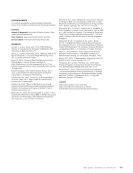
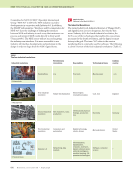
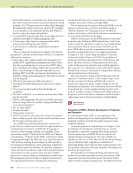
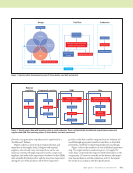
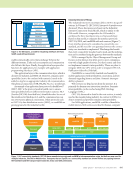
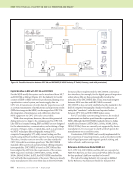
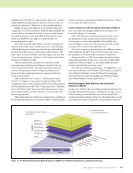
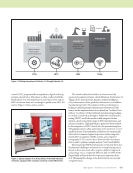
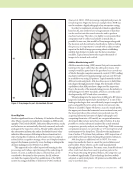
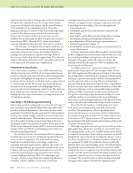
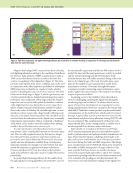
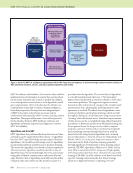
J U L Y 2 0 2 0 • M A T E R I A L S E V A L U A T I O N 787 tagged with real-time performance data robots begin performing inspections with better probability of detection (POD) AI looks at the correlations to data from other assets and creates prescriptive analytics 3D printing (additive manufacturing) is brought in to help with missing spares and special tools and soon the asset is all set to go back to service—safer, faster, and cheaper. All of these technologies work like an orchestra serving the purpose. The connectivity providing speed, economic benefits, and enhanced safety is what differentiates NDE 4.0 from our current state of the art. System-level integration has the potential of becoming a platform, where applications can evolve to rapidly and continu- ously make inspection more reliable. Not necessarily direct, but think about how a smartphone—with the integration of Wi-Fi, mobile data, a processor, memory, GPS, a camera, an HD display, and a couple of other sensors—has completely changed the world within 10 years in ways that were not originally conceived. Did you ever think that phone could be a compass, plus a stud finder, gauss meter, sound Db meter, and light meter, all in one? Such is the exponential power of digital-physical integration. There is so much to emerge that I can’t predict most of it. And whatever I can, might be wrong. And that is where having a purpose and process to pursue becomes highly relevant. The Purpose: Safety 5.0 Assuring safety is the number-one motivation behind inspection and maintenance. Everybody wants the system to function reliably, whether it is an air, water, or ground transportation vehicle, a material or energy manufacturing plant, a bridge or building, or an appliance or piece of equipment. Everyone wants safety for all the customers, users, stakeholders, operators, and construction and maintenance crews, as well as for the inspectors. This is why we engage in the business of NDE. To begin with, most digital systems offer a clear advantage over traditional systems in terms of accuracy and speed. However, a significant contribu- tion of a cyber-physical NDE system (NDE 4.0) stems from better control over human factors. This leads to a more reliable inspection system with more consistent POD from inspection to inspection (see Figure 1). This improved and dependable POD provides enhanced safety and enables the optimization of inspection programs, reducing the lifetime operating cost of an asset. The structured management of lifetime digital data, like a digital twin, opens up an additional economic opportunity to asset manufacturers and operators. Key questions we must ask include: l What safety issues can NDE 4.0 address or create? l How far and broad should we go with safety and economic impact? l How many ways are there to deliver business value through fleet-wide lifetime data synthesis and digital-physical integration? The possibilities for cyber-physical confluence using various sensory systems provide numerous opportunities (Vitale et al. 2018). Let’s dig deeper into the application of NDE 4.0 technologies to both enhance safety and bring economic value to stake- holders, with an underlying emphasis that the two need not be mutually exclusive. l Robotics and automation improve safety through dependable POD by virtue of reducing human factors and increasing precise execution. In addition, robots can protect the inspector from risks associated with confined spaces and hazardous areas. l AR improves visualization of anomalies, leading to faster and more reliable interpretation provides step-by-step instructions digitally layered over the physical asset to inform maintenance processes and provides a possibility to engage OEMs and experts remotely. l AI has the potential to significantly reduce false calls through data correlations and increase the accuracy of diagnoses, conduct root cause analysis of asset failures, enable continuous improvement in physical processes and automation, and more that we cannot comprehend today. AI ability in prescriptive and predictive maintenance is expected to be superior to human judgement. Industry 4.0 potential (robotics, AR, AI) Intrinsic capability System reliability Anomaly size 100% Figure 1. Industry 4.0 technologies have the potential to move system reliability closer to intrinsic capability, and even go beyond, making the POD curve rise up steeply toward the 100% mark. Probability of detection

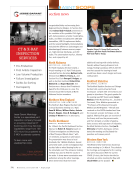
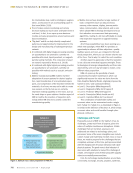
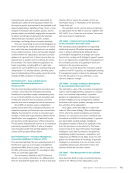
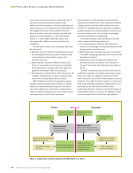
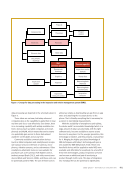
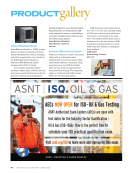
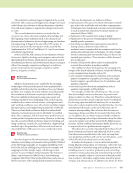
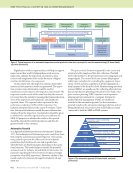
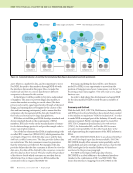
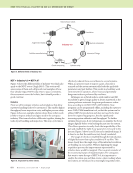
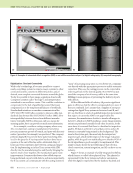
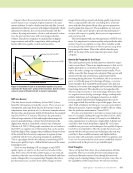
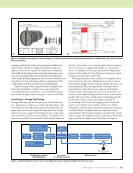
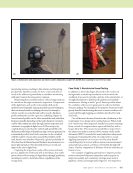
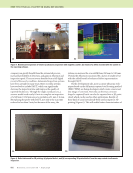
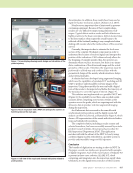
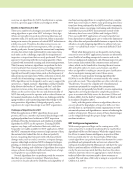
788 M A T E R I A L S E V A L U A T I O N • J U L Y 2 0 2 0 An intermediate step could be intelligence augmen- tation, as discussed in an accompanying paper in this issue (Aldrin 2020). l The IoT makes remote monitoring and remote decision making so much easier and faster (even in real time). In fact, it can open up new business models and value propositions around services and data monetization. l “Big data” and AI can help identify complicated patterns and opportunities for improvement in the design and manufacturing of subsequent product variants. l AI combined with digital image processing provides an opportunity to see anomalies currently not possible with visual, liquid penetrant, or magnetic particle testing methods. This conjecture is based on research reported by Hosny et al. (2018). l AI combined with digital signal processing provides an opportunity to see anomalies currently not possible with methods such as acoustic emission testing. l Additive manufacturing (AM) enables real-time adaptation of sensor systems for desired applica- tion, rapid manufacture of scarce/obsolete spare parts, and compression of the lead time needed for materials. As of now, we may not be able to create new sensors on the fly, but we can certainly improvise existing capability on the move, such as for naval ships or space stations. Another aspect of NDE 4.0 will be the insertion of inspection tech- nology within AM devices to actively control the manufacturing quality. l Mobile devices have absorbed a large number of basic components (such as data processor, memory, video camera, display, two-way audio- video communication, data network, and so on), which allows NDE technology developers to focus their attention on sensors and data processing algorithms, making it a lot more affordable to create new inspection equipment or upgrade existing systems. All of these possibilities have been opening up a whole new paradigm, where NDE 4.0 provides an opportunity to advance all three objectives—quality (safety), speed, and cost—as compared to the tradi- tional perspective, where you can choose only two out of the three. That is why it is called the next revolution. Another aspect to appreciate is that the revolution is not a discrete event that happens overnight. These technologies all emerge independently and then inter- dependently, until one day we begin to realize a very different value proposition. NDE 4.0 opens up the possibility of asset- customized prescriptive maintenance, which can significantly improve the value we derive from the Data Analytics Maturity Model, originally proposed by Gartner in 2012 and summarized below: l Level 1: Descriptive (What happened?) l Level 2: Diagnostics (Why did it happen?) l Level 3: Predictive (What will happen?) l Level 4: Prescriptive (What should we do?) l Level 5: Cognitive (What don’t we know?) This combination of stakeholder safety and economic value can be summarized under a single term: Safety 5.0. Safety 5.0, as illustrated in Figure 2, is similar to the definition of Society 5.0, which brings economic value and social benefits through cyber- physical confluence. Challenges and Pursuit Purposeful pursuit of NDE 4.0 for Safety 5.0 has its challenges, pretty much from all aspects, given the nature of multiple simultaneous disruptions. Visible challenges that can be listed, assessed, and addressed are related to technology, talent, and processes. Some of the more intangible ones include culture change and leadership mindset. And, on top of these, we need to prepare for the challenges that are completely unknown at this time, perhaps associated with the changing role of human interaction with cyber- physical systems. The good news is that Industry 4.0 also comes with solutions to many of the challenges it creates. Let’s explore some of these along with opportu- nities to successfully overcome them. First, the technology standardization around data connectivity, exchange, security, analytics, synthesis, ME BACK TO BASICS w purpose and pursuit of nde 4.0 Digital twin for both Safety solutions Economic value ● Keep inspector out of harm’s way ● Reduce the risk of fatal system failure ● Optimize life-cycle sustainment costs ● Use data to drive design improvements NDE 4.0 can purposefully blend human safety and business needs to create a safer system Safety 5.0 Figure 2. Safety 5.0 as a value proposition for NDE 4.0.
ASNT grants non-exclusive, non-transferable license of this material to  .
All rights reserved. © ASNT 2026. To report unauthorized use, contact: customersupport@asnt.org