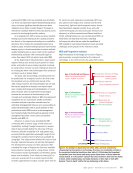
J U L Y 2 0 2 0 • M A T E R I A L S E V A L U A T I O N 789 and interpretation is still evolving. In fact, some argue that continuous change is the new normal. The under- lying technology may just always stay in a state of continuous flux. The German Society for Nondestructive Testing (DGZfP) is making a serious effort toward standardization or acceptance thereof with sources from the IT industry for data exchange protocol (Vrana 2020). Soon, we will come to accept either HL7, OPC UA, or another variant better suited for NDE, because this acceptance is a cornerstone for the industrial success of NDE 4.0, just like in the third revolution, when the community adapted HTML in 1990–1991 to enable the explosive growth of the Internet, originally born in 1969. Let’s accept that there is help available within the Industry 4.0 tech- nology suite. The 5G network is expected to address the challenge of bandwidth. Blockchain could provide the required level of data security, and AI/machine learning is emerging to handle the vast amounts of data stored in digital twins over the lifespan of thousands of similar assets. For example, let’s say an airline is operating a fleet of 520 airplanes of four different types from the same manufacturer, with a common undercarriage design and a baseline computer model. There is a digital twin for each serial number, tracking the inspection and usage data on top of as-manufactured information. Data analysis now makes it possible for the airline to derive informa- tion and trends based on all assets. In fact, if connected to the airplane’s OEM, it is possible to look across multiple airline operators. Such a capability provides an opportunity for enhanced safety and economic savings in proactive maintenance. Second, the organizations need a whole new skill set—skills involving information and communication technologies (ICT, not just IT), coworking with intelli- gent systems (desktop as well as industrial cobots, or “collective robots”), and more importantly, the willing- ness to accept that what you know today will likely be obsolete before you can establish yourself as an expert. The need and speed for learning in the fourth revolution is an order of magnitude larger than the previous revolution. Employers and employees both need to embrace learning and development as a shared, continual investment. While operators will need training on technology, managers will need to get on top of the processes, and leadership ought to explore new business models. The ability to rapidly learn and develop new skills will be key. From within Industry 4.0, AI is reducing the need for technical training, AR is enhancing training experience, and cobots can be programmed in real time for on-the-job execution. Third, companies need a slightly different leader- ship mindset. Competitive forces are unpredictable. Technology is rapidly changing. Communication needs to be in real time. This means that hierarchical organi- zational structures are detrimental to the adaption of Industry 4.0, and leaders need to free up the decision- making process. Peripheral vision and leadership agility, transparency, and connectivity are absolutely necessary to thrive in this era of volatility, uncertainty, complexity, and ambiguity, defined as “VUCA” by Bennis and Nanus (1985). We routinely witness the death of companies that flourished prior to digitization but were slow to adapt. Having a leadership mindset is one area where just simply adopting Industry 4.0 technologies will not help in addressing the challenge. Self-awareness and mindfulness are key for leadership going forward. A good fraction of business leaders will fail the test of time. Fourth, once leadership prepares itself for the transformation, they need to change the culture. Basic principles of physics come into play here. Adaption of new systems requires leaders to address the fear of failure to deliver on expectation (inertia) and resist- ance to change (friction). Leadership ought to define a clear value proposition (lubrication) and sponsor learning and technology projects (energy) to sustain transformation (momentum). The traditional business culture seeks a traditional return on investment analysis before investing. When working through the newest revolution, the traditional analysis does not work. You need to account for the cost of not investing, which at times could be as high as bankruptcy. The need and speed for learning in the fourth revolution is an order of magnitude larger than the previous revolution.

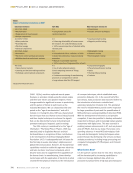
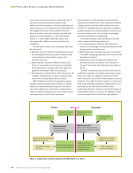
790 M A T E R I A L S E V A L U A T I O N • J U L Y 2 0 2 0 At the time of finalizing this special issue, the world was in the grip of the COVID-19 pandemic, which forced millions to work remotely from home or other locations that permitted social distancing (at least 1.8 m [6 ft] apart) and engage in contactless operations. All trainings and meetings had gone virtual. Anything that could be done remotely was done that way. As of June 2020, it was still too early to analyze how many businesses and jobs were saved by the cyber-physical technologies that constitute Industry 4.0. But there is certainly an enhanced appre- ciation of the role of digitalization in a robust and resilient workplace. AM, AI, AR, and remote operations have all proven their value in the health care sector. In the coming years, I expect management will use lessons from the COVID-19 pandemic to build business cases in pursuit of Industry 4.0 and NDE 4.0. NDE thought leaders are coming together to create knowledge platforms for guidance on this topic. There is a range of activities being pursued jointly by DGZfP and ASNT for general awareness and early acceptance of the topic. These include the formation of commit- tees, technical publications, and conferences. However, individual companies need to manage their risk of adaption and investment through some dependable process (Singh 2018, 2019). The best practices in innovation management are now emerging through a series of ISO standards (ISO 2019) that captures global expertise on the subject. My service on ISO/TC 279, as one of the US delegates to the ISO 56000 series, gives me the confidence that these will enable the evolution of purposeful NDE 4.0. Role of ISO in Support of NDE 4.0 The ISO 56000 series of standards brings best practices in innovation management to the public and can be used for the conception, development, valida- tion, and pursuit of purposeful NDE 4.0 applications. The intended benefits of these standards in the context of NDE 4.0 development process, include the following: Market Benefits: l Provide guidance on how an organization can fulfill unmet inspection and safety needs. l Enhance the competitiveness of organizations, NDE products, and inspection services. l Lead to the easier acceptance of global inspection products. l Reduce time to market for new inspection equipment. Cultural Benefits: l Open the mind to accept new NDE equipment, tech- niques, and business models. l Promote the growth of an NDE 4.0 culture with a global safety objective. l Facilitate necessary partnerships across NDE and IT expertise. l Implement social responsibility while developing new NDE tools and methods. Organizational Benefits: l Save costs and reduce risk in developing NDE 4.0 through standard processes. l Increase the ability to make decisions (test and try, fail fast) and the capability to take reasonable risks, while facing the challenges and uncertainty associ- ated with NDE 4.0. l Evaluate the progress of the organization and identify and share good practices in innovation management. l Share a globally accepted “common language” for innovation management and perhaps develop a common language for NDE 4.0. The following provides a quick overview of what is in store with the new series of ISO 56000 standards and their relevance to NDE 4.0. ISO 56000:2020 – Fundamentals and Vocabulary (published in February 2020) This document describes the fundamental concepts, principles, and vocabulary of innovation management and its systematic implementation. Innovation is defined as “new or changed entity, realizing or redis- tributing value.” The eight innovation management principles behind the ISO 56000 series are: (1) realization of value (2) future-focused leaders (3) strategic direction (4) culture (5) exploiting insights (6) managing uncertainty (7) adaptable structures and (8) systems approach. The four principles of NDE 4.0, defined earlier, already conform with these innovation management principles. The task of terminology specific to NDE 4.0 has been taken on by the ASNT committee, and the committee will adapt whatever definitions have been published in this document. ISO 56002:2019 – Innovation Management System – Guidance (published in July 2019) This document provides guidance for the establish- ment, implementation, maintenance, and continual improvement of an innovation management system for use in all established organizations. It is applicable to NDT equipment manufacturers, service providers, ME BACK TO BASICS w purpose and pursuit of nde 4.0
ASNT grants non-exclusive, non-transferable license of this material to  .
All rights reserved. © ASNT 2026. To report unauthorized use, contact: customersupport@asnt.org