J U L Y 2 0 2 0 • M A T E R I A L S E V A L U A T I O N 861 ME TECHNICAL PAPER w A B S T R A C T Case studies of Industry 4.0 usually focus on manufacturing or logistics. While these are also important disciplines in the oil and gas industry, manufacturing and logistics are not the first things that come to mind when addressing the challenges related to safety and asset integrity. However, the technologies that are commonly associated with Industry 4.0, such as supply chain management solutions, robotics, additive manufacturing, and big data, play a major role in nondestructive testing (NDT). The owner/operators of installations in the oil and gas industry certainly support these trends and routinely request these technologies to be applied to NDT. This paper will explore how the discourse on Industry 4.0 applies to NDT 4.0 and how the trending technologies mentioned previ- ously play a role in innovations. This will be done by showing where the technologies have been applied in research and development efforts currently underway. The first case study focuses on tube testing. The second focuses on the inspection of large structures such as storage tanks, pipelines, and vessels. These case studies will highlight how applying NDT 4.0 concepts contributes to increased quality of testing, and ultimately to safety and asset integrity in the oil and gas industry. KEYWORDS: NDT 4.0, tube testing, storage tank inspection, eddy current testing, MFL, oil and gas industry, nonintrusive inspection Introduction The signs of a new industrial revolution are all around us. Established industrial giants are stumbling, and new ones are emerging in every aspect of our lives. Although we may not yet know exactly where this will go for us, it is obvious that things are changing. The term “Industry 4.0” originated in 2011 from a working group within the German federal government. Klaus Schwab, chairman of the World Economic Forum, coined the term “fourth industrial revolution” and brought Industry 4.0 to the world’s attention. These concepts have been adopted by several nondestructive testing (NDT) societies, first in Germany by the German Society for Non- Destructive Testing (DGZfP), and more recently by the American Society for Nondestructive Testing (ASNT) and the British Institute for Non-Destructive Testing (BINDT), to establish a platform for guiding the NDT community during this global transformation. Industry 4.0 refers to industry that makes productive use of digital connections between all parts of society. Technologies like autonomous vehicles, robotics, artificial intelligence (AI), and personalized manufacturing including additive manufacturing (AM) all fall under the umbrella of Industry 4.0. It is important to realize that NDT is already associated with many of the component technologies involved in Industry 4.0. To collect big data, sensors and measurements are needed. NDT is one of the fields associated with data collection, sensors, and measurements. Robotics have been used for a long time in NDT, and NDT has important prac- tical experience to contribute, such as experience in the spatial positioning of data and accuracy of measurement. Products made with AM will require testing before they can be used for critical applications, and NDT has a role to play here as well. Industrial Revolutions Industry 4.0 is not the only theory on industrial revolutions. Such theories go back to early economists like Schumpeter (1939) and Kuznets (1930). After the dot-com crisis of 2000 and financial crisis of 2008, these theories have been revived. Perez (2002) offers some useful concepts on the process of successive industrial revolutions. She describes that each tech- nological revolution has an installation period, in which the technology gets developed and installed, but does not yet create societal value then, there is a deployment period in which the real value is realized and society changes. In the installation period, the technologies get invented and the infrastructure installed (for example, the internet). In the Deployment of Digital NDT Solutions in the Oil and Gas Industry by Casper Wassink*†, Marc Grenier*, Olivier Roy*, and Neil Pearson* * Eddyfi Technologies, 3425 Rue Pierre-Ardouin, Québec, QC G1P 0B3, Canada † Corresponding author: +31 654350235 cwassink@eddyfi.com Materials Evaluation 78 (7): 861–868 https://doi.org/10.32548/2020.me-04138 ©2020 American Society for Nondestructive Testing

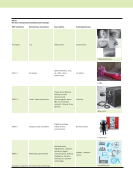
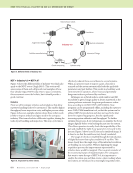
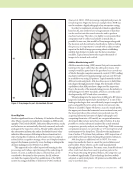
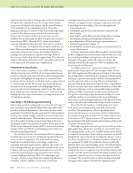
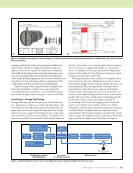
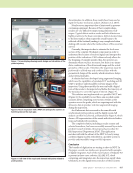
862 M A T E R I A L S E V A L U A T I O N • J U L Y 2 0 2 0 deployment period, the technology gets used to its full extent. Along this line, Industry 4.0 can be considered the deploy- ment period of digital technologies, and the period between 1970 and 2000 was the installation period. One of the findings of this type of analysis is that most technology imple- mented in the deployment period already existed before that period. The authors believe the same to be true for Industry 4.0, and especially for NDT 4.0, given the record of innovation in NDT (Wassink 2012), where technologies often get implemented decades after other sectors use them. In the literature on Industry 4.0, several key attributes are listed. These include integration of value and supply chains, interconnectedness of processes, decentralized decision making, and customization of product offerings. Many of these have a relationship with the supply chain. Therefore, the authors will start the discussion of the case studies with a look at the inspection and maintenance supply chain. Introduction to Case Studies In the next section, a number of cases will be discussed that will show how features of NDT 4.0 are being realized in new products. The first case study will discuss heat exchanger tube testing and will highlight developments in automated inter- pretation software using AI. It will also touch on issues related to cloud storage of data. The second case study will discuss the inspection of storage tanks and will highlight develop- ments in software for maintaining a digital twin. The final case study will discuss the inspection of pressure vessels and will highlight the development of software for adaptive inspection of complex geometries. Case Study 1: Heat Exchanger Tube Testing Tube testing is performed during the in-service life cycle stage of heat exchangers and is typically delivered by a specialist service provider or internal department to the owner/operator of the equipment. Over the last decade, equipment for tube testing has become more widely available, and more service providers have started to offer the service. This has led to an increased concern about the quality of testing and an increased demand for stan- dardization, evident from projects in industry bodies such as the Electric Power Research Institute (EPRI), American Petroleum Institute (API), and HOIS (a joint industry project with more than 40 participating partners). The actual test needs to be performed after the equipment has been taken out of service. Getting the equipment back in service on time is important. The work involves testing hundreds of individual tubes, and testing a single heat exchanger may take many hours. In addition, the results of a heat exchanger test may give important clues about the cause of failure and may prompt additional maintenance activities before the heat exchanger is put back into service. In this context of high productivity, NDT 4.0 technologies and concepts can play an important role in improving efficiency, reliability, and the confidence level in the overall heat exchanger inspection process. Smart sensors, accessories, and software can support service companies and asset owners by: l providing better traceability of the data throughout the inspection process l assisting the operator in crucial steps that could affect the data integrity l improving the analyst efficiency in data interpretation, including the automatic detection and classification of indications l providing realistic 3D heat exchanger representations to facilitate interpretation (Figure 1) l promoting the sharing of data, analysis, and reports based on secure cloud services Current equipment enables full traceability of instruments, probes, configurations, and metadata related to the test condi- tion, including building a testing history of a specific heat exchanger. This again enables the smart use of data for auditing and risk-based inspection (RBI) to maximize the in-service period of the asset. In addition, projects are ongoing for creating a tool to automate the interpretation of heat exchanger results. At first, this will be implemented through assisted analysis to the techni- cian. A huge effort is currently made to integrate an AI processing technique to perform data quality validation during acquisition as well as automatic data screening. The conventional eddy current bobbin probe inspection is already well accommodated by those automated processes, and the automation of other tube inspection techniques (such as remote field testing, near field testing, and eddy current array) is under active development. The goal is to drastically reduce the number of tubes to review so that the analyst can concentrate on the most challenging tubes. On top of decreasing the influence of the human factor in analysis, this will create feedback that helps train the technician. Currently, the AI classifiers, created using open source tools, have been running in beta trials with some service providers. The performance of these algorithms shows increased performance over previous rule-based algorithms for example, bringing the position error of tube features from 9.4% down to 2.3%. Figure 1 shows a 3D representation of a heat exchanger with defects graphically marked and the result of feature detection software. Although every test starts with a good sensor that provides high-quality data, digitization may help in several other ways. The testing results can be made available online, in the cloud, or connected in real time. Some service companies are already doing this by using commercial cloud-based solutions such as OneDrive, Google Drive, or Dropbox, but those solutions are not optimized for NDE. An optimized solution would offer different types of access depending on the ownership relation- ship with the asset and the data. Such cloud services will be useful for the service companies to perform data analysis with remote Level III experts to provide immediate feedback to the acquisition crew for any area of concern that may need to be rescanned. The cloud also plays a role in sending automated messages to the company level when the equipment starts ME TECHNICAL PAPER w digital ndt solutions
ASNT grants non-exclusive, non-transferable license of this material to  .
All rights reserved. © ASNT 2026. To report unauthorized use, contact: customersupport@asnt.org