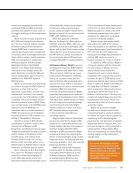
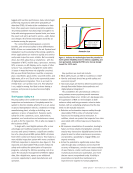
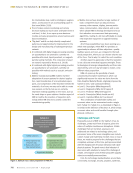
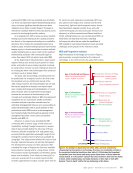
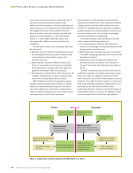
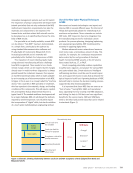
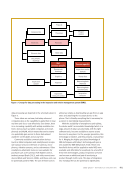
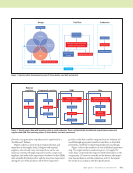
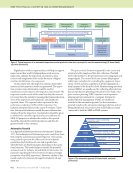
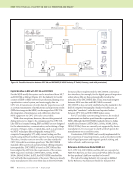
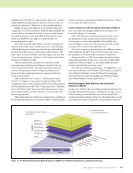
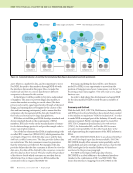
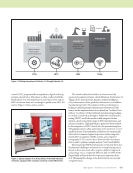
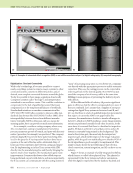
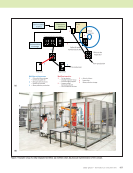
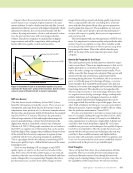
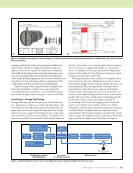
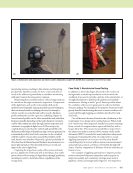
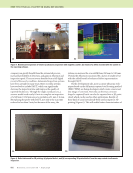
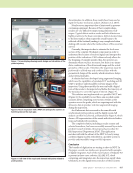
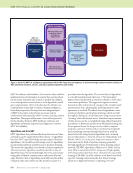
J U L Y 2 0 2 0 • M A T E R I A L S E V A L U A T I O N 845 enables syntactically correct data exchange between the different systems. Tasks such as encryption and compression also fall into this layer. Finally, the application layer provides functions for applications for example, with application programming interfaces (API). The application layer is the communication layer, which is decisive for Industry and NDE 4.0. However, semantic inter- operability (not to be confused with syntactic) needs to be added on top for an appropriate Industry 4.0 communication. The physical connection (USB, WLAN, 5G, etc.) is irrelevant. An example of an application layer protocol is health level 7 (HL7). HL7 is the protocol used in health care to ensure interoperability between different information systems. HL7 (besides DICOM, described later) should therefore be one of the interfaces for Medicine 4.0, and the communication can run over various physical connections. Other protocols such as OPC UA, data distribution service (DDS), or oneM2M are gaining ground in the industrial world. Industrial Internet of Things The Industrial Internet Consortium defines IIoT in its specifi- cations. In Volume G5 (IIC 2018), Internet 4.0 interfaces are discussed. Those discussions are based on the Industrial Internet Connectivity Stack Model, which is similar to the OSI model. However, compared to the OSI model, it combines the three host layers into one framework layer. Based on this model, it compares the interface protocols OPC UA, DDS, and oneM2M with web services (Figure 7). Every interface protocol is considered a connectivity core standard, and the need for core gateways between the connec- tivity core standards is emphasized. This brings the benefit that every connectivity standard can be used, and the informa- tion can be combined using the gateways between the standards. DDS is managed by the Object Management Group and focuses on low-latency, low-jitter, peer-to-peer communica- tion with a high quality of service. It is data-centric and does not implement semantic interoperability. There are plans to integrate DDS into OPC UA in order to integrate OPC UA Publication-Subscribe (PubSub). OneM2M is a connectivity standard used mainly for mobile applications with intermittent connections and low demands regarding latency and jitter. Semantic interoper- ability is planned. Web services use http, known from the internet. It is primarily for human user interaction interfaces. Semantic interoperability can be reached using Web Ontology Language (OWL). OPC UA, discussed in detail in the next section, is mainly used in the manufacturing industry. In contrast to DDS, it is object oriented and provides semantic interoperability. For NDE applications, oneM2M could be of benefit for mobile devices. Web services are ideal for human-computer Transmitter Receiver Application Presentation Session Transport Network 1 2 3 4 5 6 7 Data link Physical Physical connection Figure 6. The OSI layers, a model for visualizing interfaces (© Vrana GmbH, used with permission). Physical Link Network Transport Framework Distributed data interoperability and management TSN/ Ethernet (802.1, 802.3) DDS DDSI-RTPS CoAP MQTT HTTP OPC UA bin TCP TCP UDP Internet protocol (IP) oneM2M Web services OPC UA Wireless PAN (802.15) Wireless LAN (802.11 Wi-Fi) Wireless 2G/3G/LTE (3GPP) Wireless wide area (802.16) Telecommunications origin Manufacturing origin Figure 7. IIoT connectivity standards. OPC UA has a manufacturing origin and oneM2M a telecommunication origin, but both are now used for multiple industries, like DDS or WebServices. Transports that are specific to a connectivity standard are shown without any spacing between the framework and the transport layer boxes (IIC 2018, used with permission). Media layers Host layers

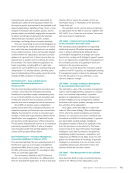
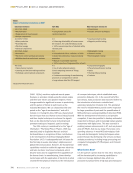
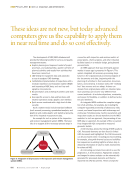
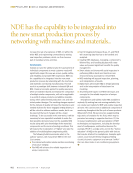
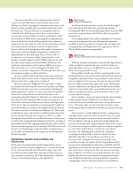
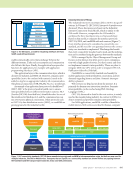
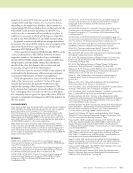
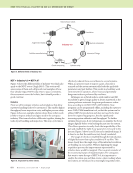
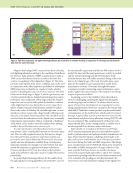
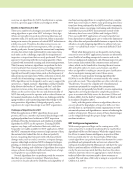
846 M A T E R I A L S E V A L U A T I O N • J U L Y 2 0 2 0 interaction and could be used for operator interfaces to store and read information regarding the component to be inspected. Low-latency and low-jitter communication is not necessary for typical NDE equipment therefore, DDS will not be considered further. OPC UA, being the standard protocol for manufacturing and due to its included semantic interoperability, seems like the ideal interface for NDE 4.0. OPC UA The high-level communication protocol/framework currently established in the manufacturing Industry 4.0 world is OPC UA (OPC Foundation 2019a IEC 2010–2019). OPC UA has its origin in the component object model (COM) and the object linking and embedding (OLE) protocol. OLE was developed by Microsoft to enable users to link or embed objects created with one program into another and is used extensively within Microsoft Office. COM is a technique developed by Microsoft for inter-process communication under Windows (introduced in 1992 with Windows 3.1). This standardized COM interface allows any program to communicate with another without having to define an interface separately. With the distributed component object model (DCOM), the possi- bility was created that COM can also communicate via computer networks. Based on these interfaces, a standardized software inter- face, OLE for process control (OPC), was created in 1996, which enabled operating system independent data exchange (such as for systems without Windows) in automation tech- nology between applications from different manufacturers. Shortly after the publication of the first OPC specification, the OPC Foundation was founded, which is responsible for the further development of this standard. The first version of the OPC Unified Architecture (OPC UA) was released in 2006. OPC UA differs from OPC in its ability to not only transport machine data, but also to describe it semantically in a machine-readable way. At the same time, the abbreviation OPC was redefined as open platform communications. OPC UA uses either TCP/IP for the binary protocol (OSI layer 4) or simple object access protocol (SOAP) for web services (OSI layer 7) (see Figures 6 and 7). Both client- server and PubSub architectures are supported by the OPC UA communication framework. Based on this, OPC UA imple- ments a security layer with authentication and authorization, encryption, and data integrity through signing. APIs are offered to easily implement OPC UA in programs. In the .net frame- work, OPC UA is even an integrated component. This means that the users do not have to worry about how the information is transmitted. This is done completely in the OPC UA framework (referred to as “Infrastructure” in Figure 8). The only thing that matters is what information is transmitted. As Figure 8 shows, the OPC information model already defines some basic core information models in which models are defined that are required in many applications. In addition, companion specifications exist for product classes ME TECHNICAL PAPER w nde 4.0: perception and reality Vendor-specific extensions Companion information models (for example, FDI, robots, scales, NDE) Core information models (for example, analog data, alarms, state machines, file transfer) Information model-building blocks (meta model) Information model access Browse and access data and semantics, execute methods, configure Data and event notifications Client-server Use case-specific protocol mappings PubSub Figure 8. OPC UA architecture (© Vrana GmbH, based on OPC Foundation 2019b and used with permission).
ASNT grants non-exclusive, non-transferable license of this material to  .
All rights reserved. © ASNT 2026. To report unauthorized use, contact: customersupport@asnt.org