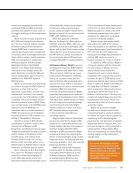
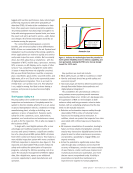
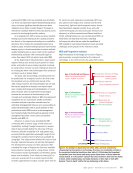
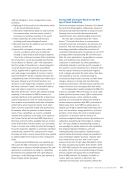
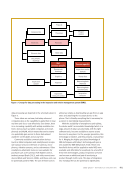
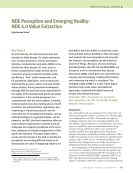
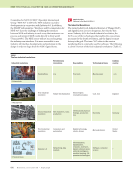
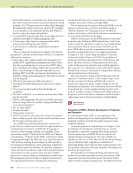
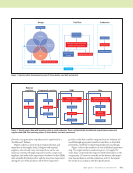
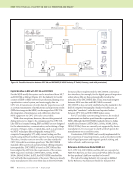
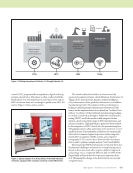
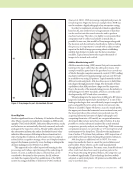
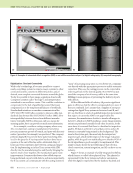
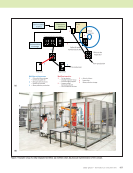
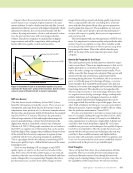
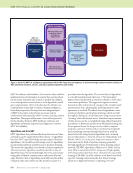
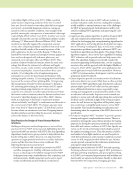
J U L Y 2 0 2 0 • M A T E R I A L S E V A L U A T I O N 847 such as field devices, robots, or scales. These companion spec- ifications provide semantic interoperability and are therefore the basis for Industry 4.0, ensuring smooth Industry 4.0 inter- faces and communication, and result in any OPC UA–enabled device being able to interpret data from others. In addition, there may also be manufacturer-specific specifications for the exchange of data between the devices of one manufacturer. OPC UA PubSub integrates DDS into OPC UA to enable one-to-many and many-to-many communications. Moreover, the OPC UA time sensitive network will make it possible to transfer data in real time and to extend OPC UA to the field level. The OPC UA specifications are also currently being converted into national Chinese and Korean standards. Moreover, it is planned to start the development of an NDE companion specification for OPC UA in a joint project between DGZfP, VDMA (Verband Deutscher Maschinen- und Anlagenbau, the German Mechanical Engineering Industry Association), and the OPC Foundation. OPC UA is, like HL7 in health care, the standard for an interface to the manufacturing Industry 4.0 world. Similar to medical diagnostics, large amounts of data can be generated with NDE (in OPC UA, larger files are split into smaller packages—for example, the OPC UA C++ toolkit has a maximum size of 16 MB). Computed tomography, auto- mated UT, and eddy current testing can easily result in several GB per day that need to be archived long-term. In the health care sector, large data files have resulted in the development of digital imaging and communications in medicine (DICOM) alongside HL7. DICOM DICOM is an open standard with semantic interoperability for the storage and communication of documents, images, video, signal data, and the associated metadata, as well as for order and status communication with the corresponding devices. This enables interoperability between systems from different vendors, which is what Industry 4.0 is striving for. In health management, this leads to the necessity of inter- faces between HL7 and DICOM (Figure 9). This interface is usually found in the picture archiving and communication system (PACS) server. In this process, patient and job data are translated from HL7 to DICOM for communication to the imaging devices. Information about the order status and provided services (such as “X-ray image of the lung”), as well as written findings and storage locations of the associated images, are communicated back. The returned data, texts, and references would usually be referred to in industry as KPIs. The central system for the “process logic” in hospitals is the hospital information system (HIS) (comparable to an ERP system in industry), which communicates with all other systems via HL7. All image, video, and signal data are stored in DICOM format in PACS, which is designed to handle large amounts of data and serves as the central system for archiving and communicating the data. HL7 DICOM CD production for patients Doctor Patients Referring doctor CHC Historical data Picture archiving and communication system (PACS) Images videos, signal data Images, CT MRI Angiography X-ray Ultrasound Status information Worklist Laboratory, OR planning, etc. Hospital information system (HIS) Radiology information system (RIS) Hospital Registration, updates Accounting Notification Findings Findings Planning, updates Figure 9. Interaction between HL7 and DICOM (© VISUS Industry IT GmbH, Germany, used with permission).

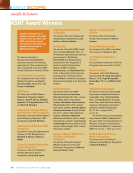
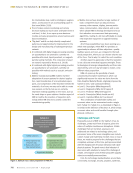
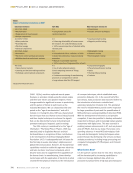
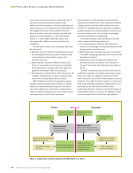
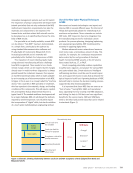
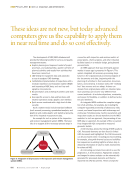
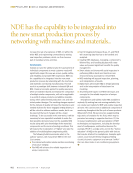
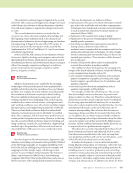
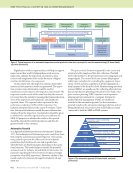
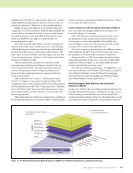
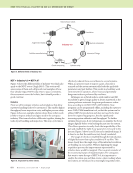
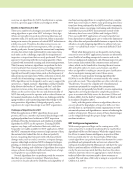
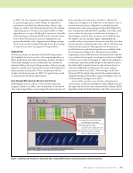
848 M A T E R I A L S E V A L U A T I O N • J U L Y 2 0 2 0 Digital Workflow in NDE with OPC UA and DICONDE For the NDE world, this system can be transferred from HL7 and DICOM as follows (Figure 10): the Industry 4.0 world consists of ERP or MES servers for production planning or as a production control system, and assets supply data via OPC UA. A transmission of order data for inspections as well as a return transmission of notifications and inspection results (KPIs for storage in the MES) can be mapped via OPC UA. An integration of maintenance and calibration data from NDE equipment via OPC UA is also conceivable. With a few exceptions, however, the raw data generated during tests are too large to be communicated via OPC UA. Like HIS in a hospital setting, ERP and MES are not designed for the administration, communication, and archiving of large amounts of images, video, or signal data, such as is generated via NDT techniques like radiographic testing (RT), computed tomography, UT, eddy current testing, and the total focusing method/synthetic aperture focusing technique. Therefore, it makes sense to store the raw data outside the OPC UA world in a revision-proof way. The DICONDE standard offers a protocol and data format offering semantic interoperability. DICONDE is based on DICOM and has been adapted by ASTM to the requirements of the various NDE inspection methods (ASTM 2015, 2018a, 2018b, 2018c, 2018d, 2018e). In RT, the DICONDE standard fits very well with the requirements of the users. There are already many manufacturers who store their data in the DICONDE format and have implemented the DICONDE communica- tion interfaces for example, for the digital query of inspection orders whose IDs are then automatically stored in the metadata of the DICONDE files. Thus, structural integrity between NDE raw data and ERP/MES is ensured. DICONDE is also currently established as the standard in the field of computed tomography. Similar to health care, an entity that “translates” order data and reported values between OPC UA and DICONDE makes sense. For UT and eddy current testing, however, the medical requirements are further apart from the requirements of NDE. Although the DICONDE standard strives to define suitable data formats (ASTM 2015, 2018a, 2018b, 2018c, 2018d, 2018e), these are currently not supported by device manufacturers. It is necessary to clarify at which points the manufacturers see a need for action. Contrariwise, DICONDE can be easily implemented for the connection of visual inspections, such as for photos in the field of liquid penetrant and magnetic particle testing, and videos of endo- and borescope tests. Reference Architecture Model RAMI 4.0 IIoT, OPC UA, DICONDE, and the AAS are concepts for NDE 4.0. But how are they connected? What different tasks do they perform? And how can they be located? The task of locating Industry 4.0 concepts is fulfilled by the Reference Architecture Model for Industrie 4.0 ME TECHNICAL PAPER w nde 4.0: perception and reality ERP Industrial facilities/plants MES Inspection planning Archive Branch office Offshore/remote Inspector/ data interpreter Image distribution OPC UA DICONDE Figure 10. Possible interaction between OPC UA and DICONDE (© VISUS Industry IT GmbH, Germany, used with permission).
ASNT grants non-exclusive, non-transferable license of this material to  .
All rights reserved. © ASNT 2026. To report unauthorized use, contact: customersupport@asnt.org