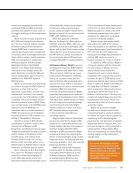
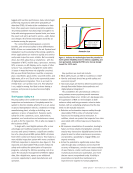
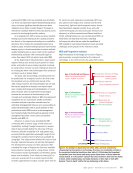
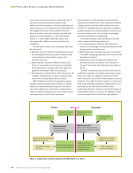
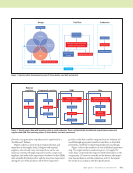
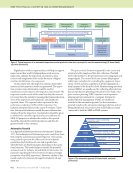
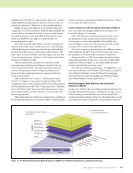
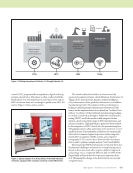
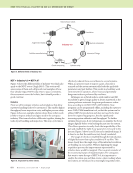
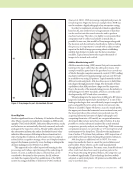
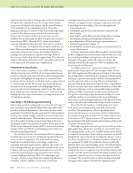
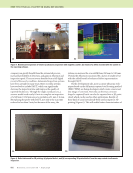
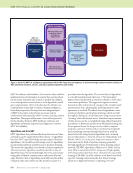
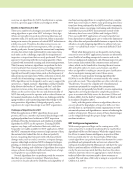
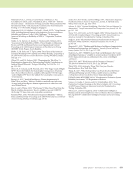
J U L Y 2 0 2 0 • M A T E R I A L S E V A L U A T I O N 849 (RAMI 4.0) (DIN 2016), as illustrated in Figure 11. Unfortu- nately, RAMI 4.0 is quite abstract however, it is one of the core models for Industry 4.0. Therefore, it is discussed briefly here. RAMI 4.0 shows the Industry 4.0 world that it has to be completely covered by interfaces. With the help of RAMI 4.0, every Industry 4.0 standard, interface, protocol, administra- tion shell, and asset can be described and located in a struc- tured way. RAMI 4.0 also helps to clarify whether all necessary interfaces exist. The “Life Cycle and Value Stream” axis shown in Figure 11 represents the value chain and life cycle of an asset, starting with the development and usage of a new type, through the production of the instance to the usage of the instance. The term “type” is used to identify a new asset type, such as a new X-ray inspection system. “Instance” refers to the test facilities that have actually been built. The hierarchy levels correspond to the layers of the automation pyramid shown in Figure 4, except for the top level, “Connected World.” The automation pyramid only covers communication within enterprises however, for Internet 4.0 data exchange between companies, this layer needs to be included. The architecture axis (“Layers”) and the lowest layer (“Asset”) in Figure 11 represents the physical object. The “Integration” layer is the transition layer between the physical and the information world. The “Communication,” “Informa- tion,” and “Functional” layers are abstraction layers to repre- sent communication, and the “Business” layer describes the business perspective. The Industrial Internet Reference Architecture, published by the Industrial Internet Consortium (2019), defines similar architecture layers compared to RAMI 4.0. However, it does not consider the other two axes. Location of AAS, IIoT, OPC UA, and AutomationML to RAMI 4.0 Due to its three-axes design, RAMI 4.0 is the ideal tool to locate all Industry 4.0 concepts. OPC UA, like most communication protocols, covers the information and communication layers for instances (not for types), such as the right half of the middle two layers in Figure 9. Moreover, the connected world and the enterprise level is not covered by OPC UA. Due to its connection gateways between different connec- tivity standards, the IIoT Connectivity Framework covers the enterprise level, but not the connected world level. AutomationML, an XML-based data format for storing and exchanging plant design data, covers the left half of the middle two layers in Figure 11. AutomationML therefore serves to describe the type of an asset. The AAS sees itself as a virtual image—the digital twin—of each asset and thus as a link between all interfaces and proto- cols within the Industry 4.0 world. Projects for mapping between OPC UA, AutomationML, and AAS have begun and will be detailed in future publications. Data Sovereignty, Data Markets, and Connected Internet 4.0 World As shown in Table 1, the networking of industrial production through standardized interfaces and thus the storage and use of the resulting crosslinked data sets is elementary for the fourth industrial revolution. However, the linked data records also represent a value in themselves. Data itself becomes an Business Life cycle and value stream IEC 62890 Hierarchy levels IEC 62264/IEC 61512 Connected world Work centers Control device Field Functional Information Communication Integration Asset Maintenance/ usage Production Maintenance/ usage Development Type Instance Figure 11. The Reference Architecture Model Industry 4.0 (RAMI 4.0) (© Platform Industrie 4.0, used with permission). Layers

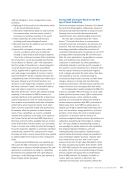
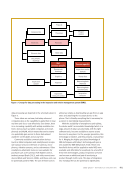
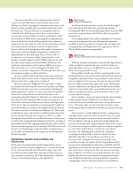
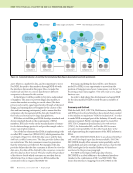
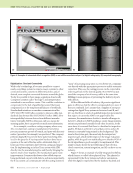
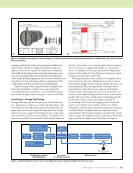
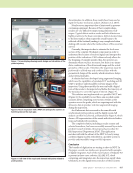
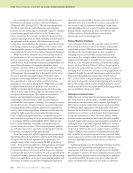
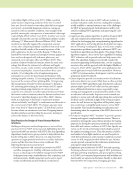
850 M A T E R I A L S E V A L U A T I O N • J U L Y 2 0 2 0 asset. There is a market for data, and it is important to use it. For NDE, the path to this market is through NDE 4.0 with the interfaces discussed in this paper. How to make this market safe and how to connect data between different companies is discussed in this section. In the future, it will be possible to buy data, independent of suppliers. The aim is to prevent illegal data markets, to create data markets according to crucial values (like data privacy and security, equal opportunities through a federated design, and ensuring data sovereignty for the creator of the data and trust among participants), and to ensure that the companies who have generated the data also benefit from their value and not just a few large data platforms. IDSA has set itself this goal. IDSA develops standards and de jure standards based on the requirements of IDSA members. IDSA also works on the standardization of seman- tics for data exchange protocols and provides sample code to ensure easy implementation. One of the key elements that IDSA is implementing is the so-called IDS connectors (IDSA 2019), which guarantee data sovereignty (Figure 12). Both the data source and the data sink have certified connectors. The data provider defines data use restrictions. The data consumer connector guarantees that the restrictions are followed. For example, if the data provider defines that the data consumer is allowed to view the data once, the data will be deleted by the consumer connector after the data has been viewed. This also enables the producer of the data to decide which customer can use their data in which form. Due to these connectors, IDSA enables the connected world as required by RAMI 4.0. For many, marketing the data will be a new business model. For NDE, it is an opportunity to move from the position of being perceived as an “unnecessary cost factor” to becoming a major data supplier. This will create a new, larger business case. In order to help shape this development and equip NDE for the data market, DGZfP recently became a member of IDSA. Summary and Outlook With the AAS, IIoT, OPC UA, WebServices, AutomationML, and IDSA, protocols and interfaces have already been created in the industry to implement “NDE for Industry 4.0.” In order to make NDE an integral part of the Industry 4.0 world, coop- eration is required. Firstly, ontologies must be created for OPC UA (Companion Specifications), for web services (OWL), for AutomationML, and for the AAS to assure semantic interoperability. On the other hand, there is the task of guaranteeing the requirements of the NDE industry in IDSA. With DICOM/DICONDE, there is an advanced interface and a well-developed open data format available. DICOM/ DICONDE already offers semantic interoperability, and its standardized and open ontology can be used as a base for the NDE ontologies for the standard Industry 4.0 interfaces mentioned in the previous paragraph. For NDE technologies with large data volumes, DICONDE is an ideal addition to the industrial interfaces (similar to the combination of HL7 and DICOM). This means that interfaces/mappings from DICONDE to the ME TECHNICAL PAPER w nde 4.0: perception and reality Industrial data cloud IDS connector Data usage constraints Non-IDS data communication Enterprise cloud Company 1 Company 2 Company n Company n+1 Company n+2 Data marketplace Internet of Things cloud Open data source IDS IDS IDS IDS IDS IDS IDS IDS IDS IDS IDS Figure 12. Connected Industry 4.0 world by the International Data Spaces Association (used with permission).
ASNT grants non-exclusive, non-transferable license of this material to  .
All rights reserved. © ASNT 2026. To report unauthorized use, contact: customersupport@asnt.org