J U L Y 2 0 2 0 • M A T E R I A L S E V A L U A T I O N 851 Industry 4.0 world (OPC UA) are needed. For NDE tech- nologies with small data volumes, it is necessary to decide, depending on the application, whether a direct interface is created using OPC UA or whether these are first stored in the DICONDE world and then transferred to the OPC UA world, in order to summarize all test results in one place. In addition, it is necessary to check which steps are required to be able to use DICONDE for UT and eddy current testing. In general, a revision-safe and secure storage must always be ensured. The retrievability, integrity, and sovereignty of the data is key. Most of these requirements are already imple- mented in DICONDE and OPC UA. Other open data formats for NDE data, like HDF5, can be viewed as alternatives to DICONDE. However, for most inspection situations, the standardized open information models of DICONDE, which enable machine-readable data using semantic interoperability, surpass the information models of the other data formats. Also, revision-safe and secure data storage needs to be implemented. In order to ensure the interests of NDE in the Industry 4.0 world and for the development of the necessary ontologies, cooperation with Industry 4.0 must be strengthened. NDE 4.0 represents a chance for NDE to move from the niche of the “unnecessary cost factor” to one of the most valuable data providers for Industry 4.0. However, this requires the opening of data formats and interfaces. The protectionism that companies previously adhered to will now have a damaging effect on business in the foreseeable future. For companies that recognize the signs of the times, NDE 4.0 presents a completely new business model for the industry via the data market. ACKNOWLEDGMENTS Many thanks to Ripi Singh (Inspiring NEXT) and Daniel Kanzler (Applied NDT Reliability) for all the discussions about NDE 4.0. Also, recognition goes to Jens Martin (VISUS Industry IT) for the introduction to DICONDE and HL7 to Thomas Usländer (Fraunhofer IOSB) for the information about the platform Industry 4.0, the AAS, and OPC UA to Markus Eberhorn (Fraunhofer EZRT) for the introduction to OPC UA and to Ralf Casperson (BAM) for a first study regarding the applicability of the DICONDE standard to eddy current applications. Many thanks also to Sven Gondrom-Linke (Volume Graphics) for his work as vice chair of the DGZfP subcommittee “Interfaces for NDE 4.0,” to the members of the subcommittee, to the hosts of the meetings, and to those who participated in the survey on Facebook and LinkedIn. Last but not least, I have to thank Franziska Vrana for the Industry 4.0 and NDE 4.0 images and for all her support. REFERENCES ASTM, 2015, ASTM E2339: Standard Practice for Digital Imaging and Communication in Nondestructive Evaluation (DICONDE), ASTM Interna- tional, West Conshohocken, PA. ASTM, 2018a, ASTM E2663: Standard Practice for Digital Imaging and Communication in Nondestructive Evaluation (DICONDE) for Ultrasonic Test Methods, ASTM International, West Conshohocken, PA. ASTM, 2018b, ASTM E2699: Standard Practice for Digital Imaging and Communication in Nondestructive Evaluation (DICONDE) for Digital Radiographic (DR) Test Methods, ASTM International, West Conshohocken, PA. ASTM, 2018c, ASTM E2738, Standard Practice for Digital Imaging and Communication Nondestructive Evaluation (DICONDE) for Computed Radiography (CR) Test Methods, ASTM International, West Conshohocken, PA. ASTM, 2018d, ASTM E2767: Standard Practice for Digital Imaging and Communication in Nondestructive Evaluation (DICONDE) for X-ray Computed Tomography (CT) Test Methods, ASTM International, West Conshohocken, PA. ASTM, 2018e, ASTM E2934: Standard Practice for Digital Imaging and Communication in Nondestructive Evaluation (DICONDE) for Eddy Current (EC) Test Methods, ASTM International, West Conshohocken, PA. DIN, 2016, DIN SPEC 91345: Reference Architecture Model Industrie 4.0 (RAMI4.0), Deutsches Institut für Normung, Berlin, Germany. IDSA, 2019, “Reference Architecture Model,” Version 3.0, April 2019, International Data Spaces Association, Berlin, Germany. IEC, 2010-2019, IEC 62541: OPC Unified Architecture, International Elec- trotechnical Commission, Geneva, Switzerland. IIC, 2018, “The Industrial Internet of Things Volume G5: Connectivity Framework,” IIC:PUB:G5:V1.01:PB:20180228, Industrial Internet Consortium, Needham, MA. IIC, 2019, “The Industrial Internet of Things Volume G1: Reference Architecture,” Industrial Internet Consortium, Needham, MA. Kagermann, H., W.-D. Lukas, and W. Wahlster, 2011, “Industrie 4.0: Mit dem Internet der Dinge auf dem Weg zur 4. industriellen Revolution,” VDI-Nachrichten, Nr. 13-201, Seite 2 (in German). Kluver, R., 2000, “Globalization, Informatization, and Intercultural Communication,” American Communication Journal, Vol. 3, No. 3, pp. 425–437. Müller, E.A.W., 1951, “Ultraschall als Hilfsmittel der Materialprüfung,” Werkstatt und Betrieb, Vol. 84, No. 12 (in German). OPC Foundation, 2019, “Interoperability for Industrie 4.0 and the Internet of Things,” 10th revision, OPC Foundation, Scottsdale, AZ. OPC Foundation, 2019, “Unified Architecture,” accessed 11 January 2019, https://opcfoundation.org/about/opc-technologies/opc-ua/. Plattform Industrie 4.0, 2016, “Structure of the Administration Shell: Continuation of the Development of the Reference Model for the Industrie 4.0 Component,” Working Paper, Federal Ministry for Economic Affairs and Energy (BMWi), Berlin, Germany. Plattform Industrie 4.0, 2018, “Specification: Details of the Asset Adminis- tration Shell Part 1 – The Exchange of Information Between Partners in the Value Chain of Industrie 4.0 (Version 1.0),” Federal Ministry for Economic Affairs and Energy (BMWi), Berlin, Germany. Tuegel, E.J., P. Kobryn, J.V. Zweber, and R.M. Kolonay, 2017, “Digital Thread and Twin for Systems Engineering: Design to Retirement,” 55th AIAA Aerospace Sciences Meeting, Grapevine, Texas. Vrana GmbH – NDE Consulting & Solutions, 2019, “Everybody – what are the most negative thoughts about NDT/NDE or what was the most negative thing somebody said about NDT/NDE?,” Facebook survey, 22 February 2019, available at https://www.facebook.com/ndeconsulting/ posts/837664029899511. Vrana, J., 2019a, “Everybody – what are the most negative thoughts about NDT/NDE or what was the most negative thing somebody said about NDT/NDE?,” LinkedIn survey, available at https://www.linkedin.com/ feed/update/urn:li:activity:6504649869087510528/. Vrana, J., 2019b, “ZfP 4.0: Die vierte Revolution der Zerstörungsfreien Prüfung: Schnittstellen, Vernetzung, Feedback, neue Märkte und Einbin- dung in die Digitale Fabrik”, ZfP Zeitung 165, pp. 51–59 (in German). Vrana, J., and R. Singh, 2020, “The NDE 4.0: Key Challenges, Use Cases, and Adaption,” arXiv:2003.07773 [cs.OH]. Vrana, J., K. Kadau, and C. Amann, 2018, “Smart Data Analysis of the Results of Ultrasonic Inspections for Probabilistic Fracture Mechanics,” VGB PowerTech, Vol. 2018, No. 7, pp. 38–42.

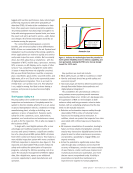
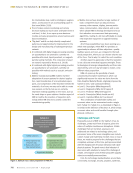
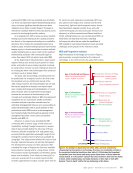
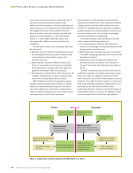
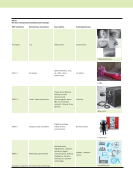
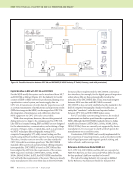
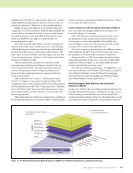
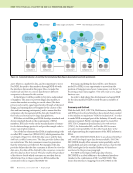
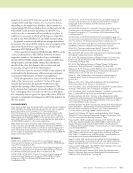
852 M A T E R I A L S E V A L U A T I O N • J U L Y 2 0 2 0 ME TECHNICAL PAPER w A B S T R A C T There is no doubt that the world currently is in the midst of a technology-driven transformation that is evidenced in our everyday lives via technical advances like self-driving cars and artificial intelli- gence. The world around us is changing at a rapid pace, and this also affects the way we produce nearly everything. Entire industries are trans- formed, resulting in major implications for profes- sionals in many fields. This transition is so compelling that it has been named “Industry 4.0,” the fourth industrial revolution. A variety of disrup- tive factors are compounding one another and have a massive impact on the status quo. These include robotics, big data, additive manufacturing, integrated systems, augmented reality, cloud computing, the Internet of Things, and much more. The NDT industry cannot escape these funda- mental changes. Nearly all methods are impacted—some more, others less. Therefore, the question arises: Is this an opportunity or a threat? This paper will explore these fundamental shifts using some specific examples from the field of radiography, as this is the field of expertise of the author. Also, the radiographic testing method is among those that will see the biggest changes caused by the new technology, as we have already seen in the medical realm. KEYWORDS: NDT 4.0, connected computer systems, cloud utilization, Internet of Things, IoT, smart factories, big data, artificial intelligence, AI, autonomous robots, predictive maintenance, additive manufacturing Introduction: What Is Industry 4.0? The concept of NDT 4.0 (Vaidya et al. 2018) is simply a subset of change sectors that are driven by the far bigger movement of Industry 4.0. It is important to understand where the term comes from (Epicor 2020). Figure 1 shows the different phases. The first industrial revolution happened between the late 1700s and early 1800s. During this period, manufacturing evolved from focusing on manual labor performed by people to a more optimized form of labor by using water and steam-powered engines in addition to other types of machine tools. In radiographic testing (RT), this phase is represented by the status of using analog film and isotopes. In the early part of the 20th century, the world entered the second industrial revolution with the use of electricity in factories. The introduction of electricity enabled manufac- turers to increase efficiency and helped make factory machinery more productive. It was during this phase that mass production concepts, such as the assembly line, were introduced to boost productivity. The legacy of the Ford Motor Co. is a great example of that period. In RT, the note- worthy changes in this phase would be the incorporation of electric components in order to improve the process and workflow. Particularly, this goes along with the usage of X-ray tubes that replaced the use of isotopes, simple manipulators, and automated film developers. Starting in the late 1950s, a third industrial revolution slowly began to emerge as manufacturers began incorporating more electronic—and eventually computer-based—technology into their factories. During this period, manufacturers began experiencing a shift that put less emphasis on analog and mechanical technology and more on digital technology and automation software. Within the RT world, this phase is char- acterized by the transition to digital detectors, numerical NDT 4.0: Opportunity or Threat? by Lennart Schulenburg* Materials Evaluation 78 (7): 852–860 https://doi.org/10.32548/2020.me-04134 ©2020 American Society for Nondestructive Testing * VisiConsult X-ray Systems & Solutions GmbH, Brandenbrooker Weg 2-4, D-23617 Stockelsdorf, Germany l.schulenburg@visiconsult.de
ASNT grants non-exclusive, non-transferable license of this material to  .
All rights reserved. © ASNT 2026. To report unauthorized use, contact: customersupport@asnt.org