FRA GRANTS FIVE-
YEAR WAIVER
TO EXPAND
AUTOMATED
TRACK INSPECTION
TESTING
The US Federal Railroad Administration’s (FRA)
Railroad Safety Board has approved a new tempo-
rary waiver permitting US railroads to broaden
field testing of automated track inspection (ATI)
technology, US Transportation Secretary Sean P.
Duffy announced on 5 December. The decision
enables the industry to collect additional safety data
and evaluate the potential of emerging inspection
technologies.
The five-year waiver gives railroads expanded flex-
ibility to demonstrate how ATI systems can supple-
ment traditional visual inspections by detecting
track defects or hazards that inspectors may not
easily spot. According to the US Department of
Transportation (DOT), ATI technology is intended to
enhance—rather than replace—the existing manual
inspection process.
“The new waiver will allow US railroads to comple-
ment visual track inspections with innovative tech-
nology that will identify issues on our rail before they
become a serious safety threat for rail passengers
and crew,” Duffy said.
FRA Administrator David Fink said the waiver
supports the agency’s commitment to evaluating
new tools that can strengthen rail safety. “ATI tech-
nology is designed to enhance already effective
visual inspections by catching things that human
eyes miss,” Fink said.
The FRA’s Railroad Safety Board, composed of
technical experts within the agency, determined
that the expanded testing will operate similarly to
earlier ATI pilot programs conducted by freight and
commuter railroads. The primary changes under the
new waiver include additional data collection and
information-sharing requirements, which will help
FRA assess the technology’s practical benefits and
any potential limitations.
The Association of American Railroads has
expressed long-standing support for the waiver,
citing technology as a key avenue for advancing
systemwide safety improvements.
More information on the waiver approval
can be found at regulations.gov, in Docket
No. FRA-2025-0059.
AIA RELEASES NAS 410
UPDATE FOR AEROSPACE
INDUSTRY PROFESSIONALS
On 1 December 2025, the Aerospace Industries
Association (AIA) and Accuris released the newest
NAS 410: Nondestructive Testing Personnel
Qualification and Certification standard (Revision 6).
This critical update for nondestructive testing (NDT)
enhances inspection reliability, supports safer aircraft
operations, and opens new career pathways for
aerospace professionals.
“NAS 410 Revision 6 marks a significant advance-
ment in aligning safety, innovation, and workforce
readiness,” said Chris Carnahan, AIA Assistant
Vice President of Standards. “This update not only
strengthens and clarifies nondestructive testing certi-
fication requirements, but also supports the devel-
opment of a more resilient and skilled aerospace
workforce by introducing a new pathway to Level III
qualification through the competency-based credit
system outlined in Appendix D.”
NAS 410 is the standard used across the aero-
space sector to qualify and certify personnel
performing NDT on aircraft components. This
revision reflects the latest industry practices,
technological advancements, and workforce
needs, ensuring continued safety and quality in
aerospace.
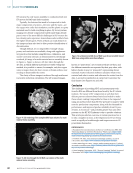
SCANNER
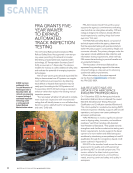
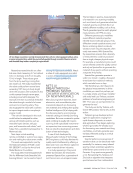
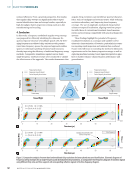
A BNSF coal train
eastbound in the
Cascade Mountains of
Washington State in
November 2022. US
railroads are preparing
to expand testing of
automated inspection
technology under
a newly approved
Federal Railroad
Administration waiver.
8
M AT E R I A L S E V A L U AT I O N • J A N U A R Y 2 0 2 6
YEAR WAIVER
TO EXPAND
AUTOMATED
TRACK INSPECTION
TESTING
The US Federal Railroad Administration’s (FRA)
Railroad Safety Board has approved a new tempo-
rary waiver permitting US railroads to broaden
field testing of automated track inspection (ATI)
technology, US Transportation Secretary Sean P.
Duffy announced on 5 December. The decision
enables the industry to collect additional safety data
and evaluate the potential of emerging inspection
technologies.
The five-year waiver gives railroads expanded flex-
ibility to demonstrate how ATI systems can supple-
ment traditional visual inspections by detecting
track defects or hazards that inspectors may not
easily spot. According to the US Department of
Transportation (DOT), ATI technology is intended to
enhance—rather than replace—the existing manual
inspection process.
“The new waiver will allow US railroads to comple-
ment visual track inspections with innovative tech-
nology that will identify issues on our rail before they
become a serious safety threat for rail passengers
and crew,” Duffy said.
FRA Administrator David Fink said the waiver
supports the agency’s commitment to evaluating
new tools that can strengthen rail safety. “ATI tech-
nology is designed to enhance already effective
visual inspections by catching things that human
eyes miss,” Fink said.
The FRA’s Railroad Safety Board, composed of
technical experts within the agency, determined
that the expanded testing will operate similarly to
earlier ATI pilot programs conducted by freight and
commuter railroads. The primary changes under the
new waiver include additional data collection and
information-sharing requirements, which will help
FRA assess the technology’s practical benefits and
any potential limitations.
The Association of American Railroads has
expressed long-standing support for the waiver,
citing technology as a key avenue for advancing
systemwide safety improvements.
More information on the waiver approval
can be found at regulations.gov, in Docket
No. FRA-2025-0059.
AIA RELEASES NAS 410
UPDATE FOR AEROSPACE
INDUSTRY PROFESSIONALS
On 1 December 2025, the Aerospace Industries
Association (AIA) and Accuris released the newest
NAS 410: Nondestructive Testing Personnel
Qualification and Certification standard (Revision 6).
This critical update for nondestructive testing (NDT)
enhances inspection reliability, supports safer aircraft
operations, and opens new career pathways for
aerospace professionals.
“NAS 410 Revision 6 marks a significant advance-
ment in aligning safety, innovation, and workforce
readiness,” said Chris Carnahan, AIA Assistant
Vice President of Standards. “This update not only
strengthens and clarifies nondestructive testing certi-
fication requirements, but also supports the devel-
opment of a more resilient and skilled aerospace
workforce by introducing a new pathway to Level III
qualification through the competency-based credit
system outlined in Appendix D.”
NAS 410 is the standard used across the aero-
space sector to qualify and certify personnel
performing NDT on aircraft components. This
revision reflects the latest industry practices,
technological advancements, and workforce
needs, ensuring continued safety and quality in
aerospace.
SCANNER
A BNSF coal train
eastbound in the
Cascade Mountains of
Washington State in
November 2022. US
railroads are preparing
to expand testing of
automated inspection
technology under
a newly approved
Federal Railroad
Administration waiver.
8
M AT E R I A L S E V A L U AT I O N • J A N U A R Y 2 0 2 6