frequency step length may need to be reduced to the order of
10 −2 MHz, implying that more than 10 2 individual measure-
ments are needed to cover just a 1 MHz bandwidth (Ren et al.
2025a). In practice, such repeated tuning and acquisition can
significantly prolong testing time, increase instrument overhead,
and complicate signal stabilization, making single-frequency
sweeping inefficient for high-throughput ultrasonic battery
testing, particularly in manufacturing (McGovern et al. 2023).
This motivates the use of frequency-modulated excitations that
provide broader time-frequency coverage, thereby improving the
effectiveness of the traditional frequency sweep method.
3.2. Verification of Angular Frequency Sweep Using
Frequency-Modulated Excitations
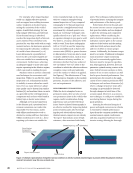
To address the inefficiencies of single-frequency sweep tests,
we investigate the use of frequency-modulated chirp exci-
tations for probing the frequency response structure of mul-
tilayer batteries. The excitation signal is designed using the
formulation in Equations 4 and 5, with a linear chirp rate
of α =0.1 MHz/µs, initial frequency f 0 =0.75 MHz, and time
duration β =20 µs. The resulting waveform spans a frequency
range of approximately [0.75, 2.75] MHz, consistent with the
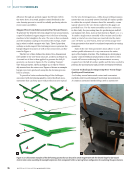
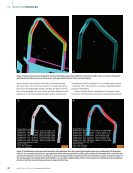
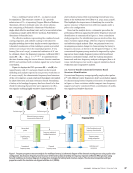
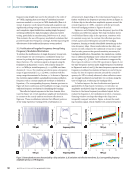
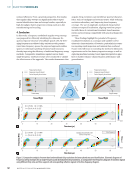
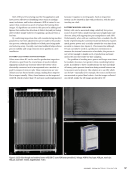
sweep range demonstrated in Section 3.1. As shown in Figure 3a,
the excitation signal exhibits a gradually increasing oscillation
frequency with a constant amplitude envelope as defined in
Equation 5. The corresponding frequency-domain spectrum in
Figure 3b shows continuous and broadband coverage, ensuring
sufficient frequency resolution for identifying the bandgap.
The reflected signal response in the time domain, illus-
trated in Figure 3d, reveals significant amplitude modulations,
in contrast to the nearly uniform toneburst reflections in
Figure 3a. These modulations indicate that different portions
of the chirp experience varying levels of attenuation or
enhancement, depending on the instantaneous frequency, as
further verified in the frequency spectrum shown in Figure 3e.
A distinct dip in the reflection amplitude appears around the
critical frequency of 2 MHz, consistent with the previously
observed bandgap position in Figures 1b and 2d.
Figures 3c and 3f display the time-frequency spectra of the
excitation and reflection signals. The chirp excitation shows
a well-defined linear ridge in the spectrum, consistent with
its constant sweep rate. In contrast, the reflection spectrum
reveals a pronounced disruption around the bandgap
frequency, forming a visually identifiable intensity gap in the
time-frequency ridge. These results indicate that chirp exci-
tations not only compress the traditional sweep into a single
shot but also preserve the spectral sensitivity necessary for
bandgap identification. Meanwhile, the simulations confirm
that no additional bandgap exists within the investigated fre-
quency range of [1, 3] MHz. This conclusion is supported by
three types of evidence: (1) the FRC spectrum in Figure 1b, (2)
the time-frequency spectra under single-frequency excitations
in Figures 2b and 2d, and (3) the time-frequency spectra under
frequency-modulated excitations in Figures 3c and 3f. In par-
ticular, the loss of response intensity around the critical fre-
quency of 2 MHz is clearly observed, where reflection waves
are strongly modulated and split into two sections along the
time-of-flight axis, evidencing the bandgap effect.
To further improve the time localization and practical
applicability of chirp-based excitations, we introduce an
amplitude-modulated chirp by applying a composite window
function to the linear frequency-modulated signal. As for-
mulated in Equation 6, the modulation involves a Gaussian–
Hanning window envelope that shapes the chirp into a
temporally compact waveform. Figure 4a shows the result-
ing excitation signal, which exhibits both a linear frequency
ME
|
ELECTRICVEHICLES
0 5 10 15 20
TOF (μs)
5
4
3
2
1
0
1
0.25
1
2
0 2.5 5
Frequency (MHz)
1
0
Bandgap
1 2
0 5 10 15 20
TOF (μs)
1
0
–1
Amplitude modulation
0 5 10 15 20
TOF (μs)
5
4
3
2
1
0
1
0.25
1
2
Bandgapgapdan B
Critical frequency
0 5 10 15 20
TOF (μs)
1
0
–1
0 2.5 5
Frequency (MHz)
1
0 1 2
2.75 MHz
0.75 MHz
Figure 3. Battery band structure characterized by a chirp excitation: (a, d) excitation and reflection waveforms (b, e) corresponding frequency
amplitude spectra (c, f) TFI diagrams.
50
M AT E R I A L S E V A L U AT I O N • J A N U A R Y 2 0 2 6
Frequency
(MHz)
Amplitude
(a.u.)
Amplitude
(a.u.)
Frequency
(MHz)
Amplitude
(a.u.)
Amplitude
(a.u.)
TFI (a.u.)
TFI (a.u.)
10 −2 MHz, implying that more than 10 2 individual measure-
ments are needed to cover just a 1 MHz bandwidth (Ren et al.
2025a). In practice, such repeated tuning and acquisition can
significantly prolong testing time, increase instrument overhead,
and complicate signal stabilization, making single-frequency
sweeping inefficient for high-throughput ultrasonic battery
testing, particularly in manufacturing (McGovern et al. 2023).
This motivates the use of frequency-modulated excitations that
provide broader time-frequency coverage, thereby improving the
effectiveness of the traditional frequency sweep method.
3.2. Verification of Angular Frequency Sweep Using
Frequency-Modulated Excitations
To address the inefficiencies of single-frequency sweep tests,
we investigate the use of frequency-modulated chirp exci-
tations for probing the frequency response structure of mul-
tilayer batteries. The excitation signal is designed using the
formulation in Equations 4 and 5, with a linear chirp rate
of α =0.1 MHz/µs, initial frequency f 0 =0.75 MHz, and time
duration β =20 µs. The resulting waveform spans a frequency
range of approximately [0.75, 2.75] MHz, consistent with the
sweep range demonstrated in Section 3.1. As shown in Figure 3a,
the excitation signal exhibits a gradually increasing oscillation
frequency with a constant amplitude envelope as defined in
Equation 5. The corresponding frequency-domain spectrum in
Figure 3b shows continuous and broadband coverage, ensuring
sufficient frequency resolution for identifying the bandgap.
The reflected signal response in the time domain, illus-
trated in Figure 3d, reveals significant amplitude modulations,
in contrast to the nearly uniform toneburst reflections in
Figure 3a. These modulations indicate that different portions
of the chirp experience varying levels of attenuation or
enhancement, depending on the instantaneous frequency, as
further verified in the frequency spectrum shown in Figure 3e.
A distinct dip in the reflection amplitude appears around the
critical frequency of 2 MHz, consistent with the previously
observed bandgap position in Figures 1b and 2d.
Figures 3c and 3f display the time-frequency spectra of the
excitation and reflection signals. The chirp excitation shows
a well-defined linear ridge in the spectrum, consistent with
its constant sweep rate. In contrast, the reflection spectrum
reveals a pronounced disruption around the bandgap
frequency, forming a visually identifiable intensity gap in the
time-frequency ridge. These results indicate that chirp exci-
tations not only compress the traditional sweep into a single
shot but also preserve the spectral sensitivity necessary for
bandgap identification. Meanwhile, the simulations confirm
that no additional bandgap exists within the investigated fre-
quency range of [1, 3] MHz. This conclusion is supported by
three types of evidence: (1) the FRC spectrum in Figure 1b, (2)
the time-frequency spectra under single-frequency excitations
in Figures 2b and 2d, and (3) the time-frequency spectra under
frequency-modulated excitations in Figures 3c and 3f. In par-
ticular, the loss of response intensity around the critical fre-
quency of 2 MHz is clearly observed, where reflection waves
are strongly modulated and split into two sections along the
time-of-flight axis, evidencing the bandgap effect.
To further improve the time localization and practical
applicability of chirp-based excitations, we introduce an
amplitude-modulated chirp by applying a composite window
function to the linear frequency-modulated signal. As for-
mulated in Equation 6, the modulation involves a Gaussian–
Hanning window envelope that shapes the chirp into a
temporally compact waveform. Figure 4a shows the result-
ing excitation signal, which exhibits both a linear frequency
ME
|
ELECTRICVEHICLES
0 5 10 15 20
TOF (μs)
5
4
3
2
1
0
1
0.25
1
2
0 2.5 5
Frequency (MHz)
1
0
Bandgap
1 2
0 5 10 15 20
TOF (μs)
1
0
–1
Amplitude modulation
0 5 10 15 20
TOF (μs)
5
4
3
2
1
0
1
0.25
1
2
Bandgapgapdan B
Critical frequency
0 5 10 15 20
TOF (μs)
1
0
–1
0 2.5 5
Frequency (MHz)
1
0 1 2
2.75 MHz
0.75 MHz
Figure 3. Battery band structure characterized by a chirp excitation: (a, d) excitation and reflection waveforms (b, e) corresponding frequency
amplitude spectra (c, f) TFI diagrams.
50
M AT E R I A L S E V A L U AT I O N • J A N U A R Y 2 0 2 6
Frequency
(MHz)
Amplitude
(a.u.)
Amplitude
(a.u.)
Frequency
(MHz)
Amplitude
(a.u.)
Amplitude
(a.u.)
TFI (a.u.)
TFI (a.u.)