Over the past year, I’ve had the privilege
of traveling across Asia, the Middle East,
Europe, and the Americas as ASNT’s
Chief Global Strategy Officer and
Executive Director of ASNT Certification
Services LLC. Whether meeting with
nondestructive testing (NDT) technicians,
Level IIIs, training providers, regulators,
equipment manufacturers, or industry
leaders, one message consistently
emerges: the future of NDT depends
on strong, trusted, globally aligned stan-
dards and certification programs.
Through these global engagements,
it has become increasingly clear that the
qualification and certification of NDT
personnel stand at a crossroads. Rapidly
emerging technologies, artificial intelli-
gence (AI) and machine learning applica-
tions, changing workforce demographics,
and rising regulatory expectations are
stretching traditional frameworks—many
of which date back to the 1960s. A critical
question continues to surface: Is our long-
standing certification structure adaptable
enough to meet today’s challenges and
tomorrow’s needs?
Whether I’m speaking at confer-
ences, leading workshops, serving on
panel discussions, or collaborating with
national NDT societies, the answer is
consistent. Around the world, there
SCOPE
SECURING TOMOR
ASNT’S VISION FOR
BY PAUL LANG
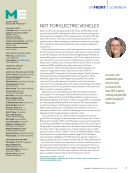
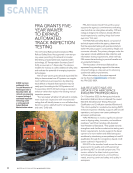
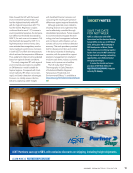
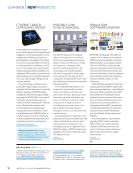
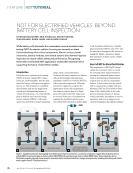
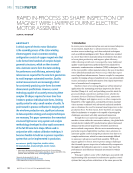
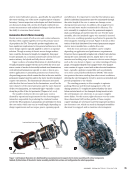
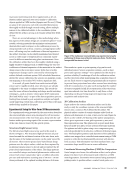
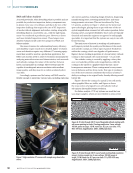
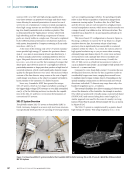
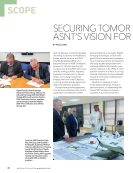
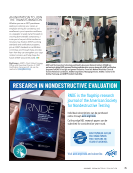
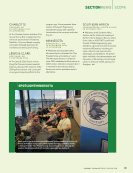
From left: ASNT President Clyde
May, Paul Lang, and Abdullah S.
AI Thuwaikh, Academy of Defense
Industries (ADI) Director of Training,
toured the ADI facility in Riyadh,
Kingdom of Saudi Arabia, where
ADI will be offering ASNT-approved
training and education courses
along with ASNT certification
programs.
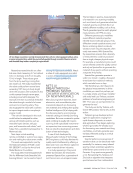
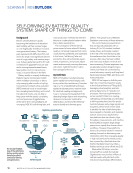
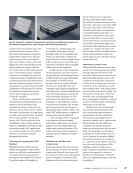
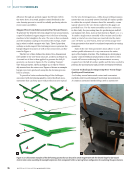
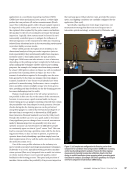
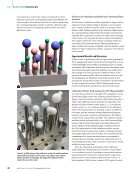
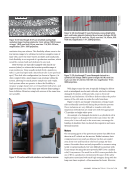
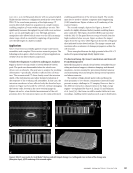
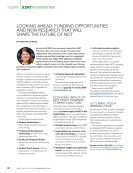
Zbynek Zavadil, General Manager
Advanced Technical Group (ATG) (on the
left), and Paul Lang, ASNT Chief Global
Strategy Officer and Executive Director,
ASNT Certification Services, signed an
operational agreement that enables
ASNT 9712 certification to be offered
through ATG.
72
M AT E R I A L S E V A L U AT I O N • J A N U A R Y 2 0 2 6
of traveling across Asia, the Middle East,
Europe, and the Americas as ASNT’s
Chief Global Strategy Officer and
Executive Director of ASNT Certification
Services LLC. Whether meeting with
nondestructive testing (NDT) technicians,
Level IIIs, training providers, regulators,
equipment manufacturers, or industry
leaders, one message consistently
emerges: the future of NDT depends
on strong, trusted, globally aligned stan-
dards and certification programs.
Through these global engagements,
it has become increasingly clear that the
qualification and certification of NDT
personnel stand at a crossroads. Rapidly
emerging technologies, artificial intelli-
gence (AI) and machine learning applica-
tions, changing workforce demographics,
and rising regulatory expectations are
stretching traditional frameworks—many
of which date back to the 1960s. A critical
question continues to surface: Is our long-
standing certification structure adaptable
enough to meet today’s challenges and
tomorrow’s needs?
Whether I’m speaking at confer-
ences, leading workshops, serving on
panel discussions, or collaborating with
national NDT societies, the answer is
consistent. Around the world, there
SCOPE
SECURING TOMOR
ASNT’S VISION FOR
BY PAUL LANG
From left: ASNT President Clyde
May, Paul Lang, and Abdullah S.
AI Thuwaikh, Academy of Defense
Industries (ADI) Director of Training,
toured the ADI facility in Riyadh,
Kingdom of Saudi Arabia, where
ADI will be offering ASNT-approved
training and education courses
along with ASNT certification
programs.
Zbynek Zavadil, General Manager
Advanced Technical Group (ATG) (on the
left), and Paul Lang, ASNT Chief Global
Strategy Officer and Executive Director,
ASNT Certification Services, signed an
operational agreement that enables
ASNT 9712 certification to be offered
through ATG.
72
M AT E R I A L S E V A L U AT I O N • J A N U A R Y 2 0 2 6