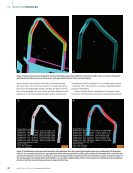
ETHERNET-BASED
ULTRASONIC DEVICE
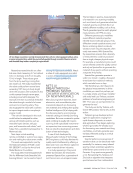
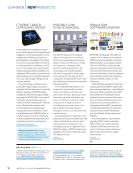
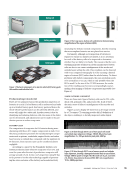
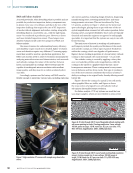
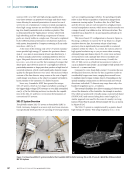
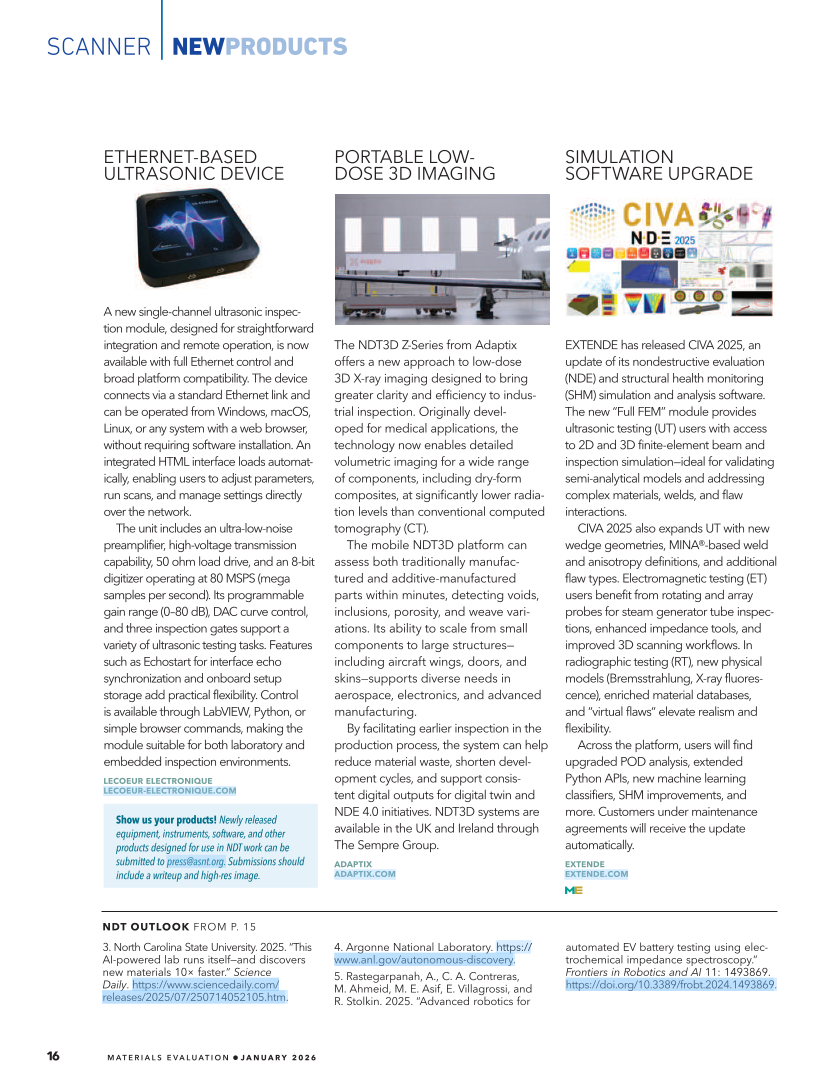
A new single-channel ultrasonic inspec-
tion module, designed for straightforward
integration and remote operation, is now
available with full Ethernet control and
broad platform compatibility. The device
connects via a standard Ethernet link and
can be operated from Windows, macOS,
Linux, or any system with a web browser,
without requiring software installation. An
integrated HTML interface loads automat-
ically, enabling users to adjust parameters,
run scans, and manage settings directly
over the network.
The unit includes an ultra-low-noise
preamplifier, high-voltage transmission
capability, 50 ohm load drive, and an 8-bit
digitizer operating at 80 MSPS (mega
samples per second). Its programmable
gain range (0–80 dB), DAC curve control,
and three inspection gates support a
variety of ultrasonic testing tasks. Features
such as Echostart for interface echo
synchronization and onboard setup
storage add practical flexibility. Control
is available through LabVIEW, Python, or
simple browser commands, making the
module suitable for both laboratory and
embedded inspection environments.
LECOEUR ELECTRONIQUE
LECOEUR-ELECTRONIQUE.COM
PORTABLE LOW-
DOSE 3D IMAGING
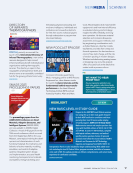
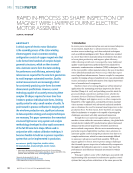
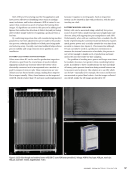
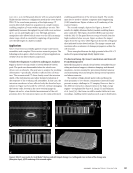
The NDT3D Z-Series from Adaptix
offers a new approach to low-dose
3D X-ray imaging designed to bring
greater clarity and efficiency to indus-
trial inspection. Originally devel-
oped for medical applications, the
technology now enables detailed
volumetric imaging for a wide range
of components, including dry-form
composites, at significantly lower radia-
tion levels than conventional computed
tomography (CT).
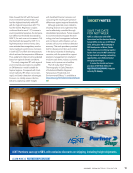
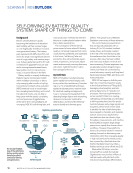
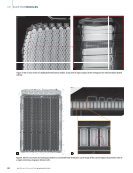
The mobile NDT3D platform can
assess both traditionally manufac-
tured and additive-manufactured
parts within minutes, detecting voids,
inclusions, porosity, and weave vari-
ations. Its ability to scale from small
components to large structures—
including aircraft wings, doors, and
skins—supports diverse needs in
aerospace, electronics, and advanced
manufacturing.
By facilitating earlier inspection in the
production process, the system can help
reduce material waste, shorten devel-
opment cycles, and support consis-
tent digital outputs for digital twin and
NDE 4.0 initiatives. NDT3D systems are
available in the UK and Ireland through
The Sempre Group.
ADAPTIX
ADAPTIX.COM
SIMULATION
SOFTWARE UPGRADE
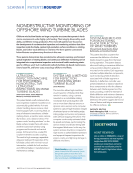
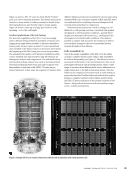
EXTENDE has released CIVA 2025, an
update of its nondestructive evaluation
(NDE) and structural health monitoring
(SHM) simulation and analysis software.
The new “Full FEM” module provides
ultrasonic testing (UT) users with access
to 2D and 3D finite-element beam and
inspection simulation—ideal for validating
semi-analytical models and addressing
complex materials, welds, and flaw
interactions.
CIVA 2025 also expands UT with new
wedge geometries, MINA®-based weld
and anisotropy definitions, and additional
flaw types. Electromagnetic testing (ET)
users benefit from rotating and array
probes for steam generator tube inspec-
tions, enhanced impedance tools, and
improved 3D scanning workflows. In
radiographic testing (RT), new physical
models (Bremsstrahlung, X-ray fluores-
cence), enriched material databases,
and “virtual flaws“ elevate realism and
flexibility.
Across the platform, users will find
upgraded POD analysis, extended
Python APIs, new machine learning
classifiers, SHM improvements, and
more. Customers under maintenance
agreements will receive the update
automatically.
EXTENDE
EXTENDE.COM
SCANNER
|
NEWPRODUCTS
Show us your products! Newly released
equipment, instruments, software, and other
products designed for use in NDT work can be
submitted to press@asnt.org. Submissions should
include a writeup and high-res image.
3. North Carolina State University. 2025. “This
AI-powered lab runs itself—and discovers
new materials 10 × faster.” Science
Daily. https://www.sciencedaily.com/
releases/2025/07/250714052105.htm.
4. Argonne National Laboratory. https://
www.anl.gov/autonomous-discovery.
5. Rastegarpanah, A., C. A. Contreras,
M. Ahmeid, M. E. Asif, E. Villagrossi, and
R. Stolkin. 2025. “Advanced robotics for
automated EV battery testing using elec-
trochemical impedance spectroscopy.”
Frontiers in Robotics and AI 11: 1493869.
https://doi.org/10.3389/frobt.2024.1493869.
NDT OUTLOOK FROM P. 15
16
M AT E R I A L S E V A L U AT I O N • J A N U A R Y 2 0 2 6
ULTRASONIC DEVICE
A new single-channel ultrasonic inspec-
tion module, designed for straightforward
integration and remote operation, is now
available with full Ethernet control and
broad platform compatibility. The device
connects via a standard Ethernet link and
can be operated from Windows, macOS,
Linux, or any system with a web browser,
without requiring software installation. An
integrated HTML interface loads automat-
ically, enabling users to adjust parameters,
run scans, and manage settings directly
over the network.
The unit includes an ultra-low-noise
preamplifier, high-voltage transmission
capability, 50 ohm load drive, and an 8-bit
digitizer operating at 80 MSPS (mega
samples per second). Its programmable
gain range (0–80 dB), DAC curve control,
and three inspection gates support a
variety of ultrasonic testing tasks. Features
such as Echostart for interface echo
synchronization and onboard setup
storage add practical flexibility. Control
is available through LabVIEW, Python, or
simple browser commands, making the
module suitable for both laboratory and
embedded inspection environments.
LECOEUR ELECTRONIQUE
LECOEUR-ELECTRONIQUE.COM
PORTABLE LOW-
DOSE 3D IMAGING
The NDT3D Z-Series from Adaptix
offers a new approach to low-dose
3D X-ray imaging designed to bring
greater clarity and efficiency to indus-
trial inspection. Originally devel-
oped for medical applications, the
technology now enables detailed
volumetric imaging for a wide range
of components, including dry-form
composites, at significantly lower radia-
tion levels than conventional computed
tomography (CT).
The mobile NDT3D platform can
assess both traditionally manufac-
tured and additive-manufactured
parts within minutes, detecting voids,
inclusions, porosity, and weave vari-
ations. Its ability to scale from small
components to large structures—
including aircraft wings, doors, and
skins—supports diverse needs in
aerospace, electronics, and advanced
manufacturing.
By facilitating earlier inspection in the
production process, the system can help
reduce material waste, shorten devel-
opment cycles, and support consis-
tent digital outputs for digital twin and
NDE 4.0 initiatives. NDT3D systems are
available in the UK and Ireland through
The Sempre Group.
ADAPTIX
ADAPTIX.COM
SIMULATION
SOFTWARE UPGRADE
EXTENDE has released CIVA 2025, an
update of its nondestructive evaluation
(NDE) and structural health monitoring
(SHM) simulation and analysis software.
The new “Full FEM” module provides
ultrasonic testing (UT) users with access
to 2D and 3D finite-element beam and
inspection simulation—ideal for validating
semi-analytical models and addressing
complex materials, welds, and flaw
interactions.
CIVA 2025 also expands UT with new
wedge geometries, MINA®-based weld
and anisotropy definitions, and additional
flaw types. Electromagnetic testing (ET)
users benefit from rotating and array
probes for steam generator tube inspec-
tions, enhanced impedance tools, and
improved 3D scanning workflows. In
radiographic testing (RT), new physical
models (Bremsstrahlung, X-ray fluores-
cence), enriched material databases,
and “virtual flaws“ elevate realism and
flexibility.
Across the platform, users will find
upgraded POD analysis, extended
Python APIs, new machine learning
classifiers, SHM improvements, and
more. Customers under maintenance
agreements will receive the update
automatically.
EXTENDE
EXTENDE.COM
SCANNER
|
NEWPRODUCTS
Show us your products! Newly released
equipment, instruments, software, and other
products designed for use in NDT work can be
submitted to press@asnt.org. Submissions should
include a writeup and high-res image.
3. North Carolina State University. 2025. “This
AI-powered lab runs itself—and discovers
new materials 10 × faster.” Science
Daily. https://www.sciencedaily.com/
releases/2025/07/250714052105.htm.
4. Argonne National Laboratory. https://
www.anl.gov/autonomous-discovery.
5. Rastegarpanah, A., C. A. Contreras,
M. Ahmeid, M. E. Asif, E. Villagrossi, and
R. Stolkin. 2025. “Advanced robotics for
automated EV battery testing using elec-
trochemical impedance spectroscopy.”
Frontiers in Robotics and AI 11: 1493869.
https://doi.org/10.3389/frobt.2024.1493869.
NDT OUTLOOK FROM P. 15
16
M AT E R I A L S E V A L U AT I O N • J A N U A R Y 2 0 2 6