ABSTR ACT
Radiographic testing (RT) has become an essential
nondestructive evaluation method for electric
vehicle (EV) powertrain components, whose
delicate and encapsulated internal features cannot
be assessed through traditional tactile or optical
inspection. This paper reviews the current state of RT
technologies used for both production and research
applications, with emphasis on batteries and
motors—the most critical components unique to EV
platforms. Key topics include rapid in-line computed
tomography (CT) for battery cell quality assurance,
automated defect recognition (ADR) and artificial
intelligence for high-throughput data analysis, and
the specialized high-resolution CT systems required
for R&D and failure analysis. Challenges such
as achieving sufficient penetration, maintaining
resolution at high speeds, and imaging low-density
materials embedded within dense structures are
discussed, along with recent technological advances
that are enabling practical solutions. The paper
highlights how RT is evolving to meet the increasing
demands for performance, reliability, and yield in
modern EV manufacturing.
KEYWORDS: radiographic testing (RT), electric vehicle (EV)
batteries, computed tomography (CT), ADR
Introduction
The arrival of the electric vehicle (EV) as a priority in auto-
motive manufacturing has created a wide range of challenges.
Inspection technologies for components of internal combus-
tion (IC) vehicles have been developed to near perfection over
the last 130 years. These technologies have also benefited from
the fact that the main engine parts can easily be inspected
externally for fitness for purpose. Technologies ranging from
go/no-go gauges to coordinate measuring machines (CMMs)
and white-light and laser scanners are fully capable of external
inspection. Nondestructive inspection for internal features
exists but is used for only a small number of applications, such
as safety-critical castings, where it is important to check for
porosity—specifically in engine blocks. In addition to looking
for porosity, critical internal features such as oil and water
channels also require inspection.
Contrast this with EV powertrain components, where
almost every critical part is delicate in nature and encap-
sulated, and out of the reach of tactile and optical inspec-
tion. Inspection of these components requires radiographic
testing (RT).
Of the components that are not shared with IC vehicles, the
most obvious and critical are the EV batteries and the motors.
Batteries
The “battery” in an EV is an all-encompassing term for a
system of electrical energy storage consisting of many parts
that together form a “battery pack” with its own control
and cooling systems. This battery pack, in turn, consists of
“modules,” which also have a control system and often their
own cooling system. These modules are composed of battery
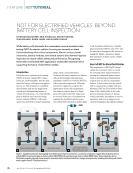
cells, which may be the familiar “cylindrical cells,” “prismatic
cells,” or “pouch cells.” All perform the same role and contain
layers of anode and cathode elements arranged in different
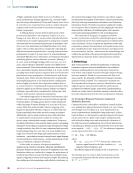
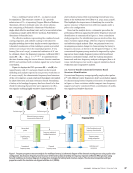
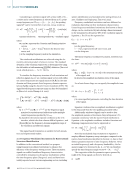
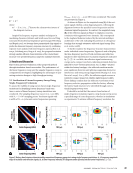
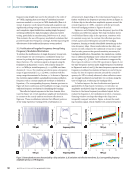
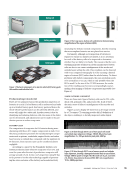
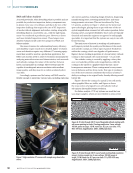
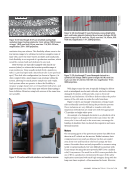
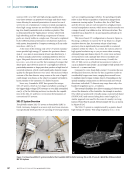
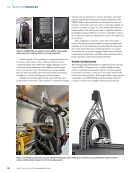
configurations (see Figure 1).
What all these components have in common is that they
contain very delicate parts, and they are sealed, making them
impossible to inspect by optical or tactile means from the
outside.
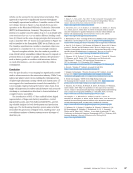
X-ray technologies are the only viable solution for inspect-
ing batteries without taking them apart. There are two main
areas where X-ray inspection is currently used: production for
battery quality assurance (QA), and research and development
(R&D) for development and failure analysis.
USES OF RADIOGRAPHIC TESTING FOR NDT
ON EV POWERTRAIN COMPONENTS
GILES GASKELL†, NEIL BLOOMFIELD‡, DANIEL SHEDLOCK§, AND EMIL ESPES††
† Pinnacle X-Ray Solutions, Duluth, GA, USA ggaskell@pxsinc.com
‡ Waygate Technologies, Cincinnati, OH, USA
§ Varex Imaging, Franklin Park, IL, USA
†† Excillum AB, Kista, Stockholm, Sweden
Materials Evaluation 84 (1): 54–60
https://doi.org/10.32548/2026.me-04547
©2026 American Society for Nondestructive Testing
ME
|
REVIEWPAPER
54
M AT E R I A L S E V A L U AT I O N • J A N U A R Y 2 0 2 6
Radiographic testing (RT) has become an essential
nondestructive evaluation method for electric
vehicle (EV) powertrain components, whose
delicate and encapsulated internal features cannot
be assessed through traditional tactile or optical
inspection. This paper reviews the current state of RT
technologies used for both production and research
applications, with emphasis on batteries and
motors—the most critical components unique to EV
platforms. Key topics include rapid in-line computed
tomography (CT) for battery cell quality assurance,
automated defect recognition (ADR) and artificial
intelligence for high-throughput data analysis, and
the specialized high-resolution CT systems required
for R&D and failure analysis. Challenges such
as achieving sufficient penetration, maintaining
resolution at high speeds, and imaging low-density
materials embedded within dense structures are
discussed, along with recent technological advances
that are enabling practical solutions. The paper
highlights how RT is evolving to meet the increasing
demands for performance, reliability, and yield in
modern EV manufacturing.
KEYWORDS: radiographic testing (RT), electric vehicle (EV)
batteries, computed tomography (CT), ADR
Introduction
The arrival of the electric vehicle (EV) as a priority in auto-
motive manufacturing has created a wide range of challenges.
Inspection technologies for components of internal combus-
tion (IC) vehicles have been developed to near perfection over
the last 130 years. These technologies have also benefited from
the fact that the main engine parts can easily be inspected
externally for fitness for purpose. Technologies ranging from
go/no-go gauges to coordinate measuring machines (CMMs)
and white-light and laser scanners are fully capable of external
inspection. Nondestructive inspection for internal features
exists but is used for only a small number of applications, such
as safety-critical castings, where it is important to check for
porosity—specifically in engine blocks. In addition to looking
for porosity, critical internal features such as oil and water
channels also require inspection.
Contrast this with EV powertrain components, where
almost every critical part is delicate in nature and encap-
sulated, and out of the reach of tactile and optical inspec-
tion. Inspection of these components requires radiographic
testing (RT).
Of the components that are not shared with IC vehicles, the
most obvious and critical are the EV batteries and the motors.
Batteries
The “battery” in an EV is an all-encompassing term for a
system of electrical energy storage consisting of many parts
that together form a “battery pack” with its own control
and cooling systems. This battery pack, in turn, consists of
“modules,” which also have a control system and often their
own cooling system. These modules are composed of battery
cells, which may be the familiar “cylindrical cells,” “prismatic
cells,” or “pouch cells.” All perform the same role and contain
layers of anode and cathode elements arranged in different
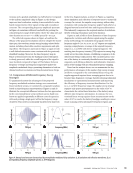
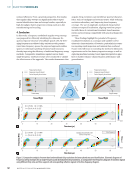
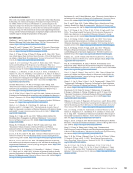
configurations (see Figure 1).
What all these components have in common is that they
contain very delicate parts, and they are sealed, making them
impossible to inspect by optical or tactile means from the
outside.
X-ray technologies are the only viable solution for inspect-
ing batteries without taking them apart. There are two main
areas where X-ray inspection is currently used: production for
battery quality assurance (QA), and research and development
(R&D) for development and failure analysis.
USES OF RADIOGRAPHIC TESTING FOR NDT
ON EV POWERTRAIN COMPONENTS
GILES GASKELL†, NEIL BLOOMFIELD‡, DANIEL SHEDLOCK§, AND EMIL ESPES††
† Pinnacle X-Ray Solutions, Duluth, GA, USA ggaskell@pxsinc.com
‡ Waygate Technologies, Cincinnati, OH, USA
§ Varex Imaging, Franklin Park, IL, USA
†† Excillum AB, Kista, Stockholm, Sweden
Materials Evaluation 84 (1): 54–60
https://doi.org/10.32548/2026.me-04547
©2026 American Society for Nondestructive Testing
ME
|
REVIEWPAPER
54
M AT E R I A L S E V A L U AT I O N • J A N U A R Y 2 0 2 6