ME
|
ELECTRICVEHICLES
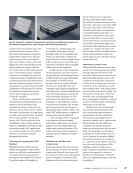
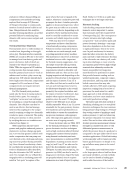
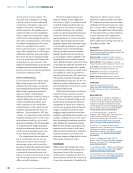
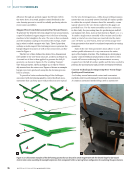
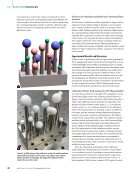
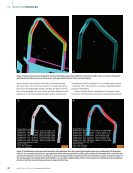
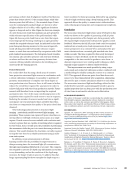
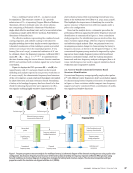
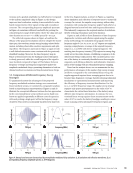
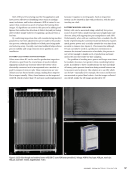
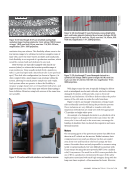
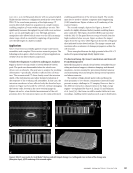
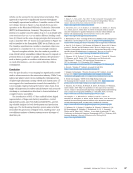
Figure 4. XXL-CT scan results of a battery pack with focus on intercell foam distribution: (a) 3D image of the scanned region (b) zoomed-in view of
a region containing a large pore between cells.
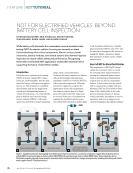
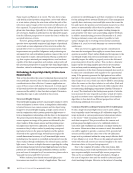
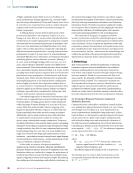
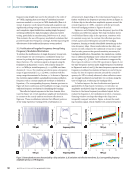
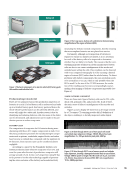
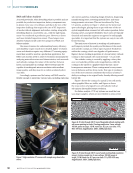
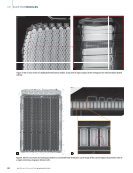
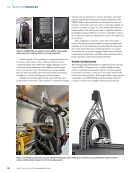
Figure 3. XXL-CT scan results of a highly deformed battery module: (a) top view of impact region (b) the orthogonal slice indicated by the dotted
red line.
64
M AT E R I A L S E V A L U AT I O N J A N U A R Y 2 0 2 6
Figure 4a shows a XXL-CT scan of a Tesla Model Y battery
pack in a cell-to-structure geometry. The battery pack is posi-
tioned at a steep incline to reduce penetration length along
the longitudinal axis and thereby improve image quality.
Figure 4b shows a close-up of a large pore between cells,
spanning ~40% of the cell height.
Further Applications: Lifecycle Testing
The detection capabilities of the XXL-CT are increasingly
used in lifecycle testing of battery assemblies of various sizes,
ranging from single battery modules to full-sized underfloor
battery packs. In most cases, an initial CT scan is performed
after assembly of the battery system to document and evaluate
the beginning-of-life (BOL) state prior to any test procedure.
The nondestructive nature of CT allows for verification of the
correct assembly state and provides a fully 3D reference for
subsequent analyses and comparisons. The individual battery
systems then undergo various tests, such as mechanical load,
electrical and thermal stress tests, and crash or impact tests.
Intermediate or final end-of-life (EOL) CT scans are per-
formed afterward. At that stage, the acquired CT datasets from
different lifetime periods can be analyzed in various ways using
standard NDE tools. A variance analysis of BOL and EOL states
is a rapid method for visualizing structural changes in both
external and internal battery components.
Dimensional measurements—such as changes in cell
thickness or cell spacing over time, correlated with applied
mechanical or electrical stress conditions—provide direct
insight into abnormal cell behavior (e.g., swelling) and the
development of critical health conditions. This makes it
possible to analyze and document the evolution of defects
and condition changes at the level of individual battery
systems throughout their lifetime.
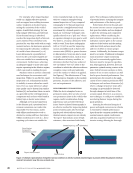
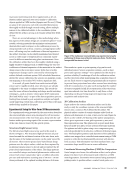
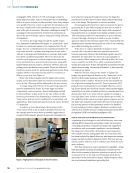
Fully Assembled Car
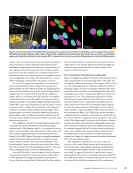
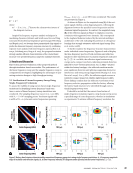
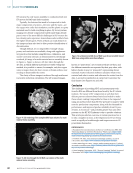
One of the unique capabilities of the XXL-CT is the ability
to inspect complete battery packs within a fully assembled
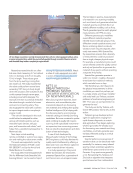
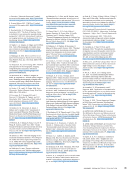
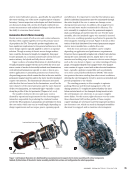
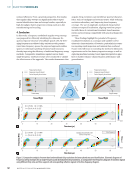
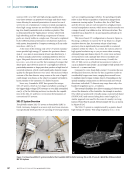
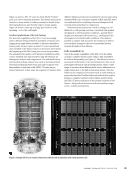
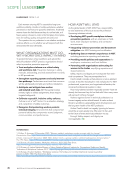
EV without disassembly (see Figure 5). This allows for in situ
assessment of the battery in its real environment. This can be
particularly relevant in early prototype phases, where a wide
range of questions from different fields can be addressed in a
single dataset due to the high information density. This also
holds true for complex test scenarios such as crash testing, as
previously described. Unlike traditional methods that require
partial or complete teardown of the vehicle and its battery,
the XXL-CT allows evaluation of the internal condition of the
battery—along with its interaction with surrounding compo-
nents—entirely noninvasively.
Figure 5. Example XXL-CT scan results of two electric vehicles with (a) cylindrical cells and (b) prismatic cells.
J A N U A R Y 2 0 2 6 M AT E R I A L S E V A L U AT I O N 65
Previous Page Next Page