sources with 6 or 9 MeV and high-energy-capable detec-
tors, these systems can penetrate very large and dense struc-
tures, allowing for material penetration of around 20 cm of
steel or 60 cm of aluminum. Contrary to initial assumptions,
these high-energy systems are not blind to weakly absorb-
ing, low-density materials such as rubber or plastics. This
is demonstrated in the “Applications” section, where both
high-absorbing and low-absorbing components of battery
packs are clearly visible in a single scan. This can be explained
by the different physical interaction mechanisms of photons
with matter, dominated by Compton scattering at X-ray radia-
tion above 1 MeV [4, 5].
At the time of this writing, only a few CT-system manufac-
turers provide high-energy CT systems for specimen dimen-
sion of ~1000 mm to 2000 mm in at least one direction [6, 7,
8]. This is usually achieved by combining different detector
types. Flat-panel detectors with a field of view of 16 in. × 16 in.
(40.6 cm × 40.6 cm) are used for fast scanning of compact but
dense parts. Line detector arrays of ~1 m length are used for
particularly massive or large parts that produce a high level of
scattered radiation, which would significantly degrade image
quality if a flat-panel detector were used. The increased object
contrast of the line detector setup comes at the cost of signifi-
cantly longer scan times, as the object is scanned vertically in
layers, similar to the operation of a flatbed scanner.
Since 2013, Fraunhofer EZRT has operated its unique
XXL-CT system, which is even larger and allows scanning of
the biggest high-voltage (HV) systems or even fully assembled
cars [5, 9]. In the following sections, we describe the capabil-
ities of the XXL-CT and how it overcomes the limitations of
conventional CT systems.
XXL-CT System Overview
The globally unique XXL-CT system at Fraunhofer EZRT in
Fürth, Germany, designed as a tower-style steel truss structure,
was specifically developed for CT scanning of very large objects
such as complete passenger vehicles. Its operating principle
relies on line-by-line acquisition of projection images from
numerous viewing angles. To achieve this, the 9 MeV linac
and the detector unit are each mounted on a high-precision
vertical manipulation system, which moves synchronously over
a range of nearly 5 m within an 8 m–tall tower structure. The
turntable has a diameter of 3 m and supports payloads up to
10 metric tons.
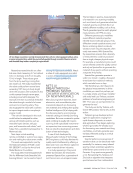
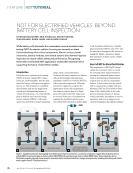
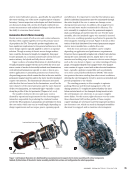
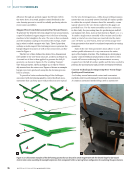
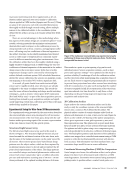
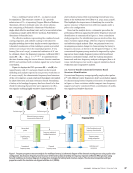
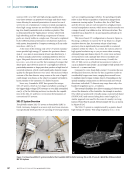
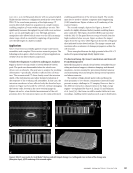
This tower-based CT configuration is shown in Figure 1a.
By using a collimator to narrow the X-ray beam to a single
sensitive detector line, the system adopts a fan-beam
geometry that is significantly less susceptible to scattered
radiation within the object. As a result, the system achieves
high spatial resolution up to 400 µm even when scanning
extremely large and dense objects. To cover cross sections
several meters wide, multiple line detector modules are
combined into a 4 m–wide detector array. Overall, the
XXL-CT fully covers a cylindrical measurement volume of
3.2 m in diameter and nearly 5 m in height at full spatial reso-
lution of ~0.4 mm voxel size.
Compared to cone-beam high-energy CT systems that use
2D flat-panel detectors, the line-by-line acquisition results in
considerably longer scan times, ranging from several hours
to multiple days for large-volume objects. Depending on the
spatial sampling configuration in the horizontal and vertical
directions, individual CT datasets may range from only a few
hundred megabytes up to 1–2 terabytes.
The system’s flexibility also allows scanning of objects that
exceed the diameter of the turntable. An example is modern
EVs, which are positioned vertically using a custom-built frame
(VERTICAGE) and scanned along their entire length [9]. A
similar approach was used for the scan of a nearly 6 m–long
historic World War II aircraft, Messerschmitt Me 163, as shown
in Figure 1b [10].
The XXL-CT system is complemented by a granite-based
high-energy CT system. This setup employs a 16 in. × 16 in.
ME
|
ELECTRICVEHICLES
Figure 1. (a) Tower-based XXL-CT system installed at the Fraunhofer EZRT in Fürth, Germany (b) an XXL-CT scan of a World War II Messerschmitt
Me 163 airplane.
62
M AT E R I A L S E V A L U AT I O N • J A N U A R Y 2 0 2 6
tors, these systems can penetrate very large and dense struc-
tures, allowing for material penetration of around 20 cm of
steel or 60 cm of aluminum. Contrary to initial assumptions,
these high-energy systems are not blind to weakly absorb-
ing, low-density materials such as rubber or plastics. This
is demonstrated in the “Applications” section, where both
high-absorbing and low-absorbing components of battery
packs are clearly visible in a single scan. This can be explained
by the different physical interaction mechanisms of photons
with matter, dominated by Compton scattering at X-ray radia-
tion above 1 MeV [4, 5].
At the time of this writing, only a few CT-system manufac-
turers provide high-energy CT systems for specimen dimen-
sion of ~1000 mm to 2000 mm in at least one direction [6, 7,
8]. This is usually achieved by combining different detector
types. Flat-panel detectors with a field of view of 16 in. × 16 in.
(40.6 cm × 40.6 cm) are used for fast scanning of compact but
dense parts. Line detector arrays of ~1 m length are used for
particularly massive or large parts that produce a high level of
scattered radiation, which would significantly degrade image
quality if a flat-panel detector were used. The increased object
contrast of the line detector setup comes at the cost of signifi-
cantly longer scan times, as the object is scanned vertically in
layers, similar to the operation of a flatbed scanner.
Since 2013, Fraunhofer EZRT has operated its unique
XXL-CT system, which is even larger and allows scanning of
the biggest high-voltage (HV) systems or even fully assembled
cars [5, 9]. In the following sections, we describe the capabil-
ities of the XXL-CT and how it overcomes the limitations of
conventional CT systems.
XXL-CT System Overview
The globally unique XXL-CT system at Fraunhofer EZRT in
Fürth, Germany, designed as a tower-style steel truss structure,
was specifically developed for CT scanning of very large objects
such as complete passenger vehicles. Its operating principle
relies on line-by-line acquisition of projection images from
numerous viewing angles. To achieve this, the 9 MeV linac
and the detector unit are each mounted on a high-precision
vertical manipulation system, which moves synchronously over
a range of nearly 5 m within an 8 m–tall tower structure. The
turntable has a diameter of 3 m and supports payloads up to
10 metric tons.
This tower-based CT configuration is shown in Figure 1a.
By using a collimator to narrow the X-ray beam to a single
sensitive detector line, the system adopts a fan-beam
geometry that is significantly less susceptible to scattered
radiation within the object. As a result, the system achieves
high spatial resolution up to 400 µm even when scanning
extremely large and dense objects. To cover cross sections
several meters wide, multiple line detector modules are
combined into a 4 m–wide detector array. Overall, the
XXL-CT fully covers a cylindrical measurement volume of
3.2 m in diameter and nearly 5 m in height at full spatial reso-
lution of ~0.4 mm voxel size.
Compared to cone-beam high-energy CT systems that use
2D flat-panel detectors, the line-by-line acquisition results in
considerably longer scan times, ranging from several hours
to multiple days for large-volume objects. Depending on the
spatial sampling configuration in the horizontal and vertical
directions, individual CT datasets may range from only a few
hundred megabytes up to 1–2 terabytes.
The system’s flexibility also allows scanning of objects that
exceed the diameter of the turntable. An example is modern
EVs, which are positioned vertically using a custom-built frame
(VERTICAGE) and scanned along their entire length [9]. A
similar approach was used for the scan of a nearly 6 m–long
historic World War II aircraft, Messerschmitt Me 163, as shown
in Figure 1b [10].
The XXL-CT system is complemented by a granite-based
high-energy CT system. This setup employs a 16 in. × 16 in.
ME
|
ELECTRICVEHICLES
Figure 1. (a) Tower-based XXL-CT system installed at the Fraunhofer EZRT in Fürth, Germany (b) an XXL-CT scan of a World War II Messerschmitt
Me 163 airplane.
62
M AT E R I A L S E V A L U AT I O N • J A N U A R Y 2 0 2 6