NONDESTRUCTIVE MONITORING OF
OFFSHORE WIND TURBINE BLADES
Offshore wind turbine blades are large composite structures that operate in harsh
marine environments under highly cyclic loading. Their integrity drives safety, avail-
ability, and lifetime energy production. Few recent US patents have focused on
the development of nondestructive inspection and monitoring solutions that allow
inspection inside the blade, capture high-resolution surface conditions on rotating
blades, and further track deflection in real time. The three patents summarized
below illustrate complementary directions in this area.
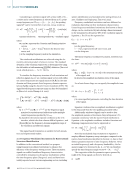
These patents demonstrate how nondestructive ultrasonic scanning, synchronized
optical inspection of rotating blades, and continuous deflection monitoring can be
integrated into comprehensive inspection and structural health monitoring strate-
gies for offshore wind. Such multimodal methods facilitate risk-based maintenance,
extend asset life, and lower costs across large offshore wind fleets.
US20250305994A1 ULTRASONIC
INSPECTION MACHINE
FOR PERFORMING
NONDESTRUCTIVE
ULTRASONIC
INSPECTIONS ON WIND
TURBINE BLADES
(Ivan Castro Casas, Iratxe Aizpurua
Maestre, and Hector Gutierrez)
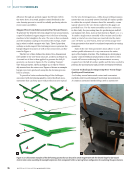
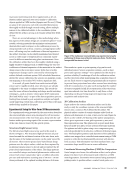
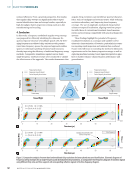
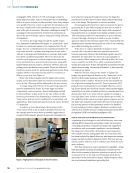
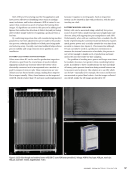
This patent details a self-contained ultra-
sonic inspection machine mounted on an
automatically guided vehicle. A six-axis
robotic handling device carries a robot
head equipped with a scanning head, an
array of ultrasonic transducers, a blade-
marking device, a machine vision camera,
illumination, and a distance sensor. The
system marks “working windows” on the
blade surface, locates them with vision,
and then scans each window using
programmed horizontal and vertical
passes. At the same time, a water-film
couplant maintains acoustic coupling.
The result is high-coverage, repeatable
ultrasonic testing (UT) inspection of the
full blade surface with minimal manual
intervention, suitable for both onshore
and offshore blades in manufacturing or
maintenance settings.
US12073547B1 SYSTEM AND A METHOD
FOR INSPECTION
OF ROTATING WIND
TURBINE BLADE
(Janis Putrams)
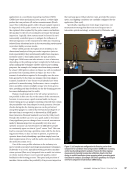
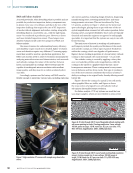
This invention allows high-resolution
visual inspection of blades while they
remain in rotation, using a camera
mounted on a controllable rotating
mechanism that works together with
one or more laser distance sensors or
dynamic vision sensors and a computer
system to capture high-resolution images
of selected spots on the leading edge,
trailing edge, and suction and pressure
sides without stopping the turbine. The
computer continuously estimates blade
tip speed and phase, synchronizing the
camera motion and shutter timing with
the targeted blade area. In this way, the
system reduces downtime compared to
rope-access or parked-blade inspections
and supports frequent inspections for
erosion, cracks, and lightning damage in
offshore wind farms.
US11639712B2 SYSTEM AND METHOD
FOR MONITORING
BLADE DEFLECTION
OF WIND TURBINES
(Vincent David, Daniel Cantin, Robert
Guillemette, and Jonathan Cloutier)
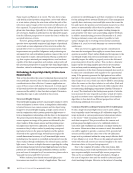
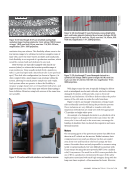
This patent describes a system that
measures the deflection of turbine
blades toward or away from the tower
during operation. The system detects
abnormal loading or excessive deflection
using a position-detection apparatus
mounted on the turbine. Each apparatus
includes multiple detection components,
each monitoring a field of detection
associated with a blade segment or
blade tip. A deflection controller uses
presence/absence or distance data from
these components to infer the distance
between each blade segment and the
tower, providing a real-time estimate of
blade deflection and minimum clearance.
When abnormal or excessive loading is
detected, the system triggers alarms and
informs lifetime and fatigue assessments
for offshore turbines.
PATENTS EDITOR
Samir Mustapha, PhD: American
University of Beirut, Beirut, Lebanon
sm154@aub.edu.lb
SCANNER
|
PATENTSROUNDUP
Patents Roundup provides a review of recent
patents of interest to the NDT community. If you’ve
been granted a patent and would like to see it
featured in an upcoming issue, please email Patents
Editor Samir Mustapha at sm154@aub.edu.lb.
ASNT REWIND
Join us online on 18 March for a recap of
the top presentations and most impactful
insights from ASNT 2025! REWIND
sessions earn contact hours and can be
converted into recertification points for
ASNT NDT Level III. Registration informa-
tion coming soon.
|
SOCIETYNOTES
18
M AT E R I A L S E V A L U AT I O N • J A N U A R Y 2 0 2 6
OFFSHORE WIND TURBINE BLADES
Offshore wind turbine blades are large composite structures that operate in harsh
marine environments under highly cyclic loading. Their integrity drives safety, avail-
ability, and lifetime energy production. Few recent US patents have focused on
the development of nondestructive inspection and monitoring solutions that allow
inspection inside the blade, capture high-resolution surface conditions on rotating
blades, and further track deflection in real time. The three patents summarized
below illustrate complementary directions in this area.
These patents demonstrate how nondestructive ultrasonic scanning, synchronized
optical inspection of rotating blades, and continuous deflection monitoring can be
integrated into comprehensive inspection and structural health monitoring strate-
gies for offshore wind. Such multimodal methods facilitate risk-based maintenance,
extend asset life, and lower costs across large offshore wind fleets.
US20250305994A1 ULTRASONIC
INSPECTION MACHINE
FOR PERFORMING
NONDESTRUCTIVE
ULTRASONIC
INSPECTIONS ON WIND
TURBINE BLADES
(Ivan Castro Casas, Iratxe Aizpurua
Maestre, and Hector Gutierrez)
This patent details a self-contained ultra-
sonic inspection machine mounted on an
automatically guided vehicle. A six-axis
robotic handling device carries a robot
head equipped with a scanning head, an
array of ultrasonic transducers, a blade-
marking device, a machine vision camera,
illumination, and a distance sensor. The
system marks “working windows” on the
blade surface, locates them with vision,
and then scans each window using
programmed horizontal and vertical
passes. At the same time, a water-film
couplant maintains acoustic coupling.
The result is high-coverage, repeatable
ultrasonic testing (UT) inspection of the
full blade surface with minimal manual
intervention, suitable for both onshore
and offshore blades in manufacturing or
maintenance settings.
US12073547B1 SYSTEM AND A METHOD
FOR INSPECTION
OF ROTATING WIND
TURBINE BLADE
(Janis Putrams)
This invention allows high-resolution
visual inspection of blades while they
remain in rotation, using a camera
mounted on a controllable rotating
mechanism that works together with
one or more laser distance sensors or
dynamic vision sensors and a computer
system to capture high-resolution images
of selected spots on the leading edge,
trailing edge, and suction and pressure
sides without stopping the turbine. The
computer continuously estimates blade
tip speed and phase, synchronizing the
camera motion and shutter timing with
the targeted blade area. In this way, the
system reduces downtime compared to
rope-access or parked-blade inspections
and supports frequent inspections for
erosion, cracks, and lightning damage in
offshore wind farms.
US11639712B2 SYSTEM AND METHOD
FOR MONITORING
BLADE DEFLECTION
OF WIND TURBINES
(Vincent David, Daniel Cantin, Robert
Guillemette, and Jonathan Cloutier)
This patent describes a system that
measures the deflection of turbine
blades toward or away from the tower
during operation. The system detects
abnormal loading or excessive deflection
using a position-detection apparatus
mounted on the turbine. Each apparatus
includes multiple detection components,
each monitoring a field of detection
associated with a blade segment or
blade tip. A deflection controller uses
presence/absence or distance data from
these components to infer the distance
between each blade segment and the
tower, providing a real-time estimate of
blade deflection and minimum clearance.
When abnormal or excessive loading is
detected, the system triggers alarms and
informs lifetime and fatigue assessments
for offshore turbines.
PATENTS EDITOR
Samir Mustapha, PhD: American
University of Beirut, Beirut, Lebanon
sm154@aub.edu.lb
SCANNER
|
PATENTSROUNDUP
Patents Roundup provides a review of recent
patents of interest to the NDT community. If you’ve
been granted a patent and would like to see it
featured in an upcoming issue, please email Patents
Editor Samir Mustapha at sm154@aub.edu.lb.
ASNT REWIND
Join us online on 18 March for a recap of
the top presentations and most impactful
insights from ASNT 2025! REWIND
sessions earn contact hours and can be
converted into recertification points for
ASNT NDT Level III. Registration informa-
tion coming soon.
|
SOCIETYNOTES
18
M AT E R I A L S E V A L U AT I O N • J A N U A R Y 2 0 2 6