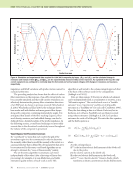
104 M A T E R I A L S E V A L U A T I O N • J A N U A R Y 2 0 2 0 ME TECHNICAL PAPER w A B S T R A C T Ultrasonic nondestructive evaluation (NDE) of composites is performed to detect and quantify material damages. The estimation of degraded material properties is not generally performed using NDE. However, if successfully done, it has the potential to illuminate the progressive failure models for estimation of composite failure and predict remaining useful life more accurately. It could be done through multiple experiments with controlled degraded material properties due to microscale discontinuities to understand the signals and use that understanding for estimation of equivalent material properties. However, it is not practical to perform all the possible experiments with various damage scenarios and geometries. An alternate way is to obtain a physics-based under- standing of the perturbation of the ultrasonic wavefield. Through virtual experiments, signals could be evaluated in the presence of microscale discontinuities compared to the pristine materials as fast as possible. In this paper, a framework with computational NDE (CNDE) is proposed to visualize the effect of microscale discontinuities on an ultra- sonic wavefield to generate a database to compute the ultrasonic wavefield in degraded composites. The framework will help clarify the effect of micro discontinuities on the ultrasonic probing energy. Distributed point source method (DPSM) is a newly developed CNDE approach used herein to boost computational efficiency, which requires elastody- namic Green’s function in the material. Materials with micro discontinuities show the effect on the Green’s function and thus they affect the computed ultrasonic wavefield in CNDE. To obtain the degraded material properties for the CNDE, representative volume elements (RVEs) are studied to understand the effect of distributed discontinu- ities on the effective constitutive properties. Finally, the acquired effective properties were utilized to calculate perturbed Green’s function and consequently, the affected CNDE response. With the available technology at this time, it is challenging to validate a high-frequency NDE problem in the time domain however, frequency domain results are presented in this paper and the effect of microscale discontinuities is enumerated. KEYWORDS: anisotropic Green’s function, computa- tional NDE, DPSM, ultrasonics, ultrasonic wave, wave field, composites, RVE Introduction Composite materials, belonging to the general class of anisotropic materials, are used in many fields from biomedical to aerospace applications. To ensure the safe operation of composites, ultrasonic nondestructive evaluation (NDE) is a necessary step to certify the composites during operation. Composites are subjected to internal damages and disconti- nuities during the manufacturing and operation process. There is also a possibility of sudden damage due to external causes and an extreme environment. These damages can exist or occur in the early stages of the material’s lifespan from the manufacturing process. It can also initiate during the opera- tion stage due to conditions such as high temperature, thermal fatigue, high humidity, and high or low fatigue load cycles. Degradation of material properties at the macro scale are initiated due to microscale damages such as matrix cracks, A Framework for Computational Nondestructive Evaluation of Degraded Composites with Microscale Discontinuities by Sajan Shrestha*, Vahid Tavaf*, and Sourav Banerjee† * Integrated Material Assessment and Predictive Simulation Laboratory, Department of Mechanical Engineering, University of South Carolina, Columbia, SC 29208 † Integrated Material Assessment and Predictive Simulation Laboratory, Department of Mechanical Engineering, University of South Carolina, Columbia, SC 29208 banerjes@cec.sc.edu

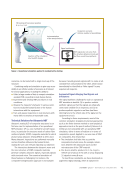
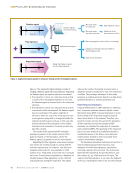
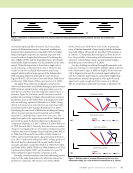
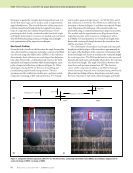
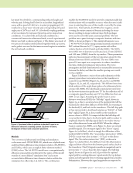
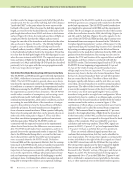
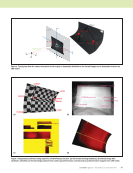
J A N U A R Y 2 0 2 0 • M A T E R I A L S E V A L U A T I O N 105 voids, and fiber breakage. Due to the discontinuities, the degradation of the material properties of the material is imminent, affecting the effectiveness and performance of the composite compared to its pristine state. However, the NDE interpretation of these damages from ultrasonic wave signals is very challenging due to the complicated wave phenomena in anisotropic composites. It is even more complicated when degraded composites with microscale damages are considered. Ultrasonic nondestructive evaluation of a composite is performed to detect and quantify material damages. The esti- mation of degraded material properties due to microscale discontinuities, precursor damages, and reduced material properties surrounding the damaged area is not generally performed using NDE. Hence, there is a need for progressive failure models with the ability to accurately estimate composite failure and predict remaining useful life. It could, in theory, be done through multiple experiments with controlled degraded material properties due to microscale discontinuities to understand the signals and then use that understanding for estimation of equivalent material proper- ties. However, it is not practical to perform all of the possible experiments with various damage scenarios and geometries. Thus, an alternate procedure called computational NDE (CNDE) can be used. The CNDE technique can be used to virtually simulate experiments to obtain a physics-based understanding of the ultrasonic wavefield in the presence of microscale discontinuities in a cost-effective and efficient manner. Nonetheless, there exists a bottleneck. Wave behavior due to internal and precursor damages in composites is not well understood. This lack of expertise is eminent under CNDE. On the other hand, understanding the material state due to the presence of microscale damage is essential for the development of a comprehensive composite failure model. A composite failure model is developed to help virtually predict the material failure before it occurs. However, the model requires current damage information (for example, shape and sizes of cracks or delaminations from the NDE of composite), followed by degraded material properties around the damage or degraded material properties in a fatigued composite. Hence, there are two questions we need to answer. First, can we reliably interpret the NDE data to quantify the degraded effective material properties? Second, is it possible to inform the composite failure models about the degraded material properties from the NDE data? This paper uniquely contributes to create the very first framework under the digital NDE pipeline by answering both questions. To accurately understand the effect of composites with microscale discontinuities on wave propagation, it is necessary to understand the material state more precisely. For that purpose, material subjected to microscale damage (~100 μm) is of more interest than the macro scale (~1 mm), such as a delamination, crack, or other discontinuity in the material. Furthermore, interpreting the effect of microscale discontinu- ities on ultrasonic NDE signals is a big challenge faced by current CNDE researchers. Does the degraded material state affect the ultrasonic signals at all? Some of the popular computational simulation techniques used in virtual NDE experiments are the finite element method (FEM) (Weilinger Associates 2009), boundary element method (BEM) (Shaw 1979 Zhao and Rose 2003), indirect boundary integral equation (IBIE)( Sánchez-Sesma and Campillo 1991 Sánchez-Sesma and Campillo 1993 Pointer et al. 1998 Bouchon and Sánchez-Sesma 2007), multi-gaussian beam model (M-GBM)(Wen and Breazeale 1988 Newberry and Thompson 1989 Spies 1999), charge simulation technique (CST) (Rajamohan and Raamachandran 1999), multiple multi- pole method (MMP) (Ballisti and Hafner 1983 Hafner 1985 Imhof 2004), spectral element method (SEM) (Moll et al. 2011), elastodynamic finite integration technique (EFIT) (Leckey et al. 2014), local interaction simulation approach (LISA), distributed point source method (DPSM) (Placko and Kundu 2001 Plack et al. 2002 Banerjee and Kundu 2006a Banerjee and Kundu 2006b Banerjee and Kundu 2007a Banerjee et al. 2007 Banerjee and Kundu 2007b Placko and Kundu 2007 Banerjee and Kundu 2008a Banerjee and Kundu 2008b Banerjee et al. 2009), and gaussian distributed point source method (G-DPSM) (Rahani and Kundu 2011). Among all the techniques mentioned, FEM has been the most common and obvious technique because of the availability of many commercial packages to perform these simulations. Unfortu- nately, spurious reflection at the element boundaries makes the FEM simulations incorrect. Moreover, it has also been found to be less accurate at higher frequencies. Similarly, the other tech- niques are also used for low-frequency applications, mostly for structural health monitoring problems where frequencies below ~1 MHz are used. For high-frequency (~1 MHz) NDE appli- cations, there are few choices with the simulation approach that could be used confidently. Incidentally, it was reported that an alternate technique DPSM is at least 2× faster than FEM (Wada et al. 2014), and accurate, to the best of our knowledge, at higher frequencies. However, it requires the elastodynamic Green’s function to be computed numerically. In this article, DPSM is explored for high-frequency CNDE of composites. Irrespective of the choices from the previously mentioned techniques, wave propagation models that we generally use are based on the macroscale material properties. It is indeed hard to create a reliable process to incorporate material degra- dation in ultrasonic CNDE models. Figure 1 shows a basic CNDE framework to understand and use the effect of degraded material properties in an NDE signal interpretation. Numerous approaches have been developed to quantify the material state and degradation of material properties of composites. An analytical technique using the representative volume element (RVE) was presented by Bakhvalov and Panasenko (1989) and Sun and Vaidya (1996) to obtain the effective material properties of material. Additional
ASNT grants non-exclusive, non-transferable license of this material to  .
All rights reserved. © ASNT 2026. To report unauthorized use, contact: customersupport@asnt.org