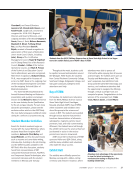
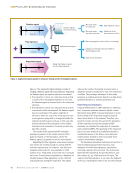
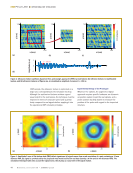
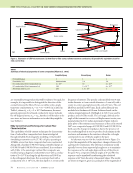
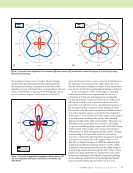
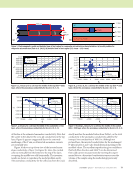
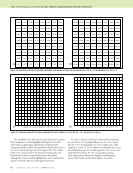
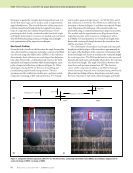
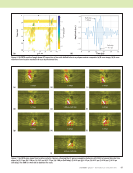
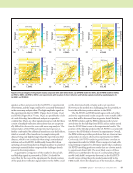
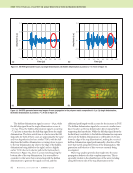
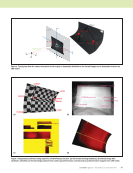
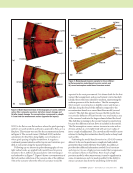
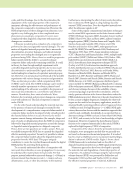
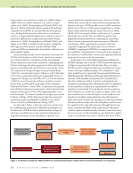
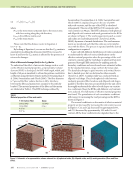
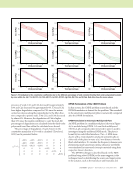
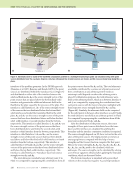
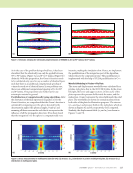
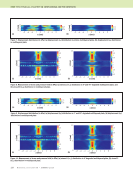
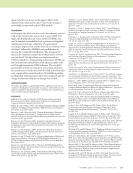
44 M A T E R I A L S E V A L U A T I O N • J A N U A R Y 2 0 2 0 CFRP sample, the ultrasonic texture is replicated on a larger area corresponding to the simulator mock-up. Although the synthesized textures achieve a good visual match to the real texture, the technique must be improved in terms of computer speed and quantita- tively compared to real signals before applying it into the operational NDT simulator prototype. Experimental Setup of the Prototype Whatever the options, the augmented signal approach requires specific hardware: an ultrasonic acquisition system to get the real signals, and a probe position tracking system to measure the position of the probe with regard to the inspected structure. ME FEATURE w operational ndt simulations 140 140 x (mm) 140 140 x (mm) 140 140 x (mm) 1 0 1 0 –1 t = 190 ns 7 Figure 4. Ultrasonic texture synthesis based on Efros and Leung’s approach (1999): (a) real texture (b) reference texture (c) synthesized texture and (d) ultrasonic textures of Figures 4a–4c visualized as amplitude C-scans at t = 190 ns. (a) (d) 20 0 0 20 0.8 0.6 0.4 x (mm) 20 0 0 20 0.8 0.6 0.4 x (mm) Figure 5. Amplitude C-scan of flat-bottom hole (FBH) defect signatures: (a) signal comes from a real acquisition of a part containing a 12 mm diameter FBH (b) signal is synthesized by the proposed meta-model trained on real data (namely a 9 mm and 16 mm diameter FBH). The simulation technique takes into account the signal noise, which plays a crucial role in the signal realism. (a) (b) (b) (c) y (mm) y (mm) y (mm) Amplitude (a.u.) y (mm) y (mm) Amplitude (a.u.) Amplitude (a.u.) Amplitude (a.u.)

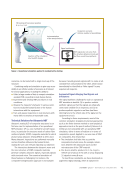
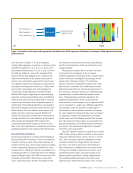
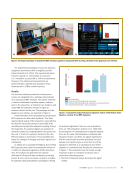
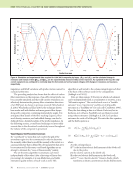
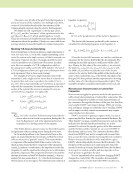
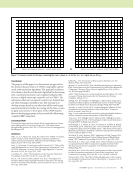
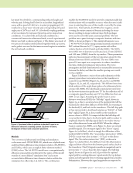
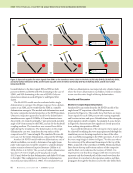
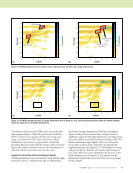
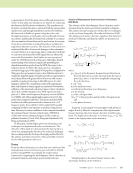
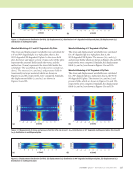
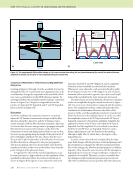
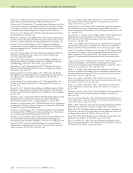
J A N U A R Y 2 0 2 0 • M A T E R I A L S E V A L U A T I O N 45 The implemented prototype is based on ultrasonic equipment synchronized with a magnetic position tracker (Guibert et al. 2016). This experimental setup ensures a typical 0.1 mm position accuracy and 0.1° orientation accuracy with a 240 Hz measurement frequency. The ultrasound measurements are performed with a phased array transducer of 32 elements with a 5 MHz central frequency. Results The technical solutions presented in the previous section are integrated into a prototype demonstrator of an operational NDT simulator. The system looks like a classical ultrasound acquisition system however, prior to the inspection, an instructor can decide to add virtual FBH discontinuities (shown in Figure 5) wherever desired on the part. The prototype and the graphical user interface are depicted in Figure 6. A demonstration of this prototype was proposed to NDT inspectors to collect their feedback. They have reported good realism of the inspection, especially the fact that the virtual discontinuity is not visible if the real ultrasound probe lacks adequate coupling. During the inspection, the acquired signals are analyzed to check the ultrasound coupling between the probe and the part. If a lack of coupling is detected, then the FBH simulation is deactivated. This possibility illus- trates the strength of merging real-world signals and simulations. To obtain more quantitative feedback, five certified NDT inspectors were asked to evaluate the realism of 12 different ultrasound signatures of FBH discontinu- ities. The analysis was performed on software dedicated to ultrasound data visualization providing A-scan, B-scan, and C-scan views, as well as a toolbox for automatic sizing and statistical computations. Among the analyzed signatures, three are real acquisitions three are CIVA simulations (Calmon et al. 2006) with the assumption of a homogenized composite material three are the same CIVA simulations combined with ultrasonic texture and three are signals synthesized with the meta-model described previously. For each dataset, the inspectors give a score from one (if the signature is detected as a simulation) to four (if the signature is considered real). Results are summarized in Figure 7. This evaluation may not involve enough inspectors to give a consistent conclusion yet, it raises three interesting points: l The lack of ultrasonic texture decreases the signal realism. Figure 6. Developed prototype of operational NDT simulator applied to ultrasound NDT: (a) setup (b) detail of the graphical user interface. (a) (b) 3.3 1 2 3 4 1.3 2.6 3.3 Real acquisition Physical model (homogenized composite) Physical model (homogenized composite) + ultrasound texture Proposed meta-model + ultrasound texture Legend Figure 7. Comparative study of ultrasound signature realism of flat-bottom holes based on a survey of five NDT inspectors. Realism score
ASNT grants non-exclusive, non-transferable license of this material to  .
All rights reserved. © ASNT 2026. To report unauthorized use, contact: customersupport@asnt.org