NDT

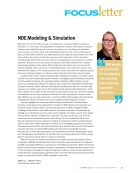
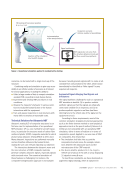
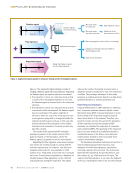
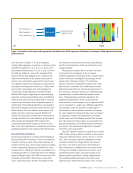
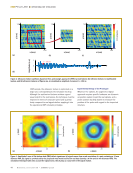
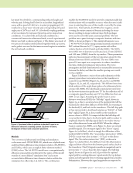
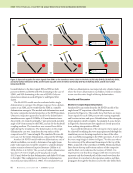
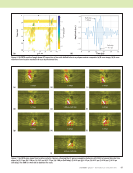
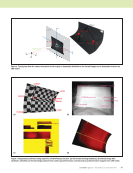
I n aeronautics, the reliability of nondestructive testing (NDT) procedures is quantified through probability of detection (POD) studies. In this approach, inspection results are collected for different defect sizes and then a statistical analysis is performed on the inspection results to estimate the probability to detect a defect with regard to its dimension. To get a consistent estimation, a large number of inspection results is required and makes the POD studies complex and expensive to implement. Typically, several inspectors are asked to inspect several samples containing disconti- nuities. In the last 15 years, the approach of using simulation to provide data and to lower the cost of such POD campaigns has been developed and is known under the acronym MAPOD (model-assisted POD). A major limitation of this approach is related to its ability to properly account for human factors. To take a step further, the idea of developing an “operational NDT simulator” involving human operations and simulated data, as a flight simulator does to train pilots, has arisen. In this paper, we describe this concept and show recent results of an early prototype dedicated to ultrasonic inspections of composite materials. The concept is reviewed in the first section. Then, the technical challenges of its implementation for ultrasound NDT are described. Finally, the human percep- tion of the operational NDT simulation is evaluated, showing the performance of the current prototype. w ME FEATURE Operational NDT Simulations Involving Real Operators by Damien Rodat, Nicolas Dominguez, Frank Guibert, and Pierre Calmon J A N U A R Y 2 0 2 0 • M A T E R I A L S E V A L U A T I O N 39 POD
ASNT grants non-exclusive, non-transferable license of this material to  .
All rights reserved. © ASNT 2026. To report unauthorized use, contact: customersupport@asnt.org