26 M A T E R I A L S E V A L U A T I O N • J A N U A R Y 2 0 2 0 company’s written practice. This compli- ance verification will focus on under- standing the workflow process, reviewing the certification record documentation, and by interviewing company personnel such as the NDT Level III and quality and management positions. 5. Upon completion of the assessment, the assessor submits the accreditation pack to ASNT for review by NDT technical staff. ASNT staff and the company seeking accreditation shall be in communication to address any outstanding items. 6. Upon completion, ASNT technical staff will determine if accreditation is to be granted. 7. Prior to company notification, a review panel shall verify the accreditation pack has been completed in accordance with the defined requirements. 8. Company is notified accordingly. 9. Any company accredited will be listed on the registered accredited list for EBC on the ASNT website. Who are the assessors? Assessors are credentialled individuals possessing ASNT Level III certifications in NDT who are experienced and skilled at conducting external assessments on NDT personnel certification programs. Assessors are independent contractors who meet the requirements as defined by the ASNT EBC procedures. Who are the ASNT technical staff? Assessment programs within ASNT are controlled through the Standards and Accreditation team at the International Service Center (ISC). This team is made up of technical staff holding ASNT NDT Level III certifications who are experienced and skilled at conducting external assess- ments, with at least 25 years of experience in the engineering world. They also hold experience in various accreditation programs such as ISO-9001, AS-9100, ISO-17021, ISO-17024, and ISO-17025. Who and what is the review panel? The review panel is composed of three individuals who perform an overcheck to verify all the requirements have been satisfied in accordance with the EBC proce- dures. These individuals are ASNT assessors but not associated with the company or the specific assessment that was conducted. It is imperative to keep a level of separation to ensure a fair and valid assessment is conducted for all companies that seek such an accreditation. Where are the procedures located? Procedures will be available for review on the ASNT EBC webpage. Any procedures considered confidential shall be identified but will not be available for review by the general public. How much will the audit cost? The cost model at the time of writing this article has still to be finalized. This infor- mation will be made available in January 2020. What are the benefits of being accredited by ASNT? l Industry-leading expertise. SNT-TC-1A and ANSI/ASNT CP-189 have been developed and are maintained through the ASNT organization. ASNT released SNT-TC-1A back in 1963, and it has been the foundation for many—if not all—NDT certification programs developed since then. Whether it be a third-party certification (such as ASNT ACCP) or an employer-based certifica- tion program, owner/operators, primes, customers, and designers commonly reference SNT-TC-1A as a base document for developing NDT certifica- tion programs. Who else is more qualified to deliver an assessment program relating to SNT-TC-1A and ANSI/ASNT CP-189? l Competitive advantages. The program will differentiate between those capable of implementing and maintaining an effective employer-based certification program as opposed to those that cannot and provide a competitive advantage to those with an ASNT accreditation. l Standardization within the industry. NDT certification assessments are taking place at companies with varying levels of oversight by many different companies, creating inconsistencies. Having a program managed by industry through ASNT provides the opportunity to share information for the betterment of the industry to tackle the challenges faced individually by companies and work collectively to standardize these challenges. Everyone faces the same challenges—why work on these issues individually? l Potential cost reductions. What happens when industry is involved as a collec- tive, working together through ASNT and accepting the EBC accreditation? The potential reductions of site visits from customers who are specifically there to review NDT personnel certifica- tion programs. A reduction in site visits allows for resources and time (such as time spent in preparation, assessment, addressing outstanding items, and so forth) to be redirected within the company. What is the duration of the EBC accreditation? The duration of the EBC accreditation will be three years. More information can be found on the ASNT EBC webpage at asnt.org/EBC. For answers to specific questions, please email ebc@asnt.org. w society news

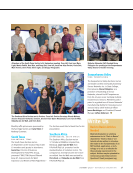
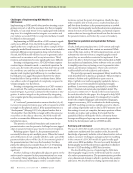
J A N U A R Y 2 0 2 0 • M A T E R I A L S E V A L U A T I O N 27 special notice New Technical Editor Joins Materials Evaluation The Materials Evaluation (ME) staff and editors would like to welcome John Z. Chen as the journal’s new technical editor. Chen will replace Richard H. Bossi as technical editor and chair of the ME Committee effective 1 January 2020. Bossi, who is stepping down, served in the position since 2012. Chen is an ASNT NDT Level III in ET, MT, PT, RT, and UT. In his current position as Principal Materials Engineer at Schlumberger Ltd. in Houston, Texas, he develops procedures, trains personnel, and validates technologies for oilfield material engineering challenges, including NDT, welding, brazing, coating, heat treating, and materials selection. Chen joined ASNT in 2000 and served as an Associate Technical Editor for ME from 2013 to 2019 after serving as a reviewer for multiple years. Currently he is a director at large on ASNT’s Board of Directors, an associate member of the Certification Management Council (since 2012), and a member of the Host Committee of ICPIIT conference series (since 2011). He also served on the Financial Awards Committee, Selection Committee, Chemical and Petroleum Committee, Guided Wave Committee, and as a session chair for several conferences. He has published 29 journal papers, delivered multiple technical presentations at conferences, reviewed eight ASNT books, and been an invited speaker on several occasions. In addition to serving on ASNT’s Board of Directors, Chen is currently chair of the Greater Houston Section a voting member of the B1 Committee on Methods of Inspection at the American Welding Society (AWS) a member of the Academic Advisory Committee for the NDT program at San Jacinto College in Pasadena, Texas a co- chair for ICPIIT 2020 and the vice chair of ASNT’s Handbook Development Committee. His awards and recognitions include the Jerry Fulin Technician of the Year–Level III from the Greater Houston Section in 2017 ASNT Fellow in 2016 a World Oil Award– Best Well Intervention Technology in 2016 a President’s Award from Schlumberger in 2016 a Performed by Schlumberger Bronze Award in 2016 an Achievement Award for the Advance of Science and Technology in Beijing in 2000 and an Honored Undergraduate Student Award from Shaanxi Province (equivalent to summa cum laude) in 1995. He has also won three Section Meritorious Awards from AWS. Chen received a Ph.D. in Welding Engineering from the Ohio State University in 2005. Before that, he received a Ph.D. in Materials Science and Engineering and a bachelor’s in Mechanical Engineering from Xi’an Jiaotong University, China, in 1999 and 1995, respectively. w John Z. Chen
ASNT grants non-exclusive, non-transferable license of this material to  .
All rights reserved. © ASNT 2026. To report unauthorized use, contact: customersupport@asnt.org